The Lemmo One Collab.Ride marks a significant update to what is arguably the most advanced smart bike currently available: new features include automatic gear shifting, a more powerful motor and additional sensors with AI support designed to improve the interaction between the rider and the bike. That sounds like a major step forward — but our test will reveal whether these innovations make as much of a difference in everyday use as hoped.
Design
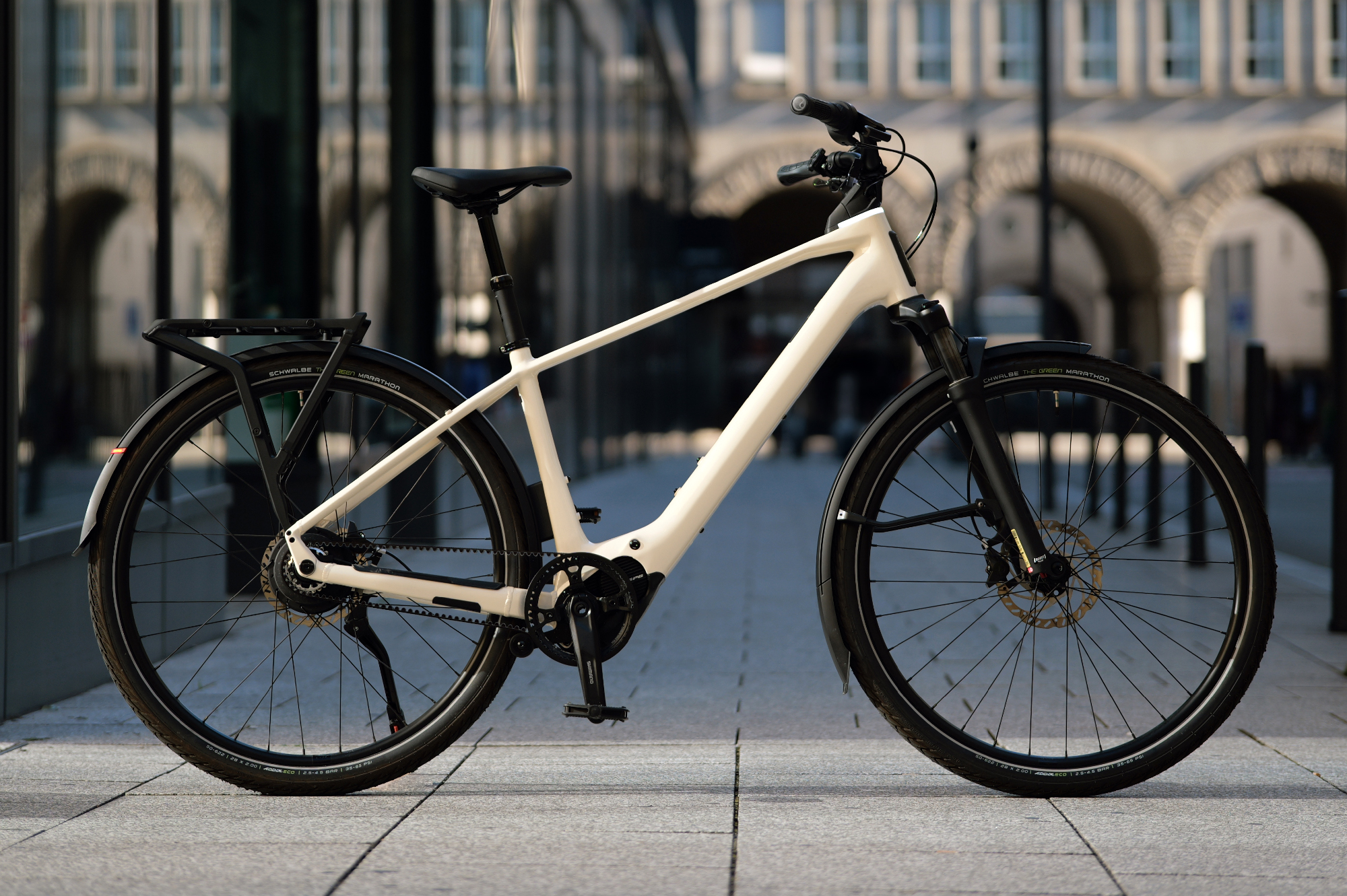
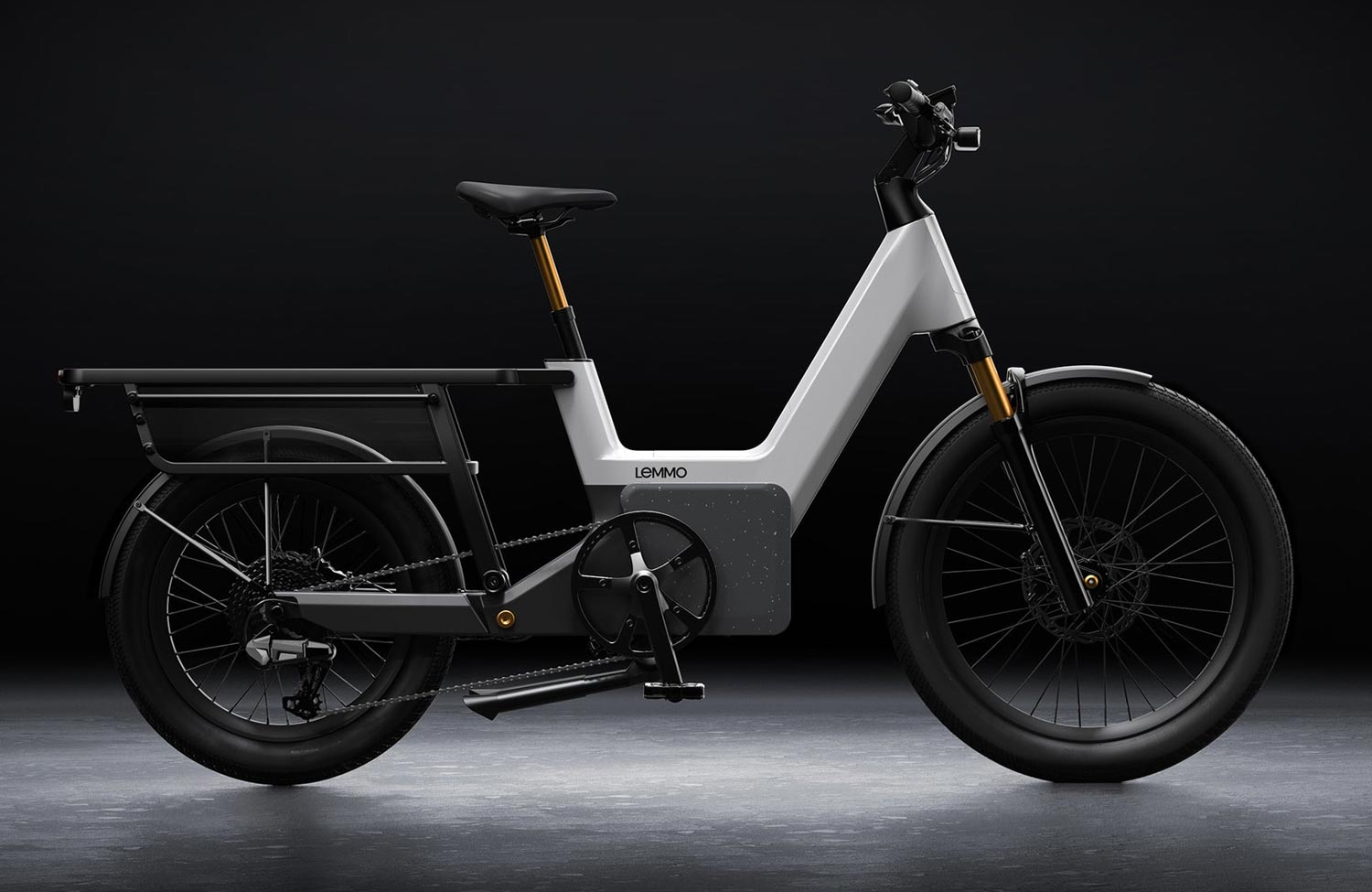
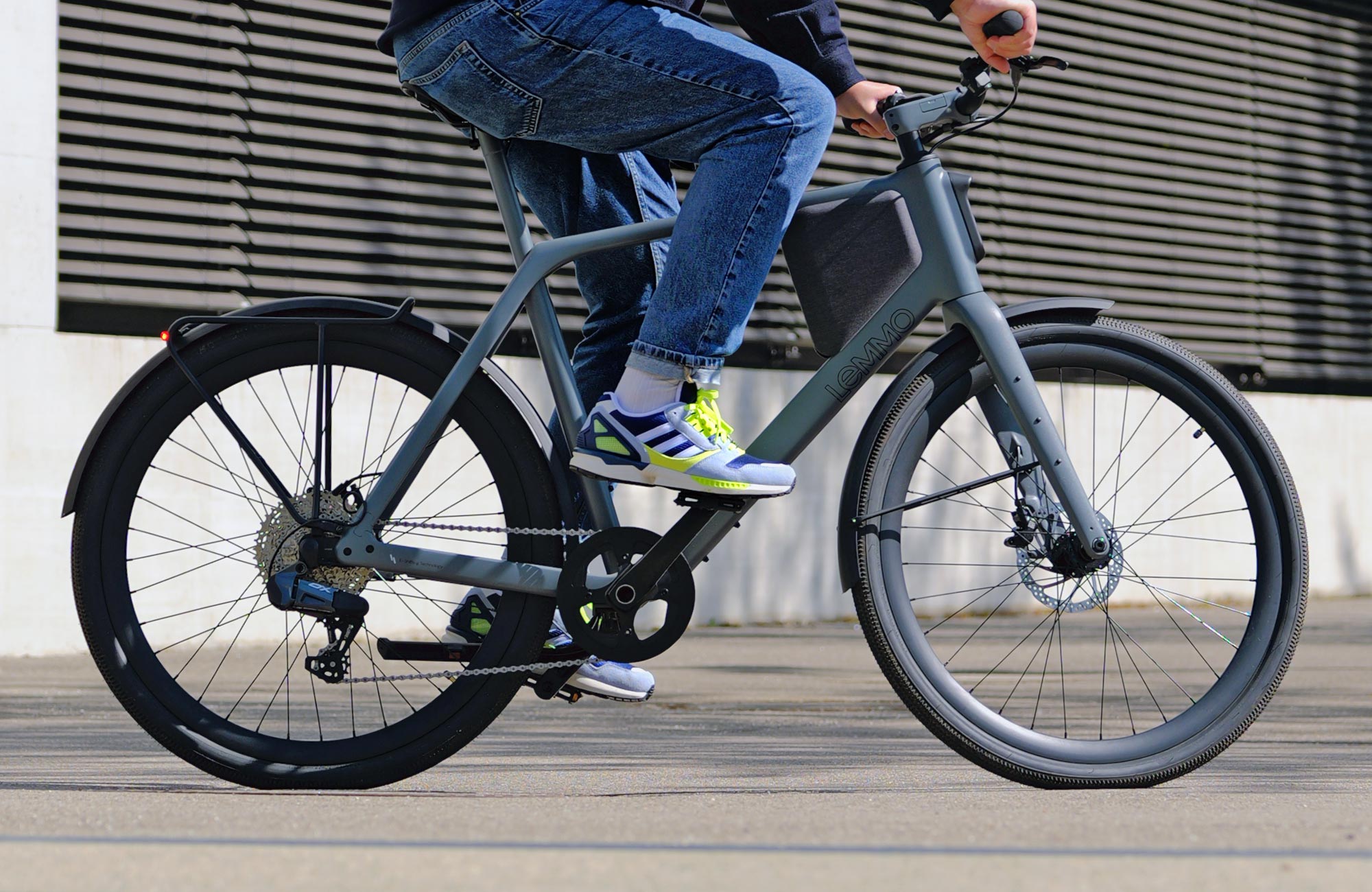
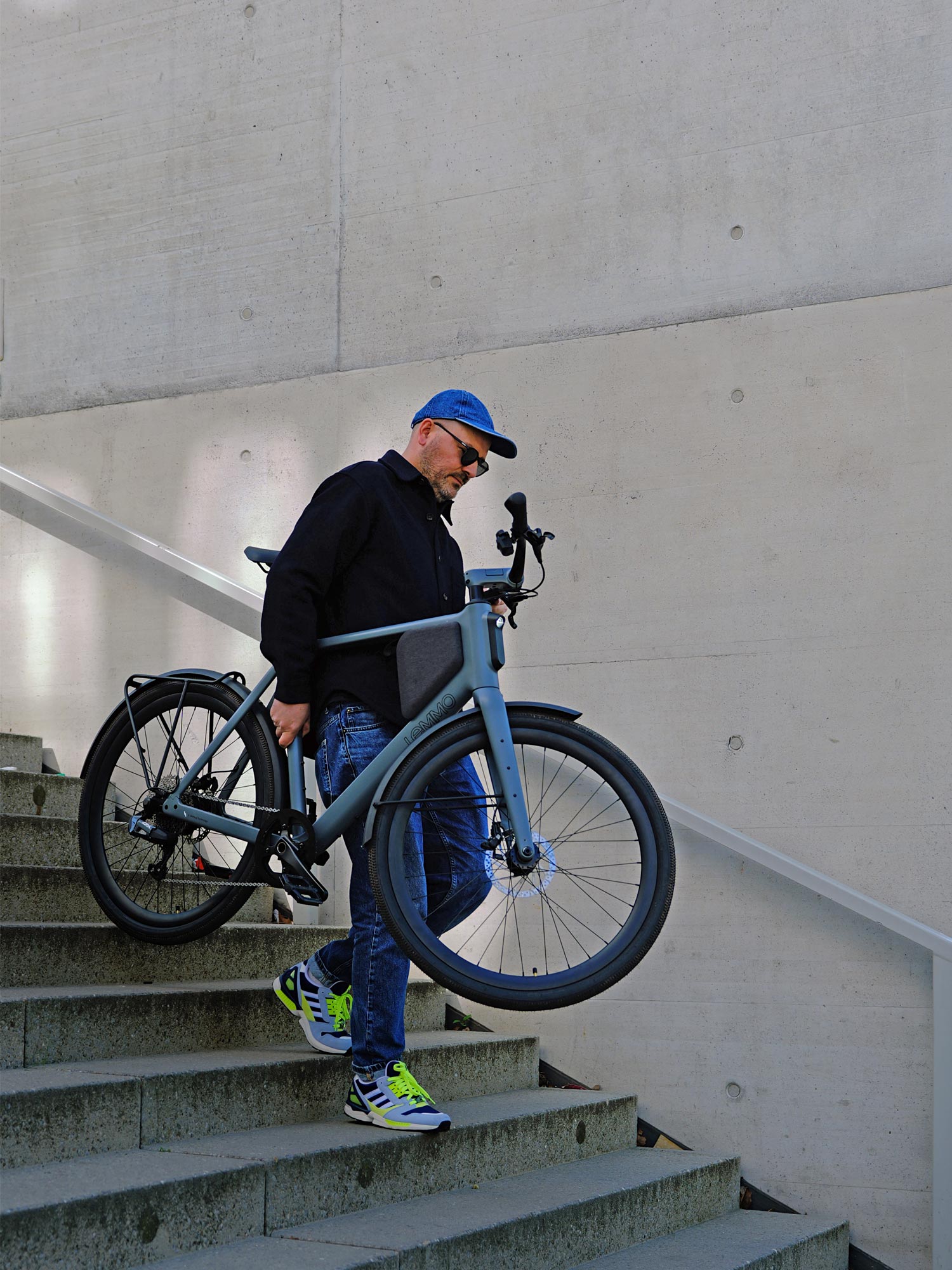
It’s hard to tell from the outside that the Collab.Ride is actually the third version of the Lemmo One. The design has been carried over virtually unchanged — and that’s definitely a good thing. It proves just how harmonious and timeless the bike’s design language is. Sleek lines, a cleanly finished aluminium frame with no visible welds — achieved using an adhesive process from the automotive industry – and an overall very minimalist, modern look characterise its appearance.
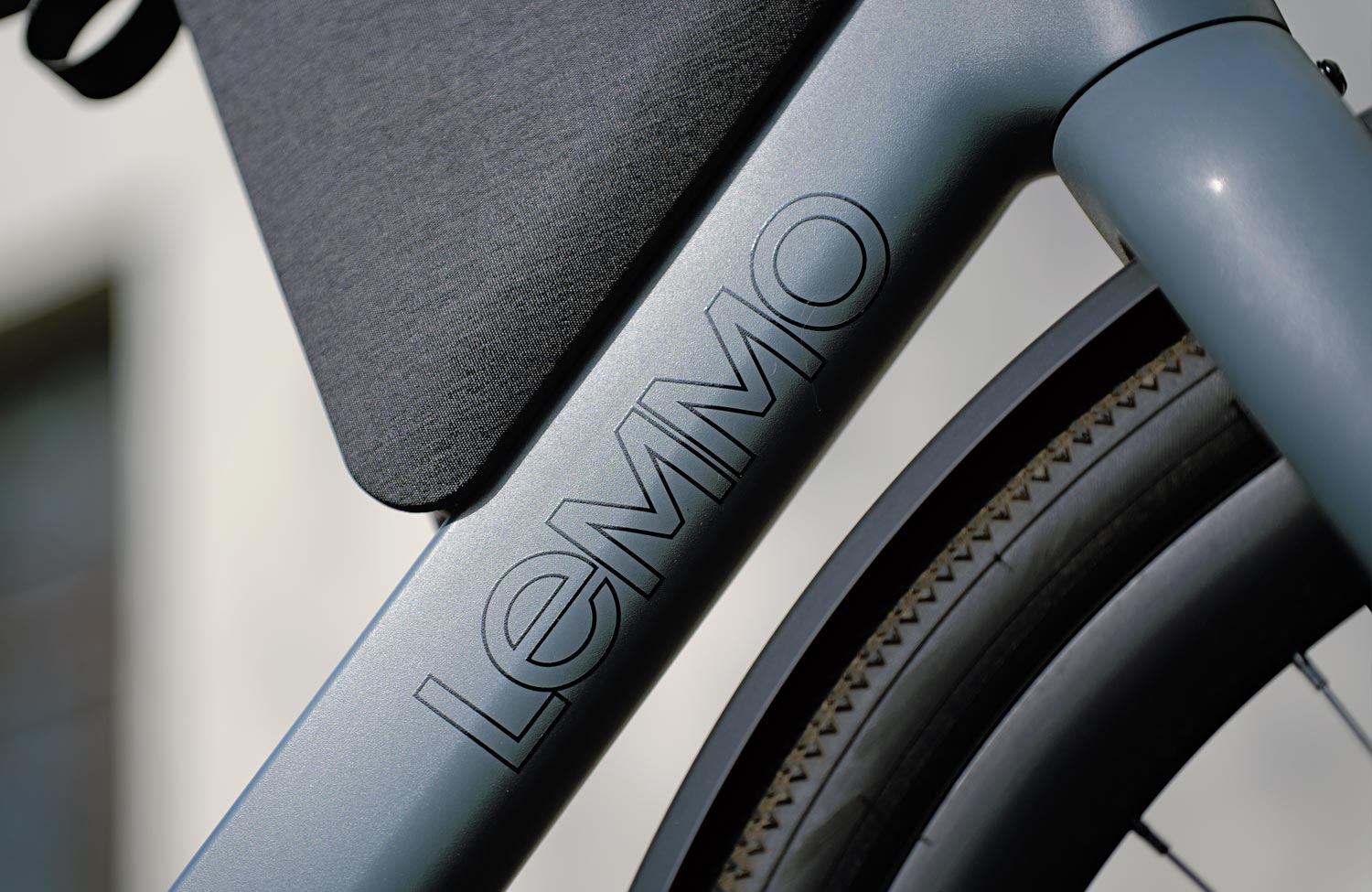
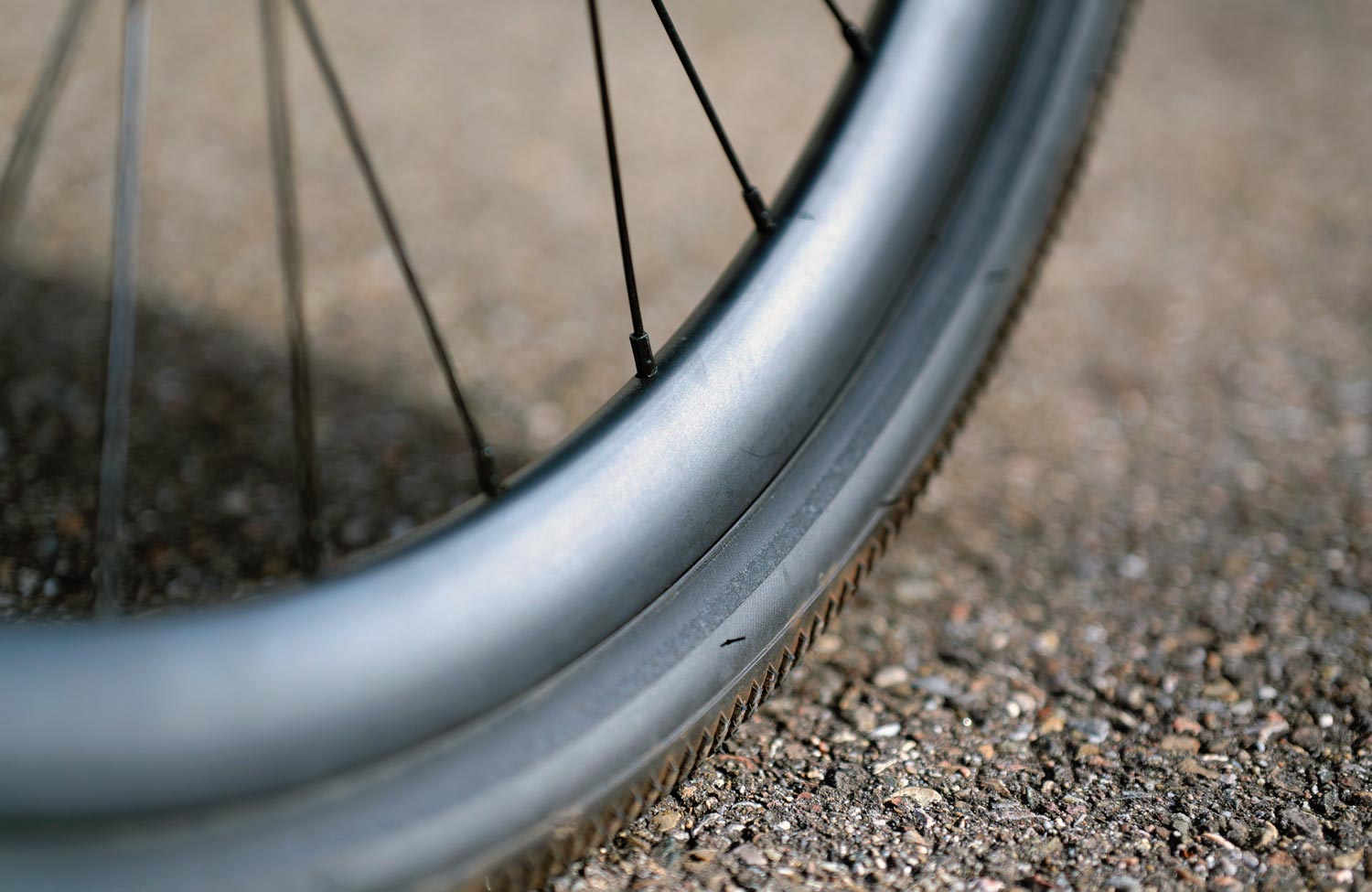
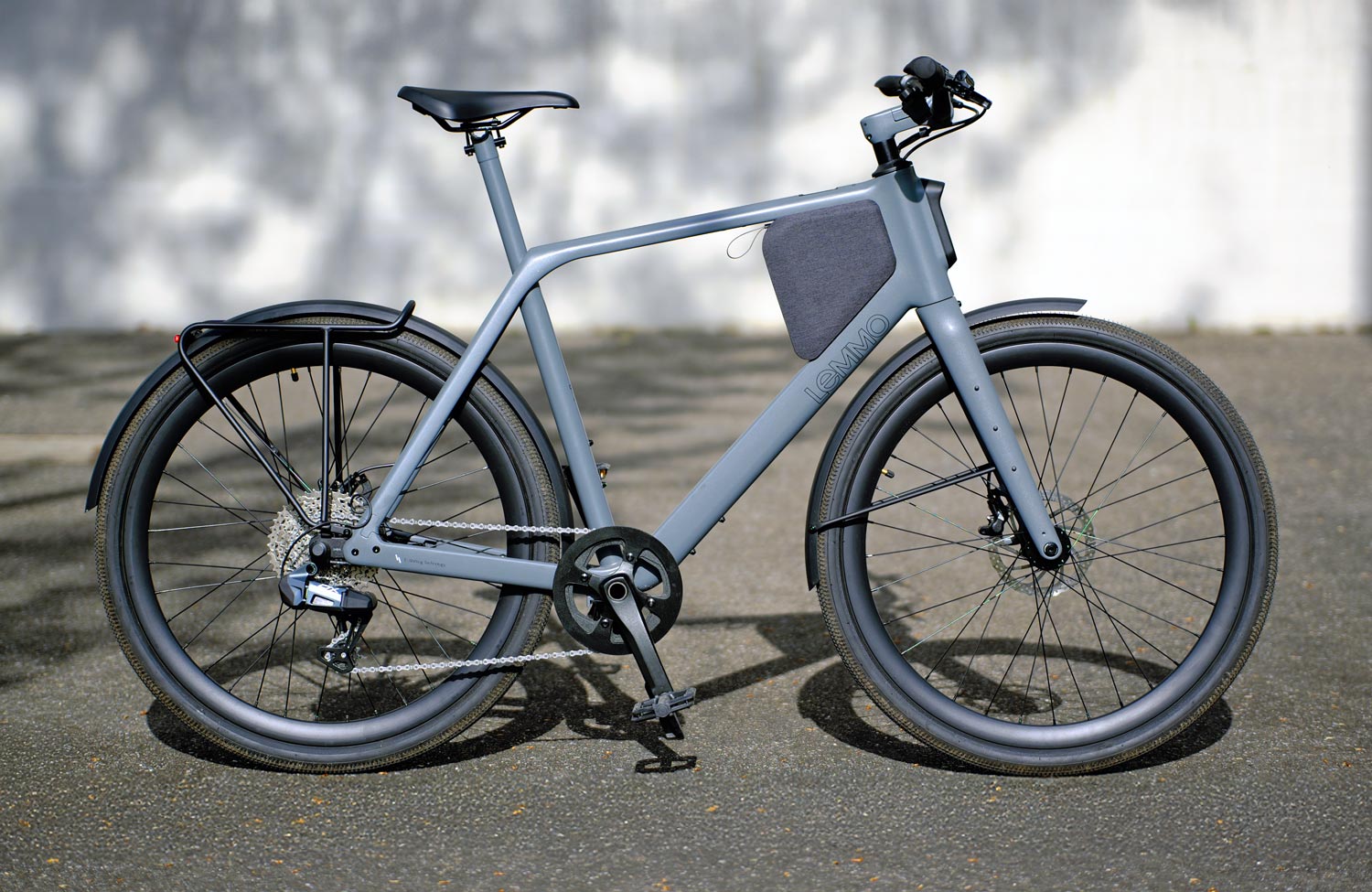
The position of the battery in the front frame triangle remains a genuine unique feature — as does its high-quality finish with fabric covering on the sides. The electric drive, featuring a compact hub motor in the rear wheel, blends discreetly into the background, as do the deliberately minimalist controls. The new gear lever for the electronic gear system, on the other hand, is quite striking. Although it is rather chunky, it manages entirely without any unsightly cables thanks to wireless transmission. Further clever details, such as the integrated smartphone mount in the stem or the black reflective strips on the tyres, ensure a consistently clean overall look — both functional and visually appealing.
Equipment
When it comes to features, the Collab.Ride remains true to its tried-and-tested design, whilst making targeted improvements in key areas. The removable battery — known as the Smartpac — still offers a capacity of 540 Wh and can also be used as a power bank, allowing external devices to be charged at up to 65 watts. An integrated GPS transmitter ensures that the bike’s location can be tracked in the app at any time, whilst Apple’s Find My technology is also integrated into the bike itself for tracking purposes.
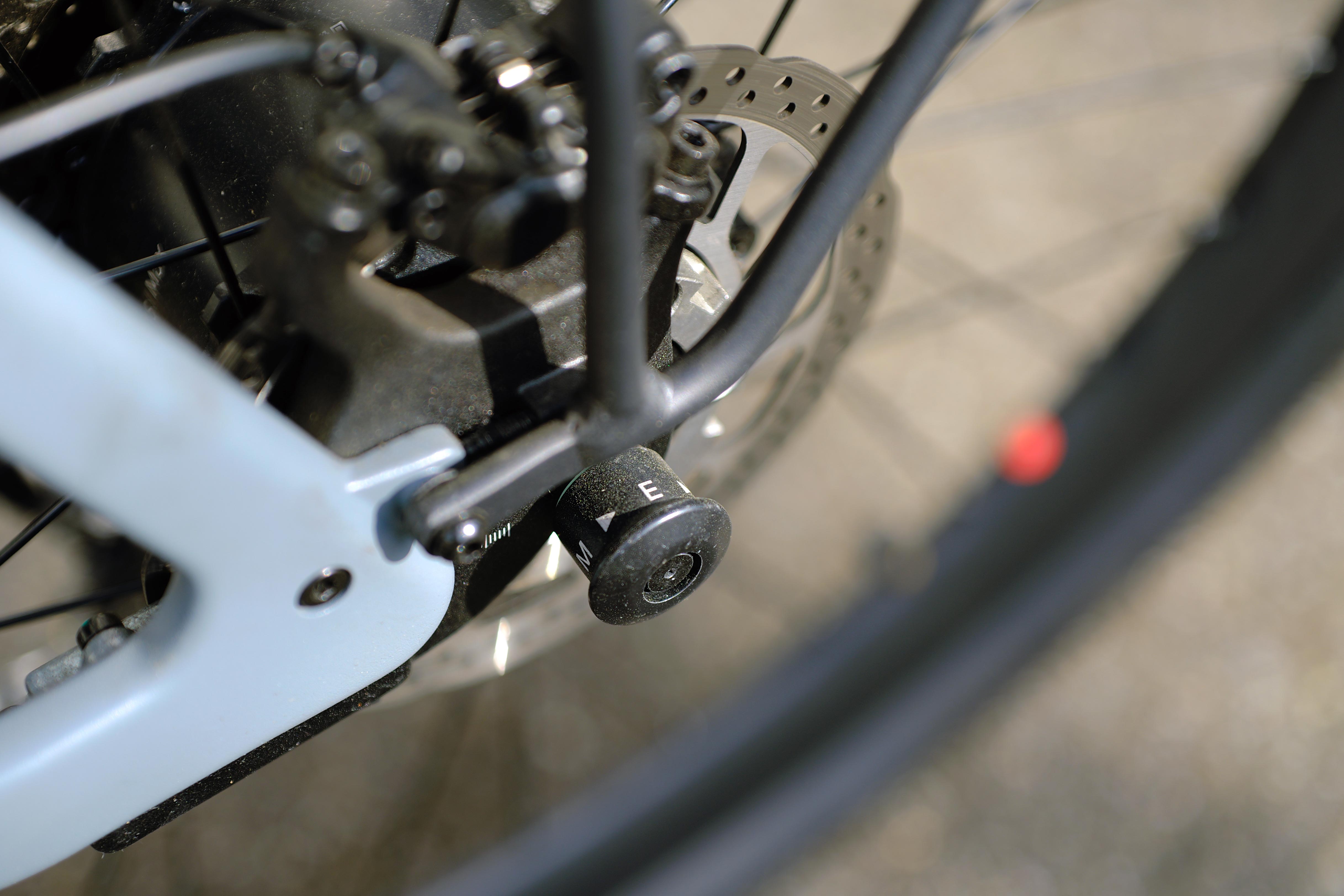
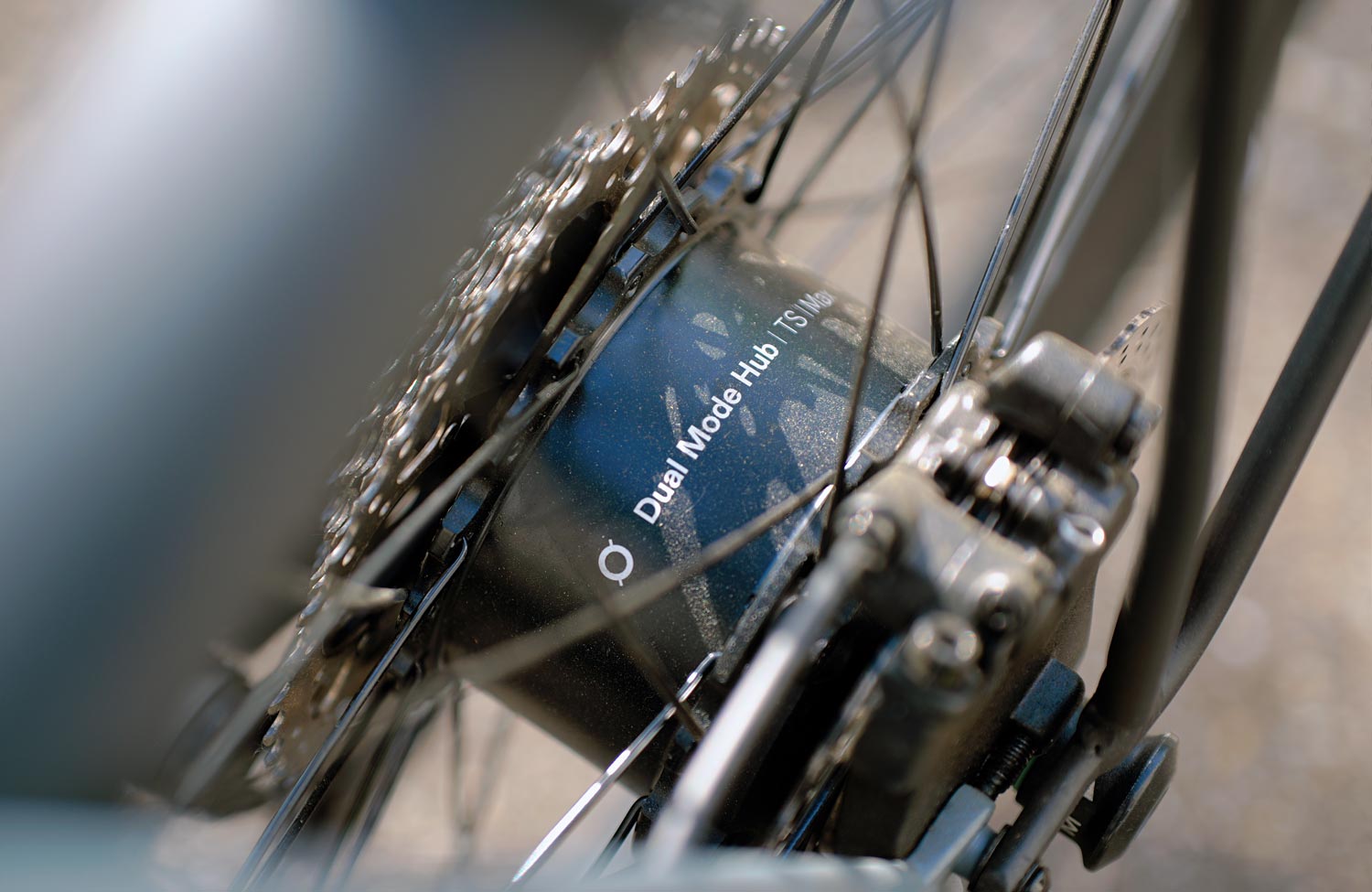
However, when in ride mode, the Smartpac supplies power to the hub motor in the rear wheel — and this is where one of the most significant innovations comes in: with 52 Nm of torque, even the standard model of the Collab.Ride now features a noticeably more powerful motor — a feature previously reserved for the Dynamic Edition variant. This means that all variants now benefit from the extra power, which is particularly noticeable when accelerating and cycling uphill. The familiar Manual Mode remains — this allows the motor to be mechanically disengaged from the freewheel, so that the bike can be ridden like a classic bicycle without any resistance, even without assistance.
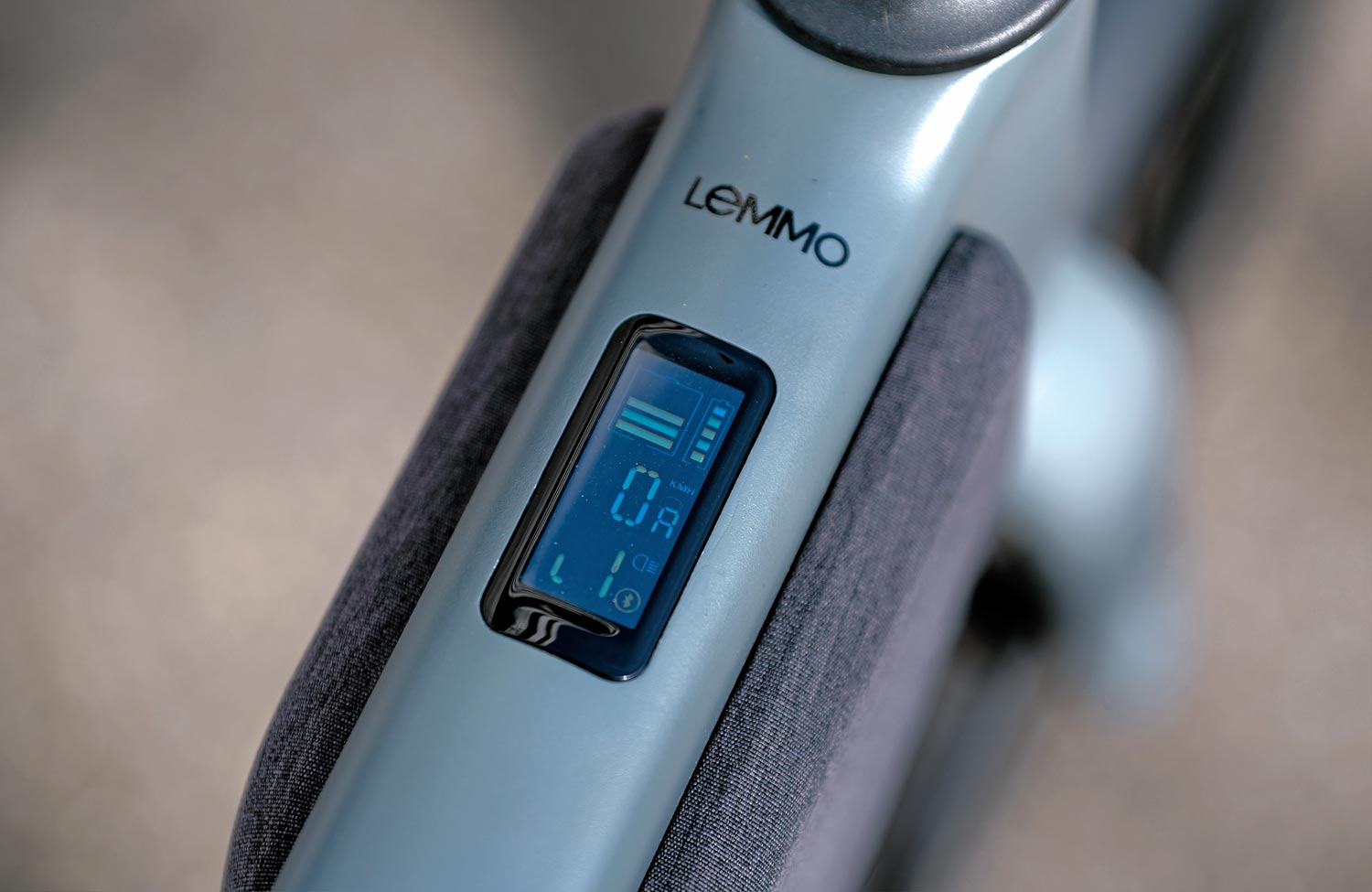
Controlling it is still done via the thumb buttons on the handlebars and a compact display on the top tube. Whilst the motor’s power delivery was already regulated by a torque sensor in the previous model, Lemmo is now also promoting an integrated power meter — although at present this mainly means that the rider’s input is displayed in the app in watts and includes cadence. Further functions have already been announced in this regard, such as a Cardio mode, in which the motor assistance is adjusted to the rider’s desired heart rate.
Fancy even more high-tech? No problem: the bike is equipped with a whole host of electronic features — such as anti-theft protection with a rear wheel lock, an electronic battery safety system and an alarm with an audible signal. Even the bell is electronic, though its synthetic sound means passers-by still hardly recognise it as a bicycle bell.
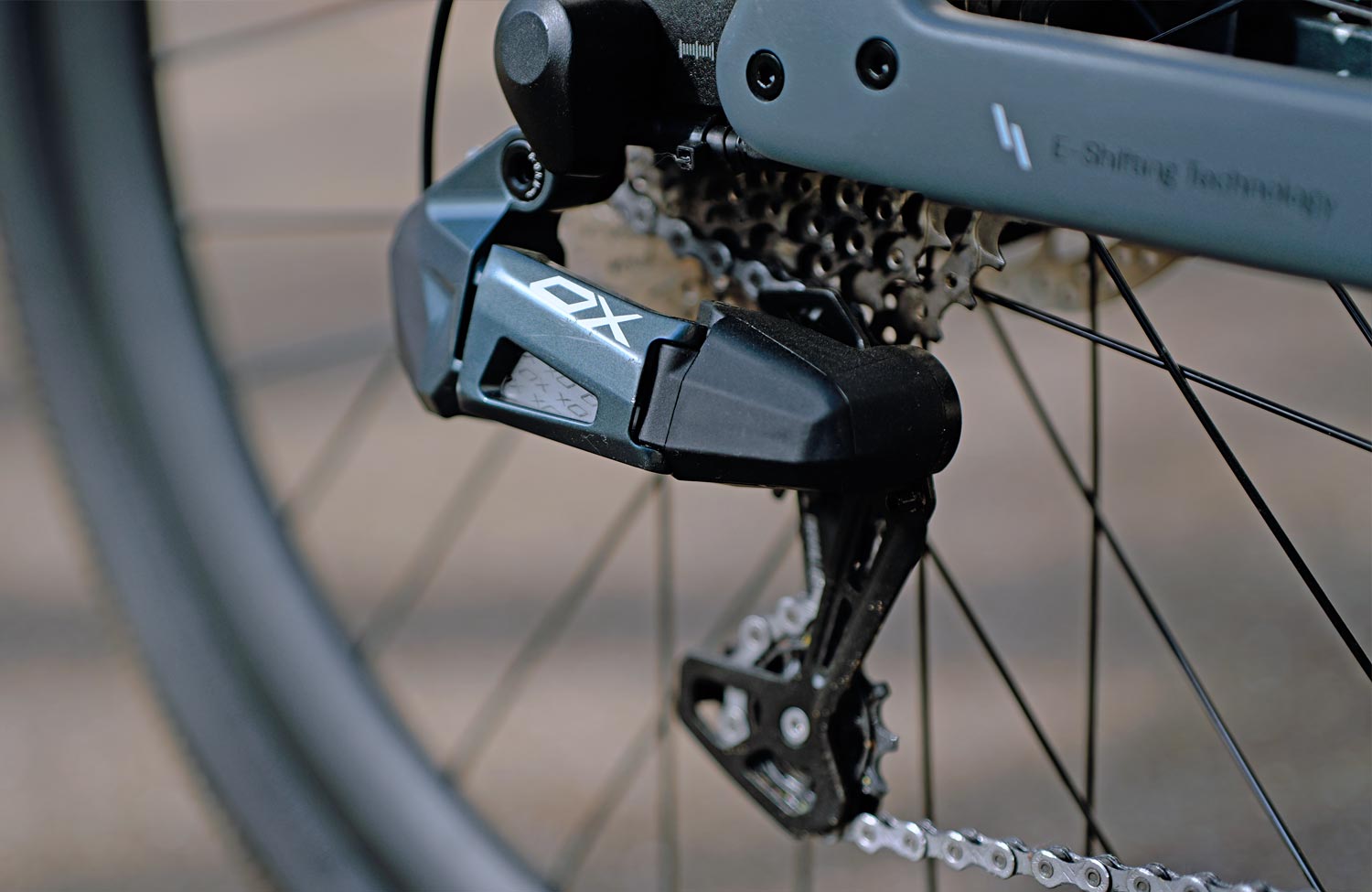
The biggest innovation, however, is probably the 10-speed derailleur from Wheeltop — as this is now also electronically controlled, which is designed to ensure fast and precise gear changes thanks to AI support. Even more interesting, however, is the automatic mode this enables: on request, the system automatically selects the gears itself, basing its decisions on the rider’s personal riding style.
The overall package is rounded off by well-thought-out details such as a front light integrated into the head tube, which can be removed and used as a torch — though overall, it is designed more to make the rider visible than to illuminate the road. Added to this is a rear light with a brake light function on the pannier rack, as well as the discreet smartphone mount on the stem. Weighing 16.7 kilograms without the battery (measured in size L), the bike remains pleasantly light, whilst the Smartpac itself adds a further three kilograms.
Operation
Given the wide range of features, one might expect the bike to be complicated to use – yet in everyday use, the system remains surprisingly user-friendly, although it is worth familiarising yourself with its quirks beforehand. The bike is powered on and off using the buttons on the handlebars, which can also be used to switch between assistance modes and activate the bell. In addition, the Boost mode can be activated for quick starts at traffic lights, unlocking the full motor power at the touch of a button.
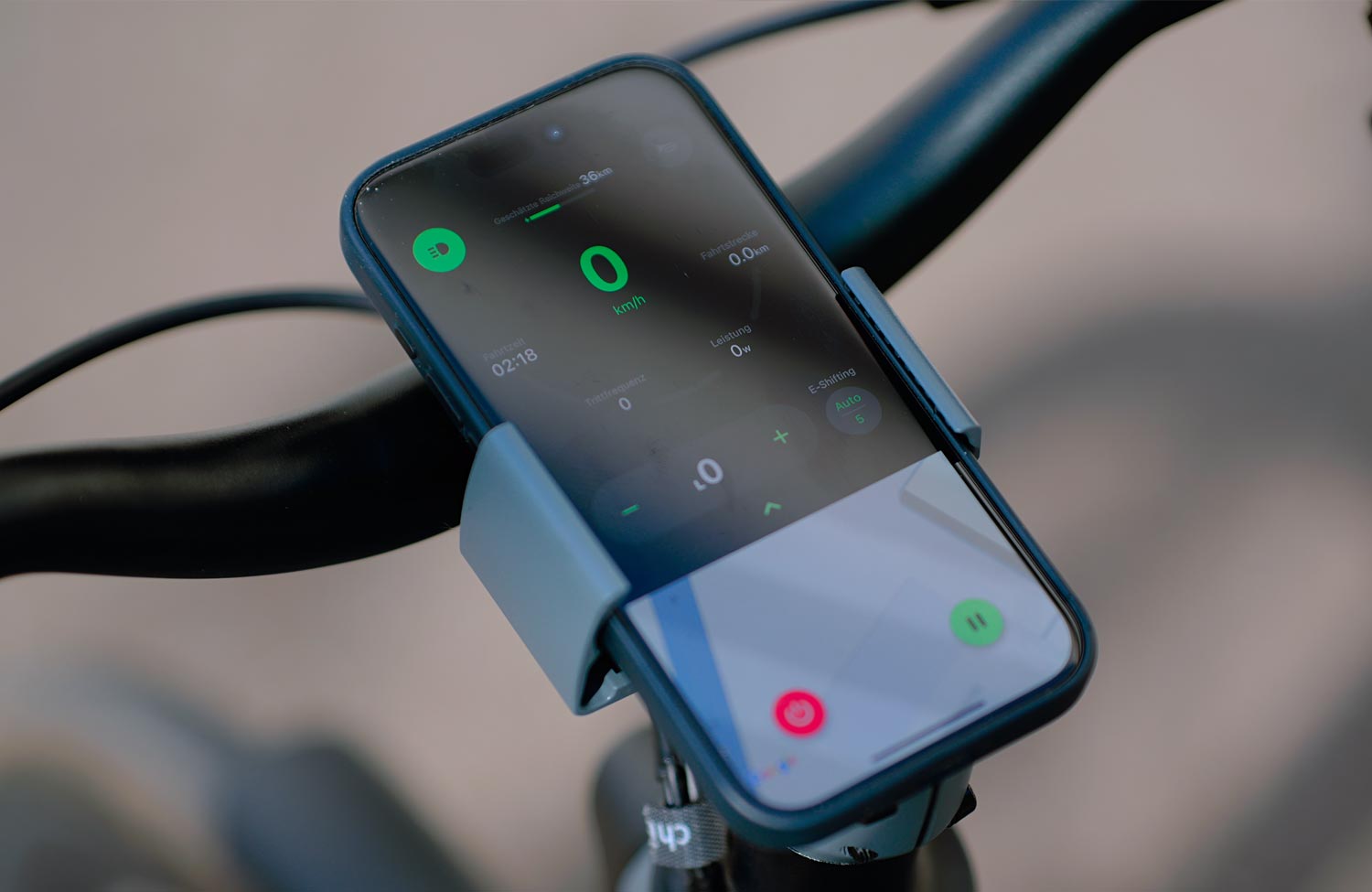

However, for more advanced settings, the app quickly comes into play: it allows you to adjust basic settings for the anti-theft system, battery protection, lights and alarm system. The automatic locking function is particularly handy — it can be either time-controlled or linked to your smartphone, which acts as a digital key. If you move away from the bike, it locks automatically; when you approach it again, it unlocks.
The new power meter data is displayed on the app dashboard, where you can also record your rides — though a navigation function is still missing. The operation of the electronic shifting system can also be customised via the app: either in manual mode or automatic mode, depending on your personal preference. In manual mode, gear changes are made in the traditional way using the thumb shifters, whilst in automatic mode the system selects the gears — though you can intervene at any time if necessary.
You can put the battery in place using a guide rail, along which the Smartpac slides precisely into the bike and clicks firmly into position. To remove it, simply press the button on the battery itself and slide it out in the opposite direction. Charging is also done via the Smartpac — either separately or whilst it’s in the bike. During testing, as with the previous generations, we noticed the rather high standby power consumption. Due to the integrated GPS transmitter, the battery loses a noticeable amount of capacity even when idle, which is why regular recharging is necessary.
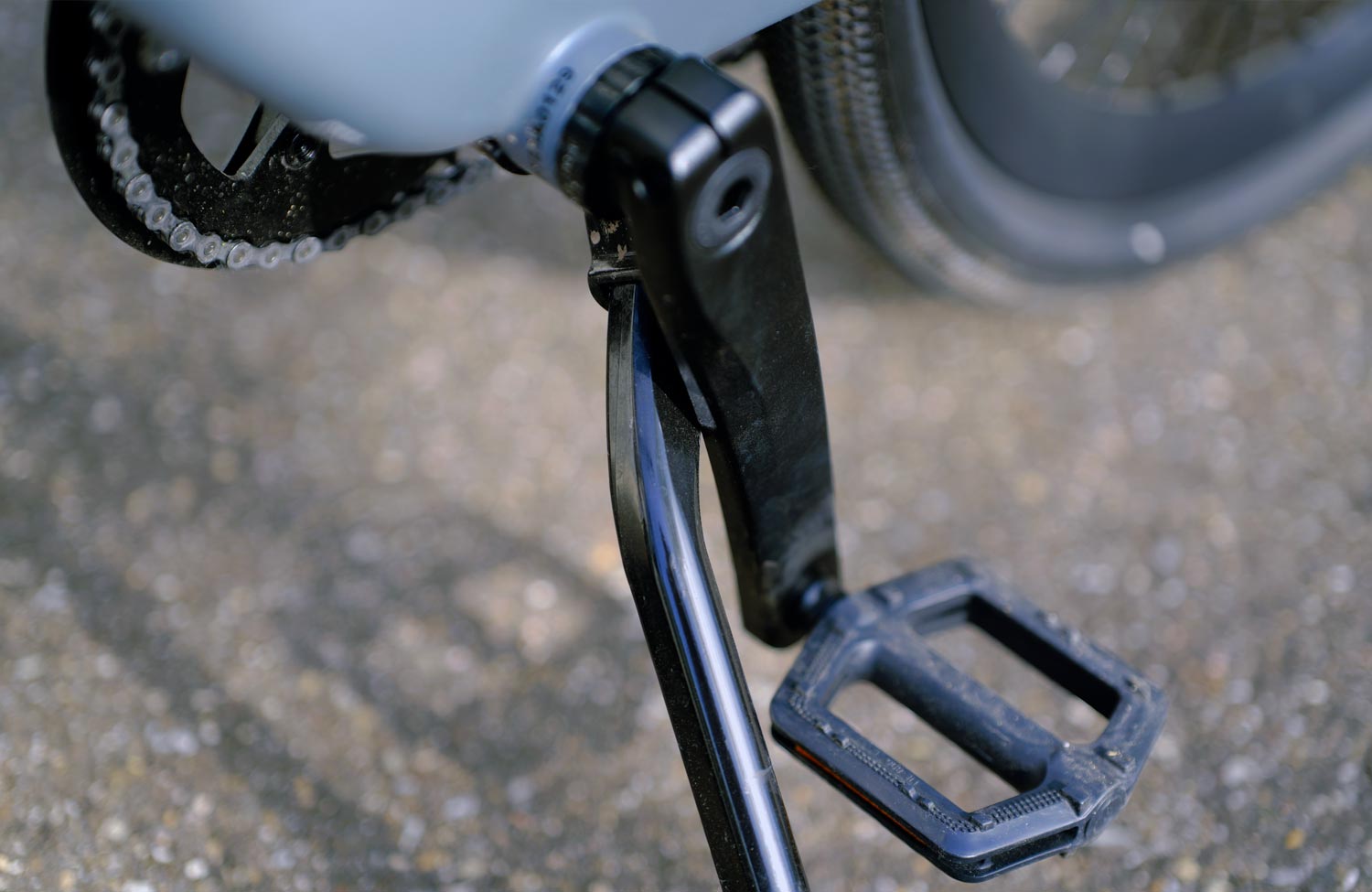
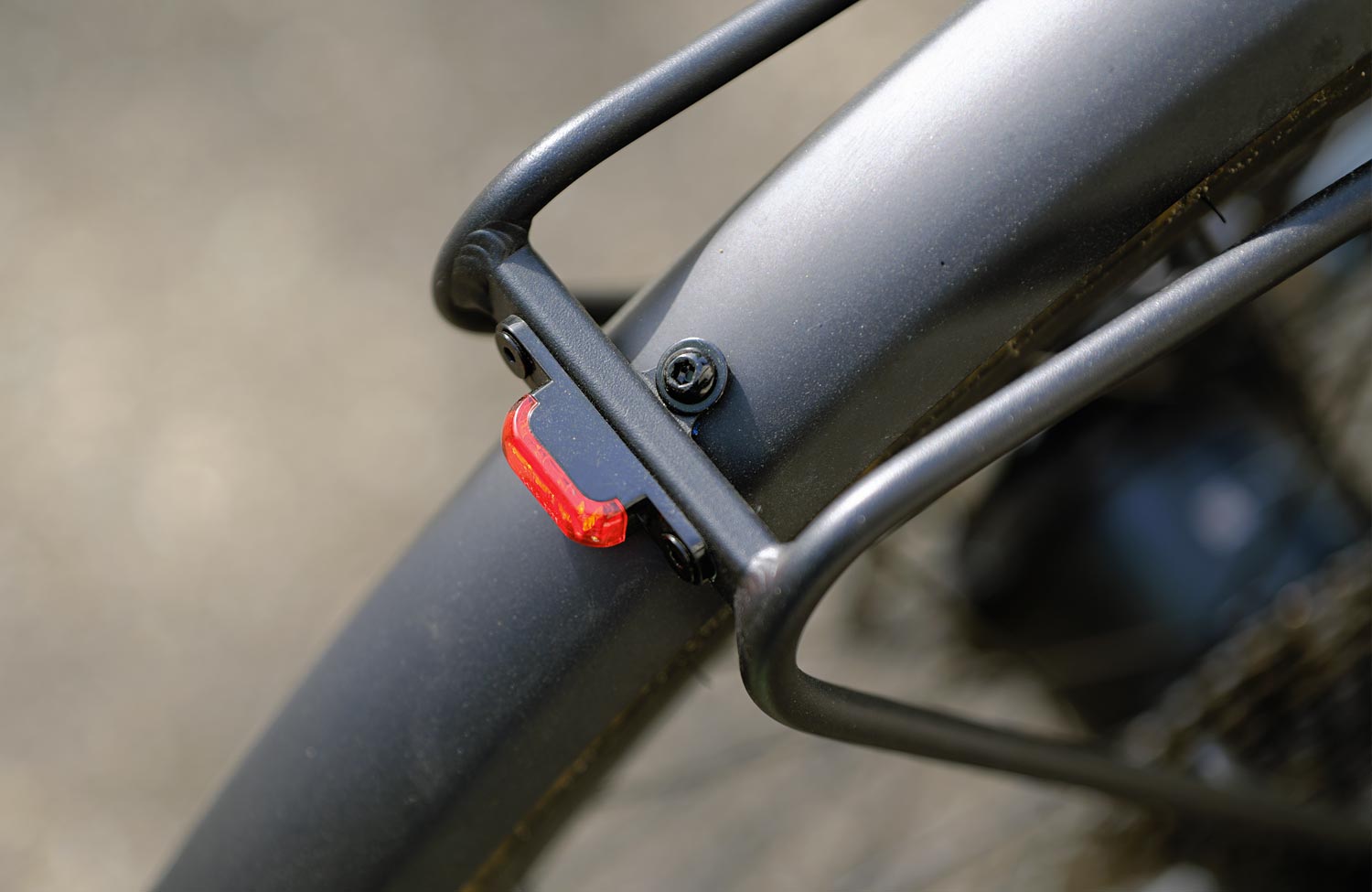
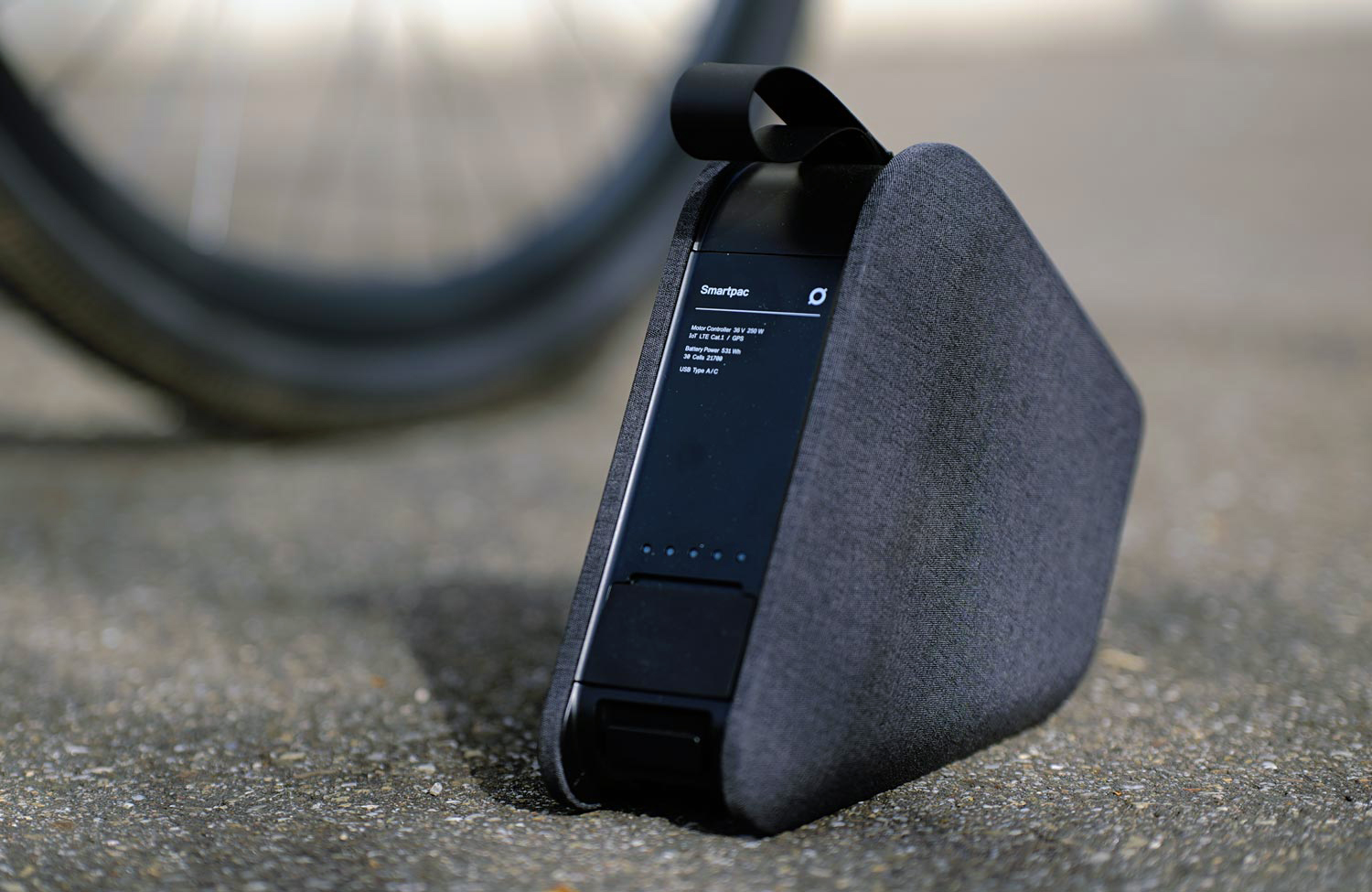
The universal smartphone mount on the stem is best operated with both hands – once in place, the device sits very securely and stably in it. One minor criticism is the position of the stand on the bottom bracket, as it occasionally comes into contact with the pedals when manoeuvring.
Ride impressions
When riding, it quickly becomes clear that the technical innovations aren’t just on paper. The higher torque delivers powerful acceleration without feeling unnatural — the assistance kicks in smoothly and, thanks to the torque sensor, adapts well to your own pedalling effort. The assistance limit of 25 km/h is reached gently; beyond that, you can easily increase your speed further under your own power. But it is particularly on inclines that the motor proves its power, mastering even the most challenging sections with ease!
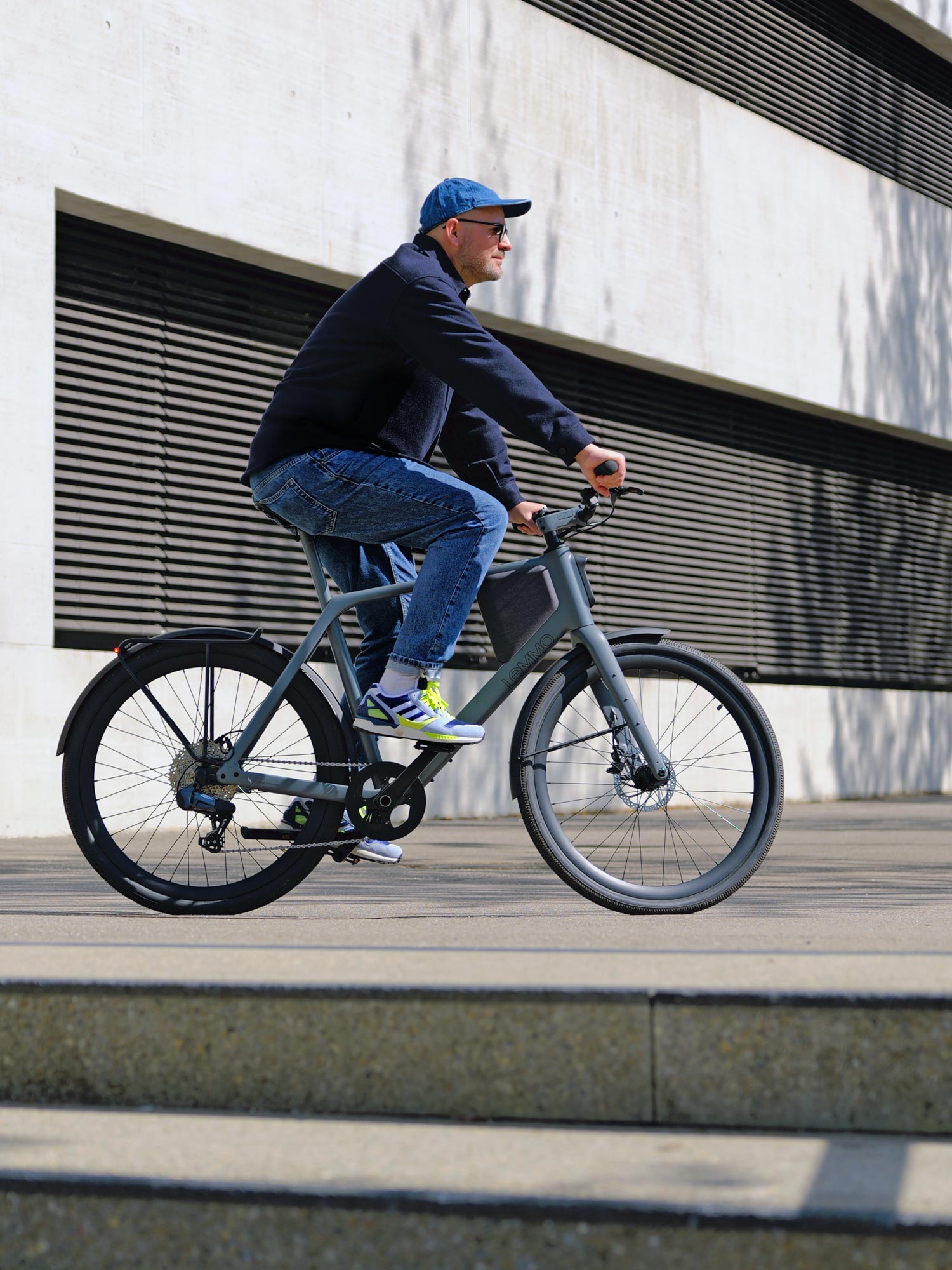
However, the main focus of the Collab.Ride is the electronic shifting: in manual mode, it operates quickly, precisely and almost silently. Only under heavy load do some gear changes feel slightly jerky. Its greatest strength, however, lies in automatic mode — here, the system takes over gear selection and adapts surprisingly well to your personal riding style. The timing of the gear changes feels intuitive and usually occurs just when you would change gear yourself. Although a slight delay is noticeable, it is hardly significant in everyday use and when riding at a relaxed pace. The system also recognises when you are coming to a stop and automatically shifts down to a lower gear in advance.
On flat terrain, the system performed so well overall that there was almost no need to intervene manually. On steep inclines, however, it became apparent that the automatic system tends to be rather cautious — it rarely shifted down to lower gears on its own. In these situations, it was necessary to shift manually using the control button on the handlebars to select a suitable gear. Future software updates are likely to improve this behaviour somewhat. Overall, however, it is already clear that the automatic system offers a definite gain in comfort.
The Lemmo One’s relatively upright riding position ensures a relaxed riding experience, whilst the brakes provide reliable deceleration even at higher speeds — which is quite relevant given that speeds frequently exceed 30 km/h. Thanks to the high-quality build overall and solid components such as the aluminium mudguards, the bike remains pleasantly quiet on the road — not only is the motor barely audible, but there are no rattling noises from the bike itself whilst riding.
Conclusion
Innovative and fascinating — with the Collab.Ride, Lemmo takes the One to a whole new level. The focus is clearly on the automatic mode of the electronic shifting system with AI support, which is the real highlight. It combines the best of both worlds: in everyday use, it offers noticeably greater convenience, as you hardly need to worry about selecting the right gear — and those who prefer a sportier ride can simply take control themselves at any time using the thumb button.
That said, the Lemmo remains the high-tech bike we already know — with comprehensive app integration and a bunch of smart features. It therefore continues to appeal particularly to tech-savvy users who value this connectivity and are eagerly awaiting the upcoming feature updates.
At 2,790 euros, the price seems quite fair given the bike’s extensive features, especially as it is currently available for a further 200 euros off as part of a launch offer. However, those who can do without the automatic shifting will find its biggest competitor within the brand’s own range — as the previous model, the Lemmo One MK2, is now available for just 1,990 euros.