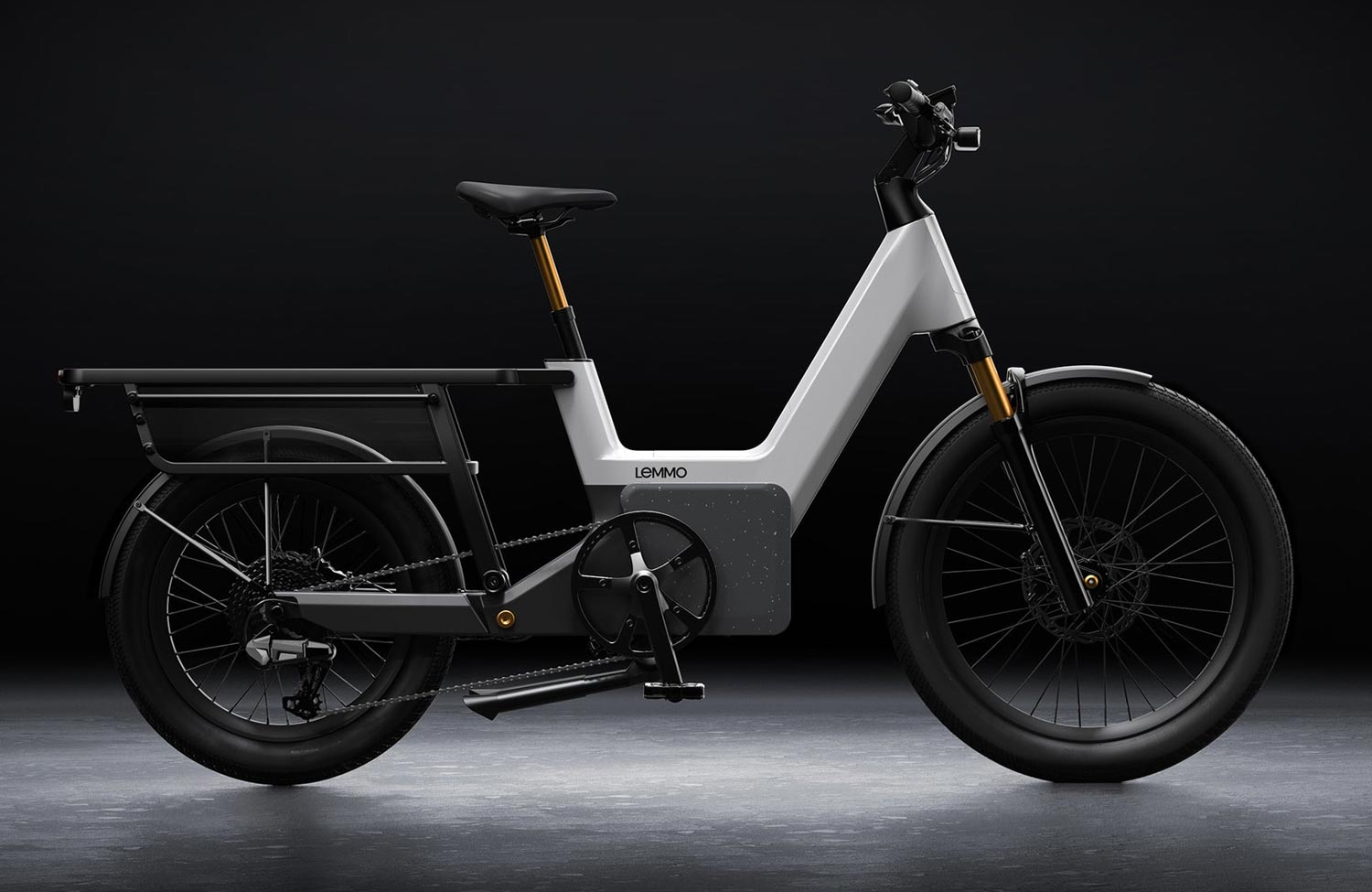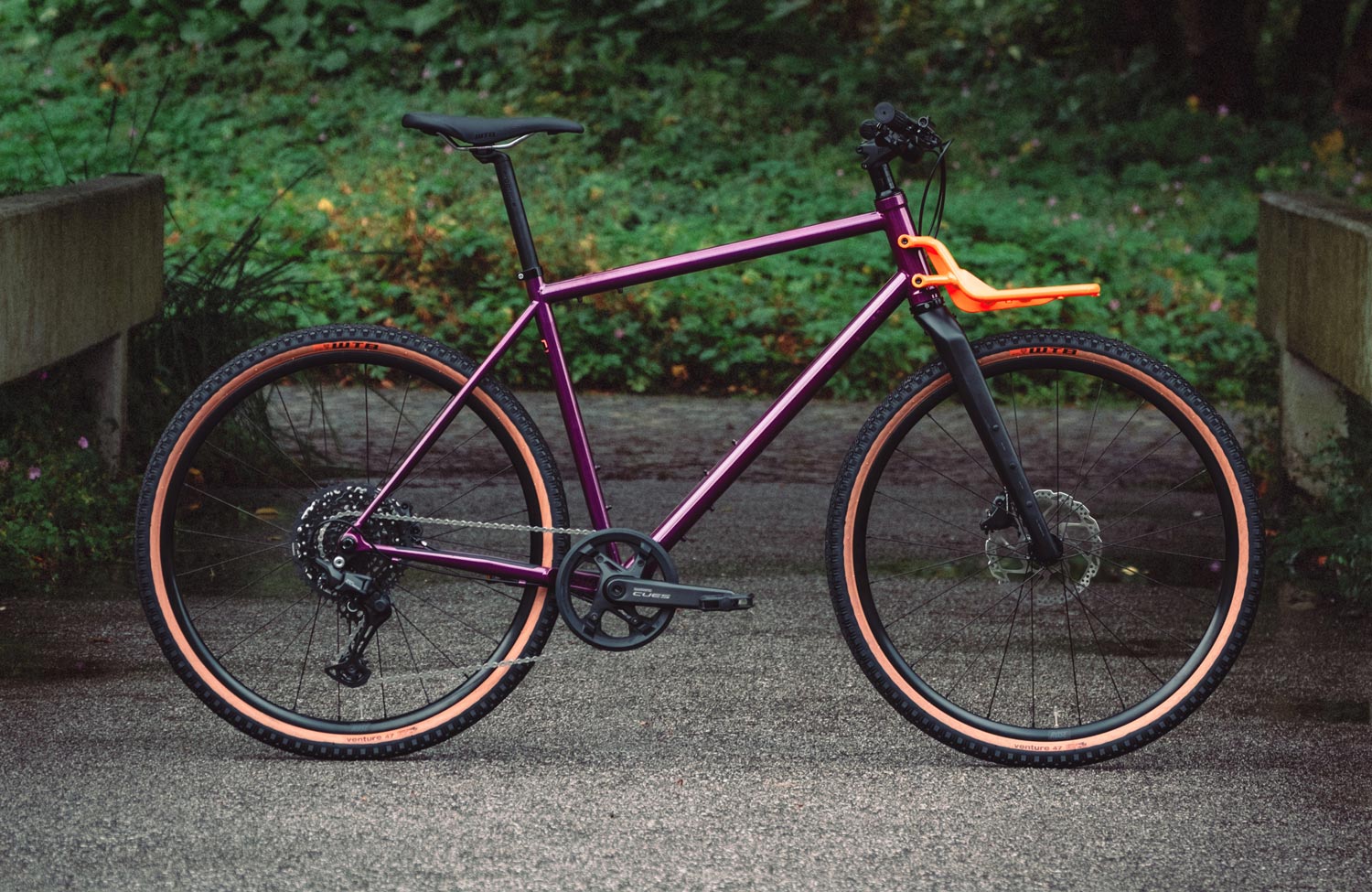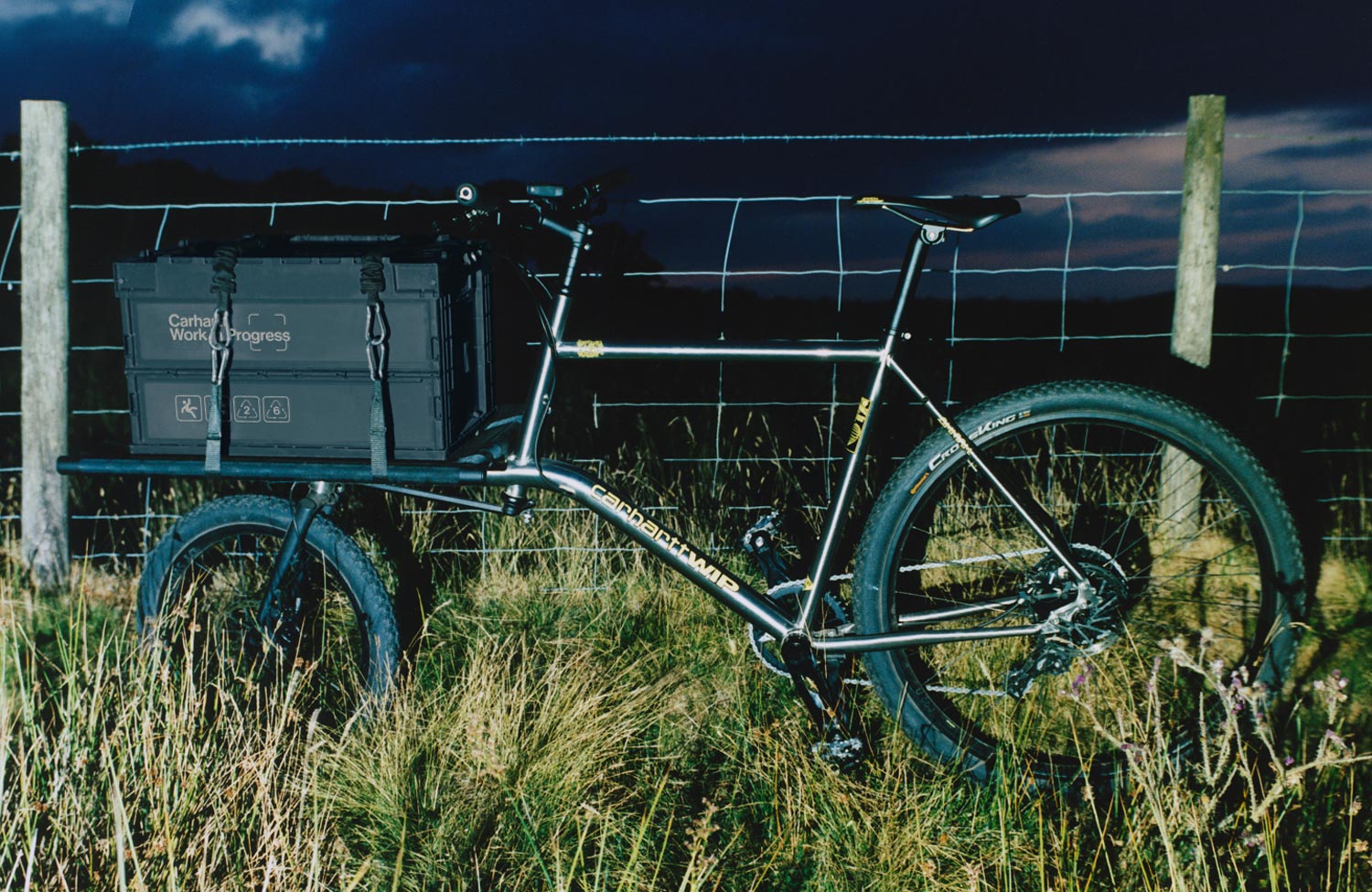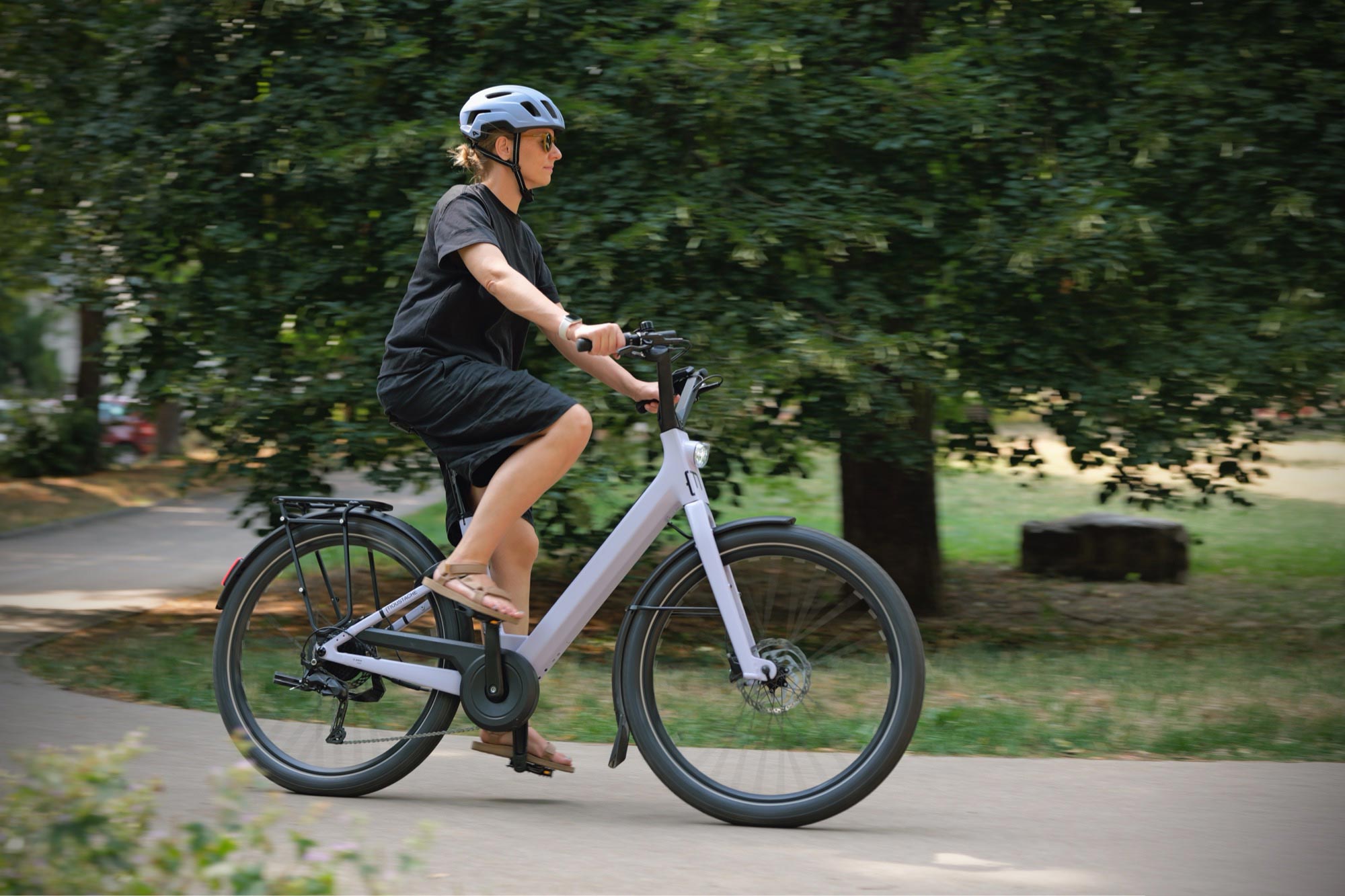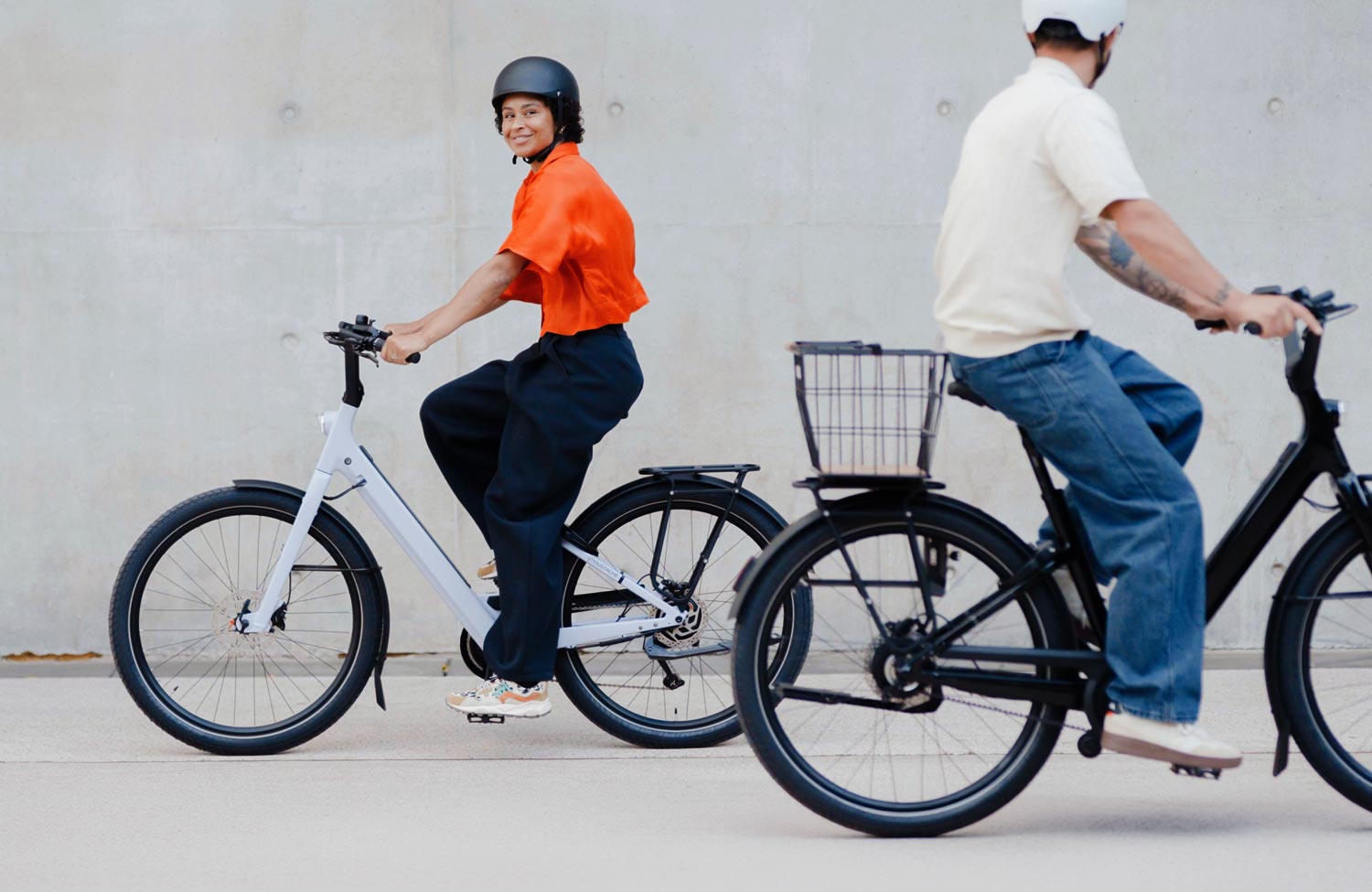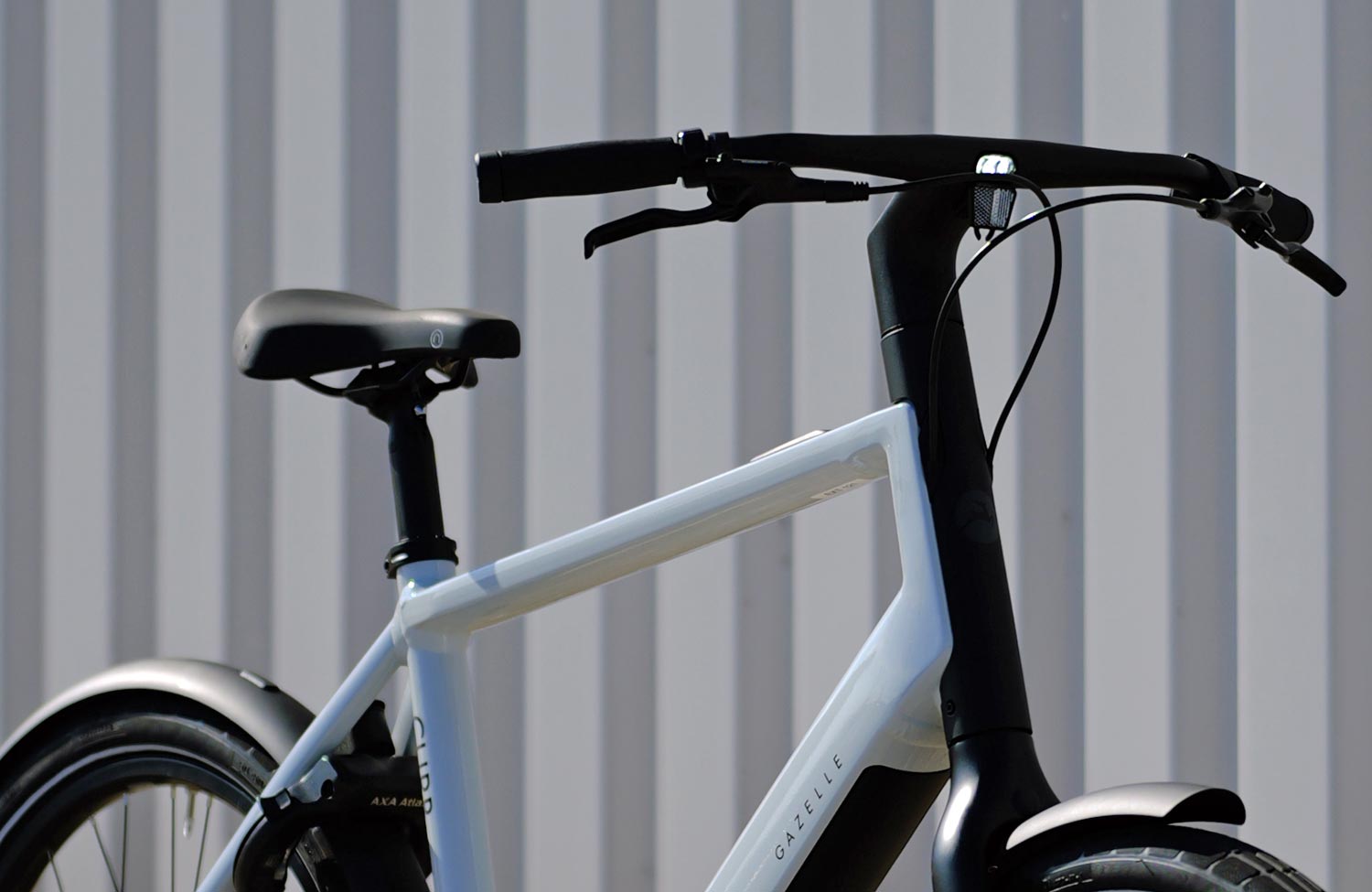
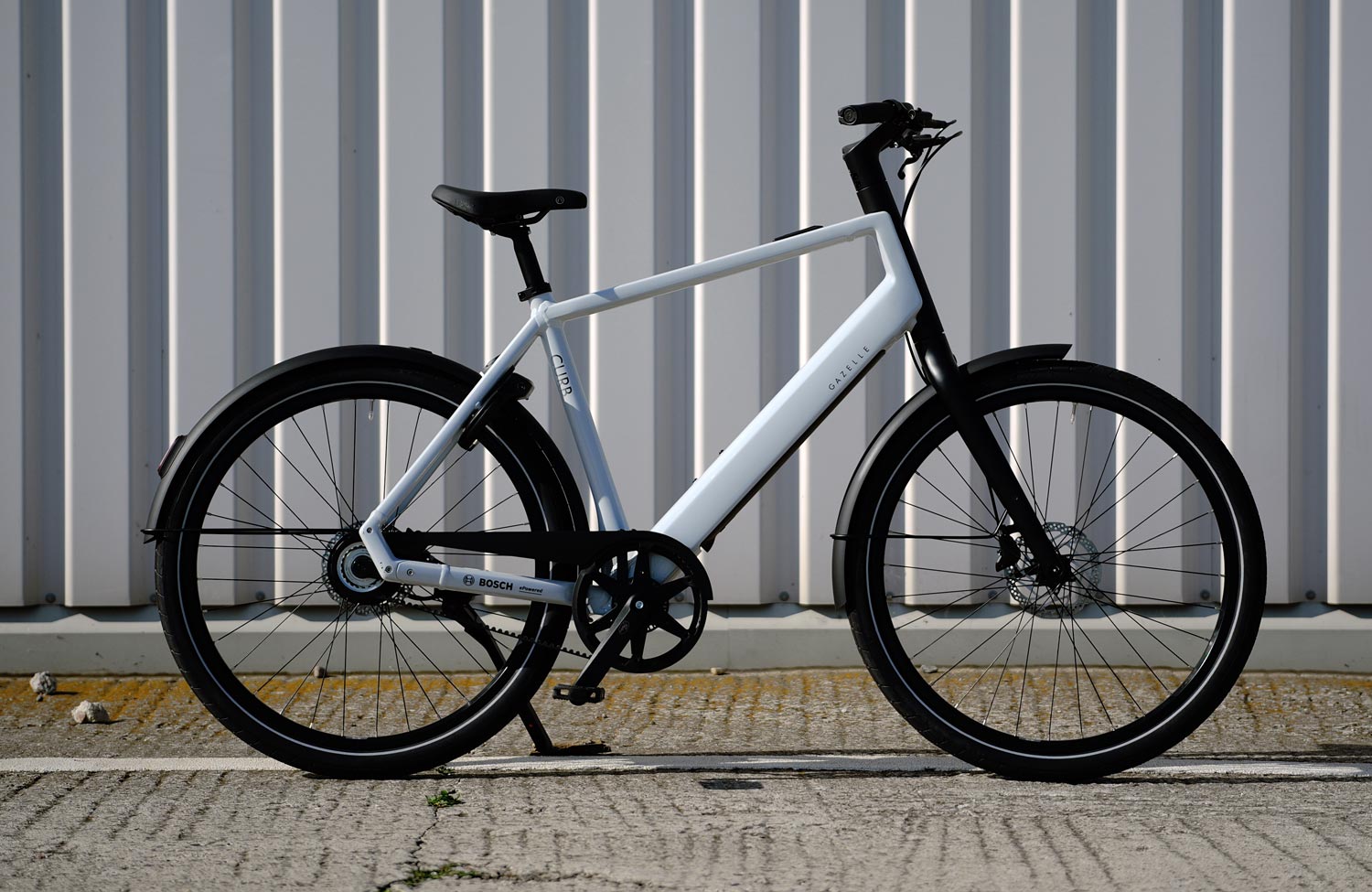
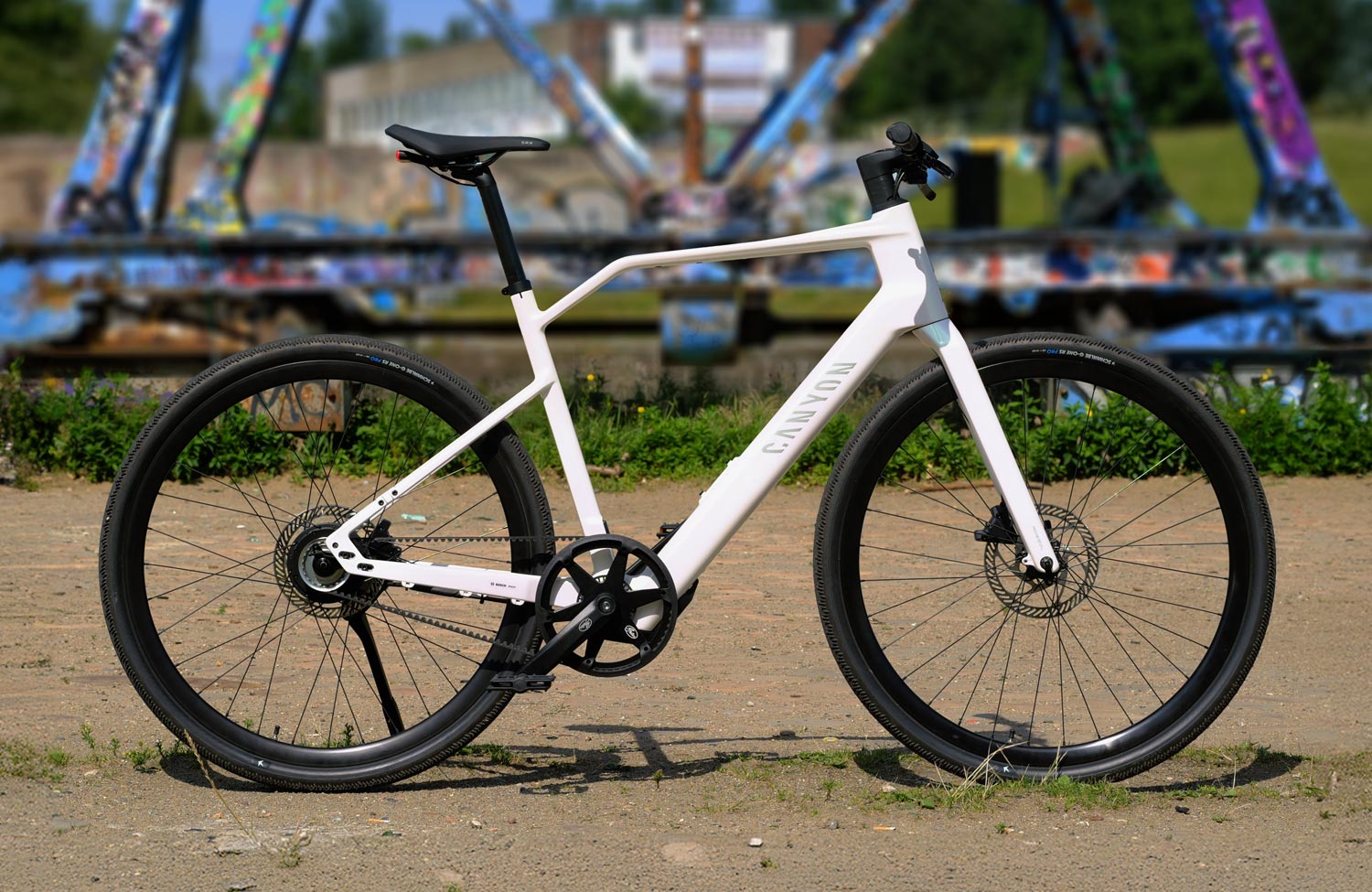
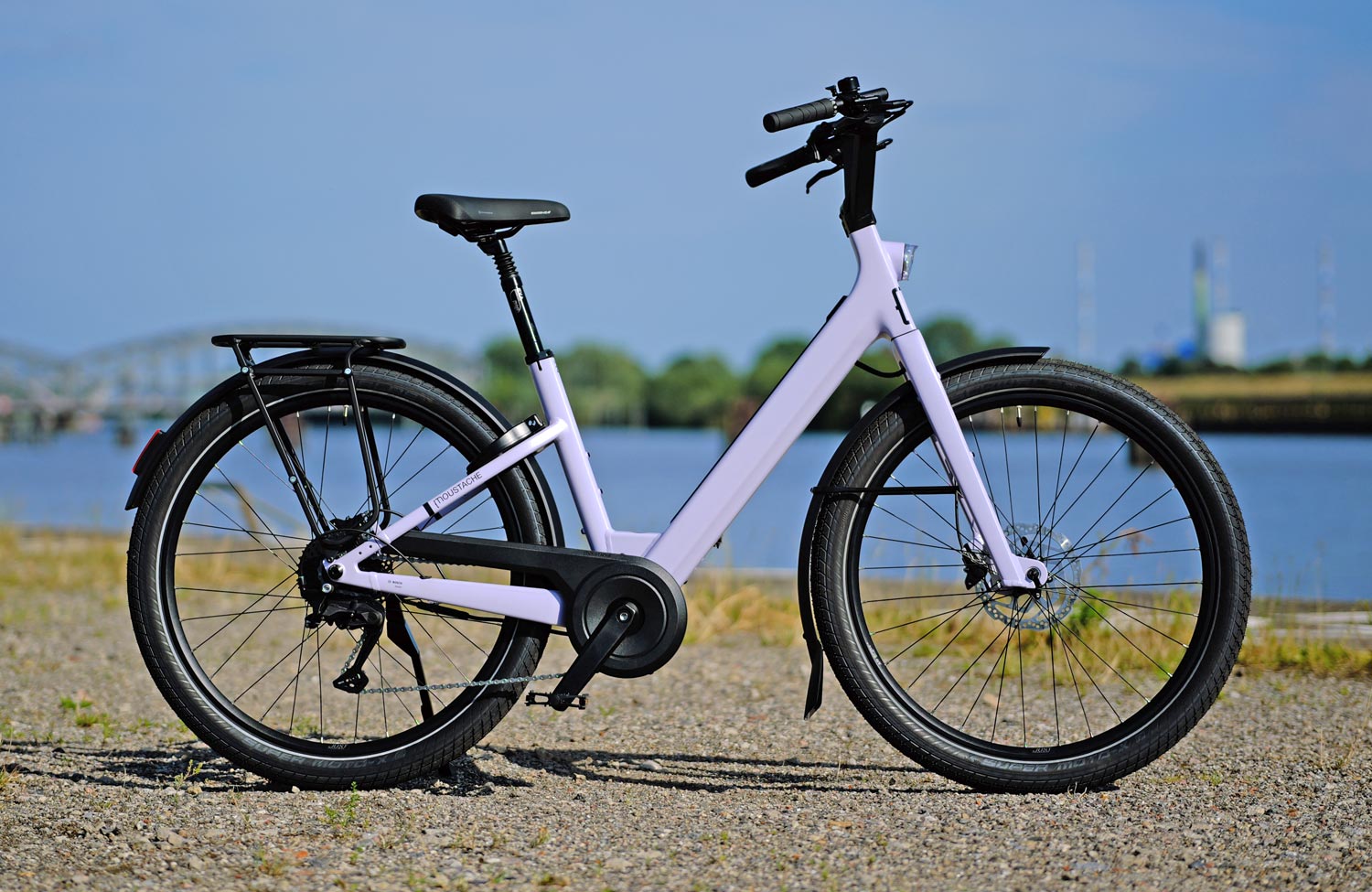
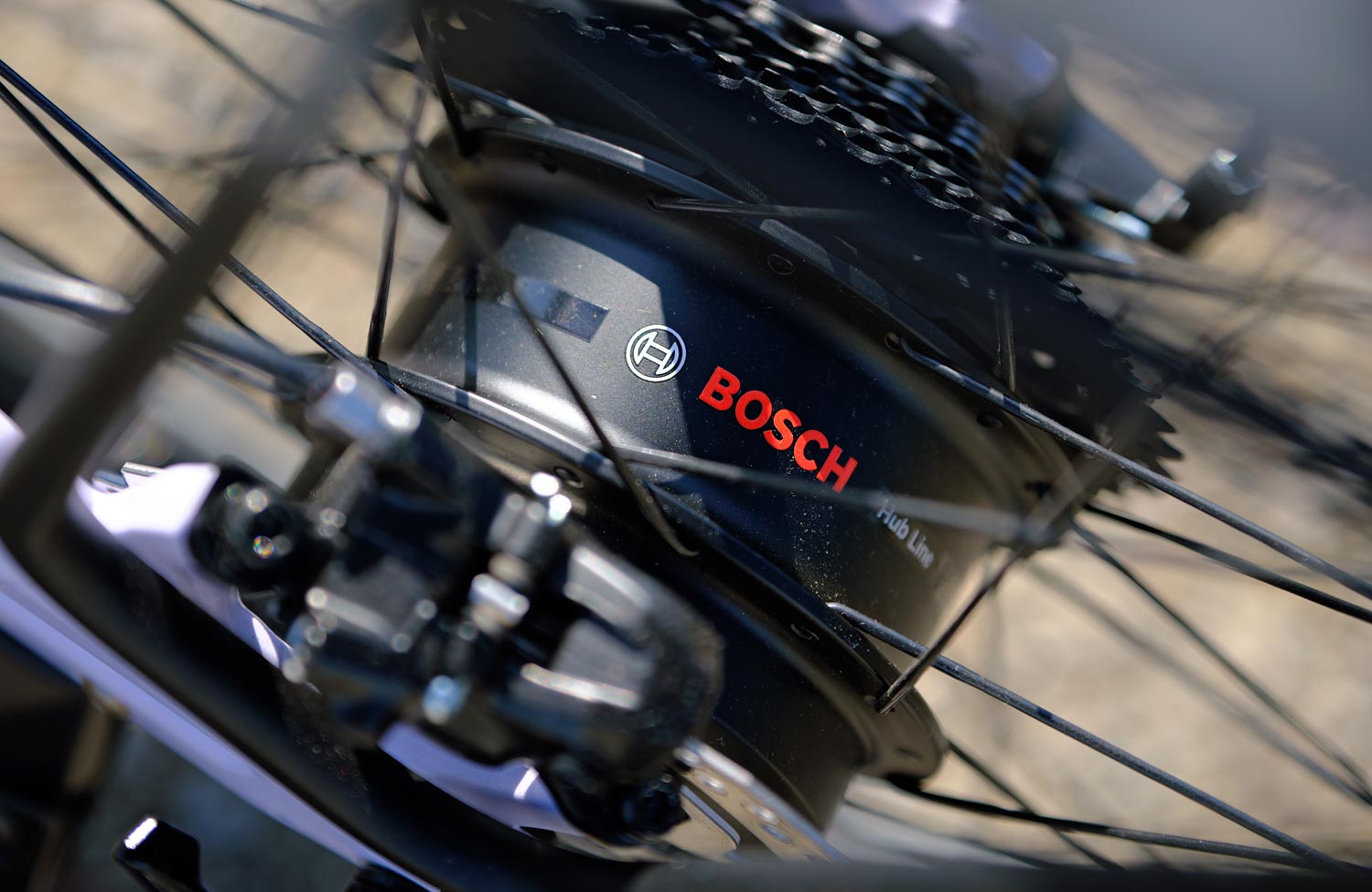
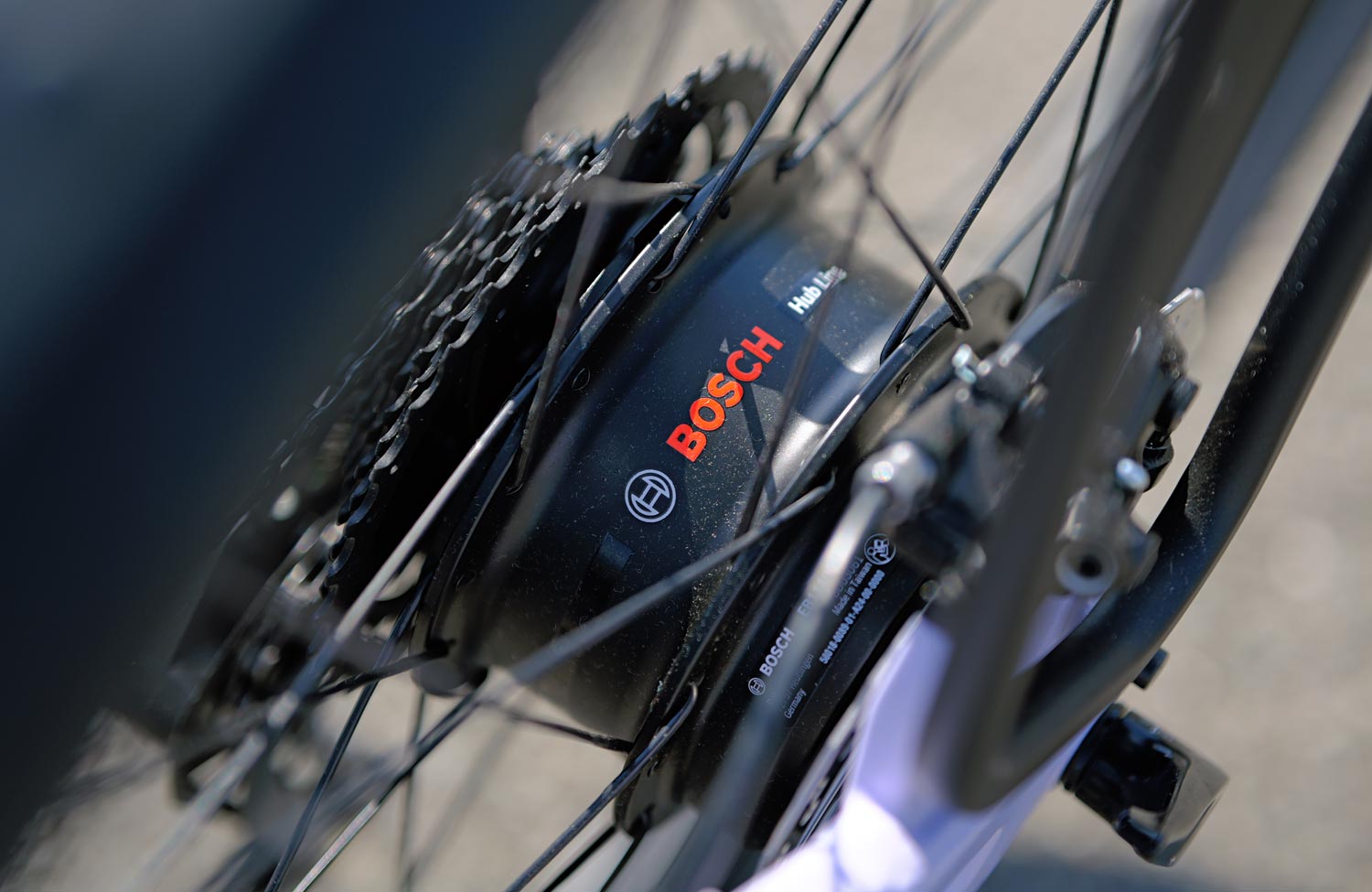
With its new Hub Line, Bosch is entering the hub motor market for the first time – this article has all the details. As part of the launch, there was also an opportunity to test the new motor on several e-bikes. Three different models from Canyon, Gazelle and Moustache were available for this purpose.
Proven Bosch Operation
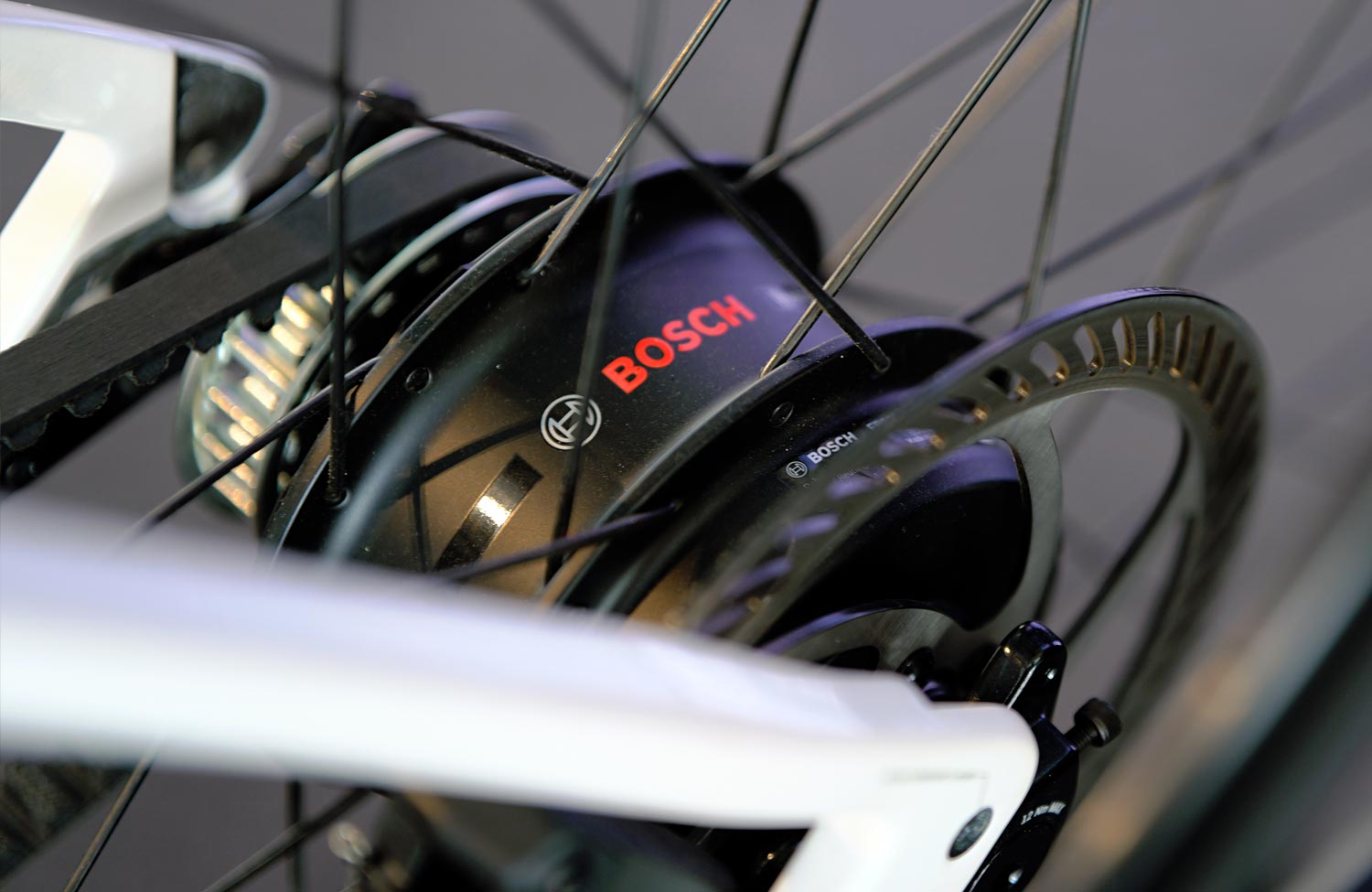
In technical terms, the Hub Line delivers a torque of 45 Nm and a peak power output of up to 400 watts. The continuous power output, however, is limited to 250 watts, as required by law for pedelecs.
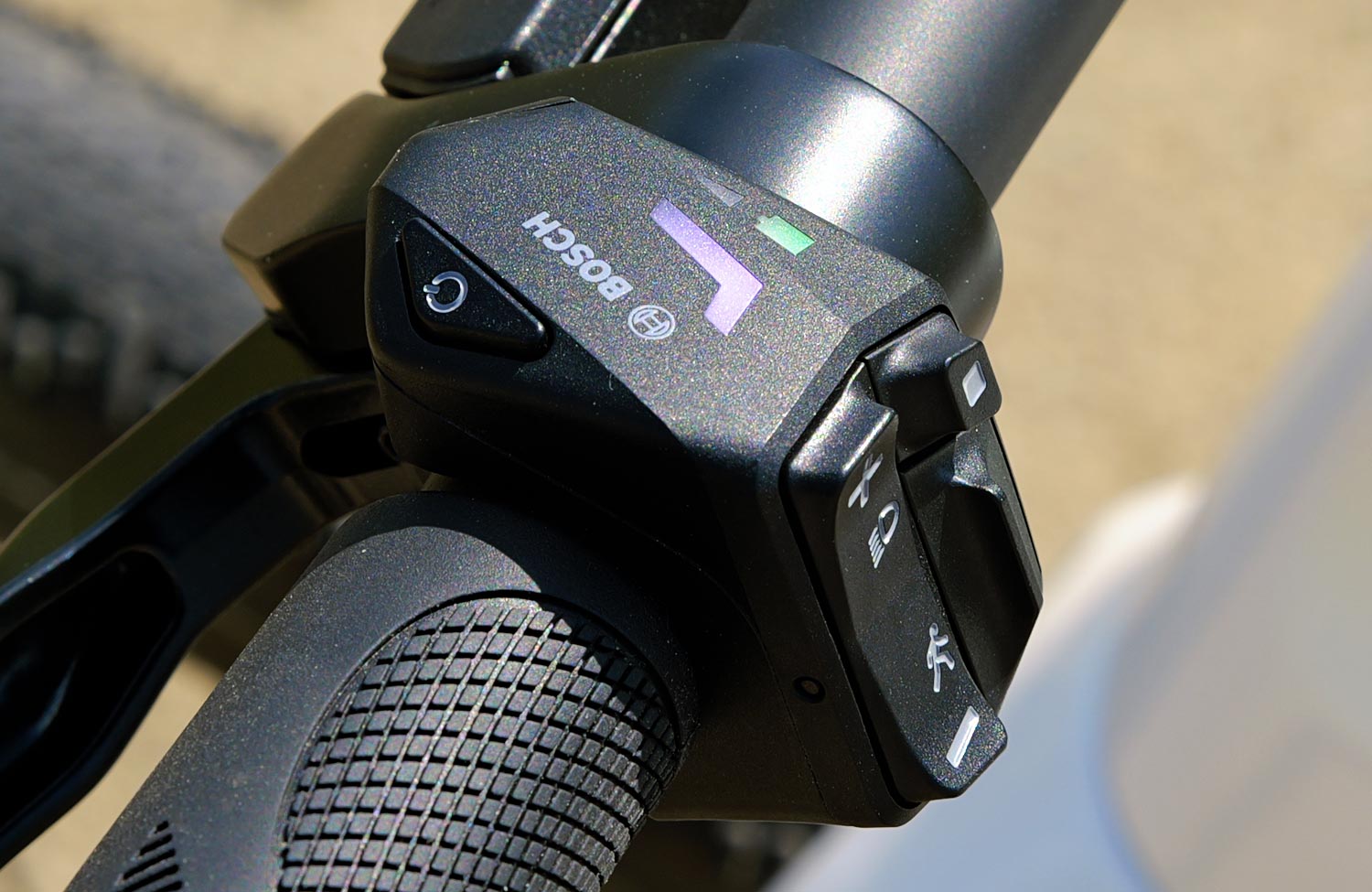
Anyone who has already ridden a Bosch e-bike will feel right at home straight away. This is not only down to the familiar controls, but also to the familiar logic of the riding modes. Whilst some special modes, such as eMTB mode, are missing, the standard assistance levels are still included on the Hub Line. Alongside Eco, Tour and Turbo, these include, above all, the Auto mode, which once again emerged as the clear favourite in our test.
Same motor, different character
The test fleet also demonstrated just how much the respective bike design influences the riding experience. On a lightweight urban bike with a single-speed drivetrain, the Hub Line felt exceptionally agile and almost more powerful than the technical specifications would suggest. On a heavier bike with a comparable drivetrain, the motor continued to perform confidently, but felt noticeably less spirited. A third test bike of similar weight, however, was able to compensate for this with its derailleur gears. The new two-speed gearbox from Universal Transmission also offers an exciting alternative to the single-speed drivetrain.
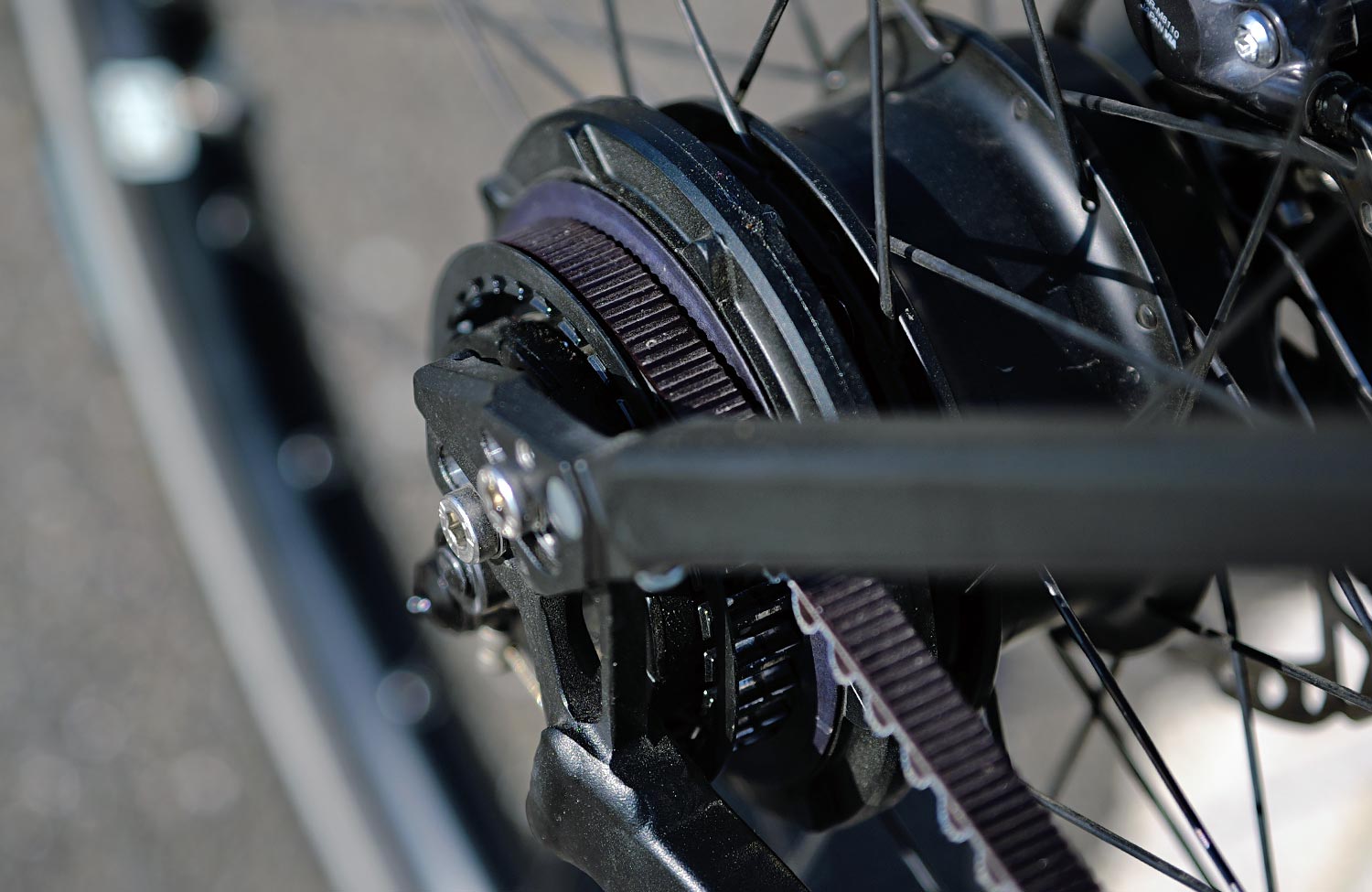
However, none of this is specific to the Hub Line; it applies to all e-bike drives in general: weight and gear ratio have a significant influence on how powerful a motor feels in everyday use.
Impressive in Auto-Mode
Anyone who regularly uses Bosch systems is probably already familiar with the benefits of Auto mode. In our tests, Auto mode was usually our first choice even with Bosch’s mid-drive motors – and it also makes a convincing impression with the Hub Line. On flat terrain, the motor provides support in a pleasantly unobtrusive way. The bike accelerates briskly without giving the impression that it wants to race off of its own accord.
Things get interesting on inclines, where the system increases the assistance significantly. The level of assistance then reaches a point where it is almost indistinguishable from Turbo mode. It is precisely this adaptability that makes Auto mode so pleasant for everyday use.
Turbo mode reveals weaknesses
The Turbo mode is a different story. On flat stretches, the motor responds very energetically and provides a powerful boost even with minimal pedal input. Whilst this generates plenty of forward momentum, it can feel a little unnatural at times – particularly on lighter bikes.
One reason for this is likely to lie in the technical design of the drive system, as the Hub Line does not feature a torque sensor. Whilst the system does take into account factors such as speed, pedalling motion and gradient, the actual force applied to the pedals is not factored into the calculation.
This is also evident in certain riding situations. For example, when coasting, it is sufficient simply to let the cranks turn without applying any noticeable force – the motor continues to provide assistance nonetheless. Similarly, when setting off on a hill, it is noticeable that the assistance only kicks in after about a quarter of a turn of the cranks. If you wish to get round this, you can use the push assist, which acts as a start-off aid and can make setting off easier.
The Tour and Eco modes operate in a more linear manner overall and intervene less actively in the driving situation. They provide predictable assistance, but do not respond as flexibly to changing conditions as Auto mode.
Pleasantly quiet in operation
As is typical of a hub motor, the Hub Line also operates relatively quietly. Whilst riding, a faint, constant hum can be heard, but it is hardly noticeable. Although there are even quieter drives on the market, in everyday use the operating noise is usually quickly drowned out by ambient noise, road traffic or the wind.
New battery solution and familiar interfaces
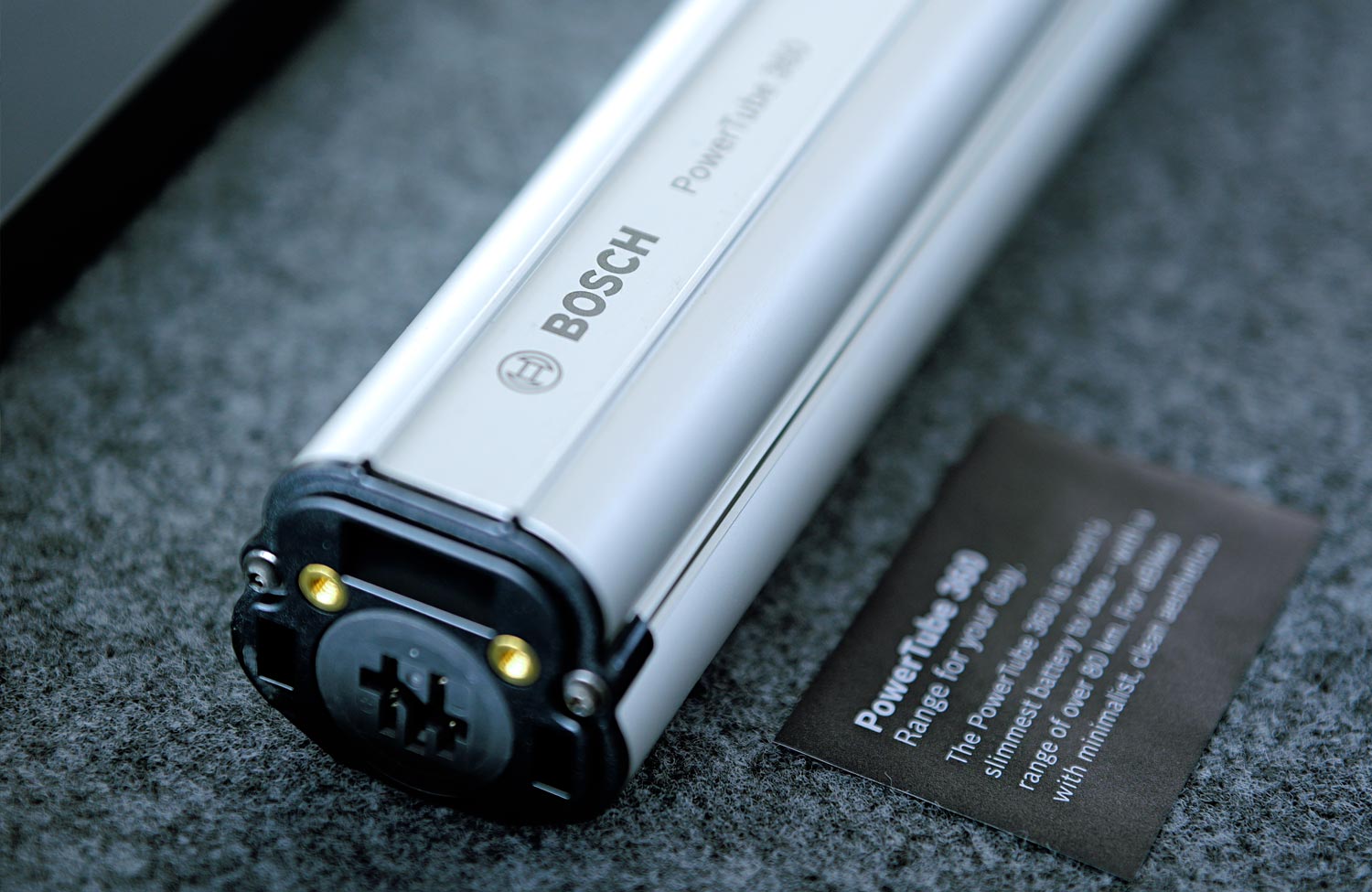
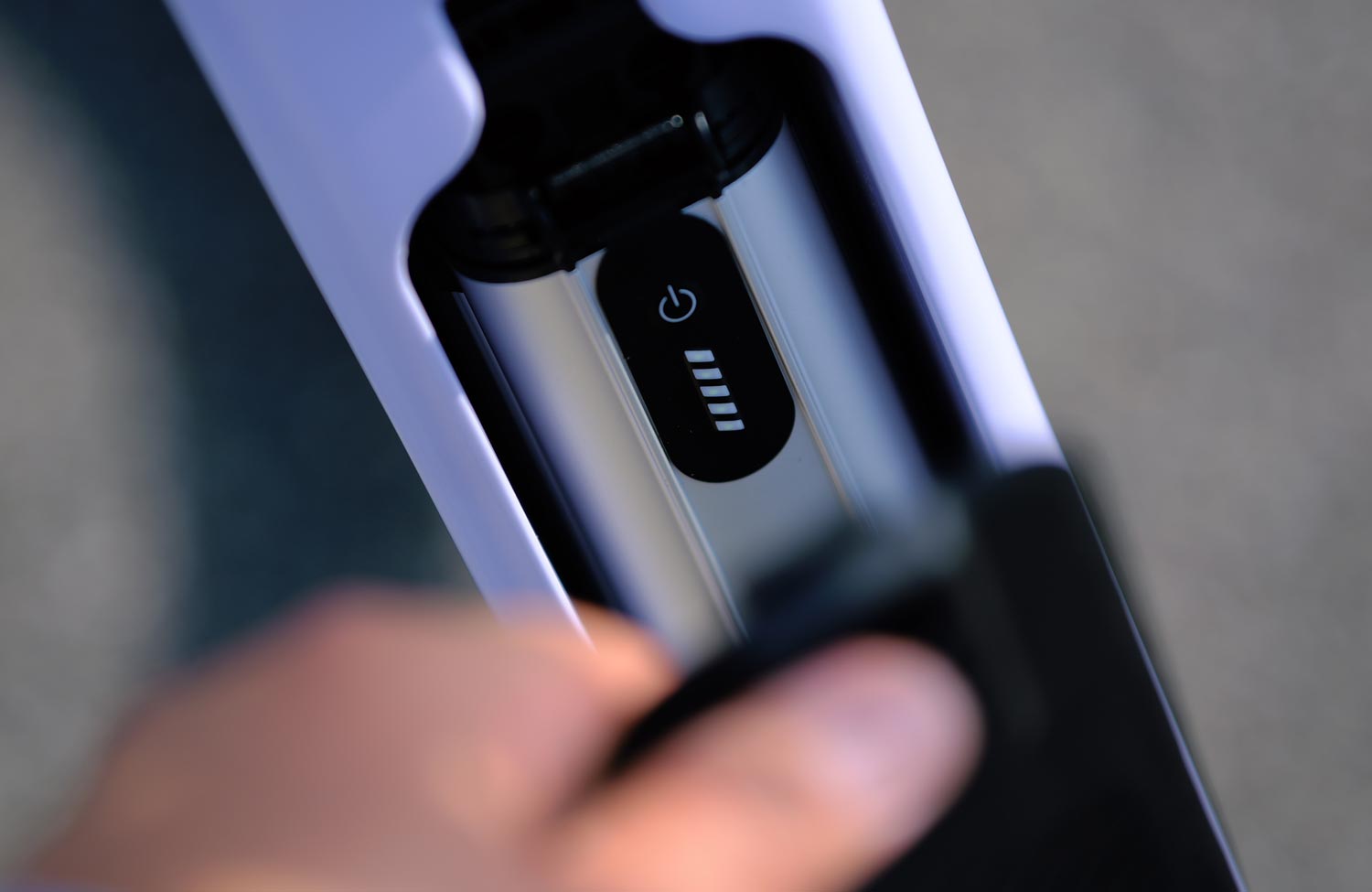
Alongside the Hub Line, Bosch also unveiled the new and compact PowerTube 360 battery. A particularly welcome feature is the option to remove the battery for charging – provided the bike manufacturer in question opts for this variant. It works in much the same way as the familiar PowerTube 600 and PowerTube 800 batteries – and is significantly easier to use than the similarly compact PowerTube 400 battery. This is a practical advantage, particularly for users who cannot charge their e-bike directly at their parking space.
Another positive aspect is its comprehensive compatibility with the existing Bosch ecosystem. The Hub Line uses the familiar interfaces and can be combined with current displays as well as the new LED Controller. There is little to criticise in terms of feel, operation and range of functions – Bosch delivers its usual, well-established quality here.
Conclusion
With its Hub Line, Bosch has made a solid entry into the hub motor market. The drive system is particularly impressive in the very scenario for which it is designed: everyday urban cycling. The Auto mode, in particular, ensures a comfortable and balanced riding experience and effectively masks the system’s technical quirks. The Hub Line does not perform quite as confidently in Turbo mode, where the assistance feels somewhat unnatural at times, nor when setting off on steep inclines – here, the absence of a torque sensor becomes noticeable. For typical city riding with predominantly moderate gradients, however, this issue is less of a concern.
Added to this are advantages such as low noise levels, the possibility of creating particularly slim and lightweight bikes, and the option of an easily removable battery. This makes the Hub Line a particularly good fit for modern urban bikes, where a sleek design and hassle-free everyday use are the main priorities.