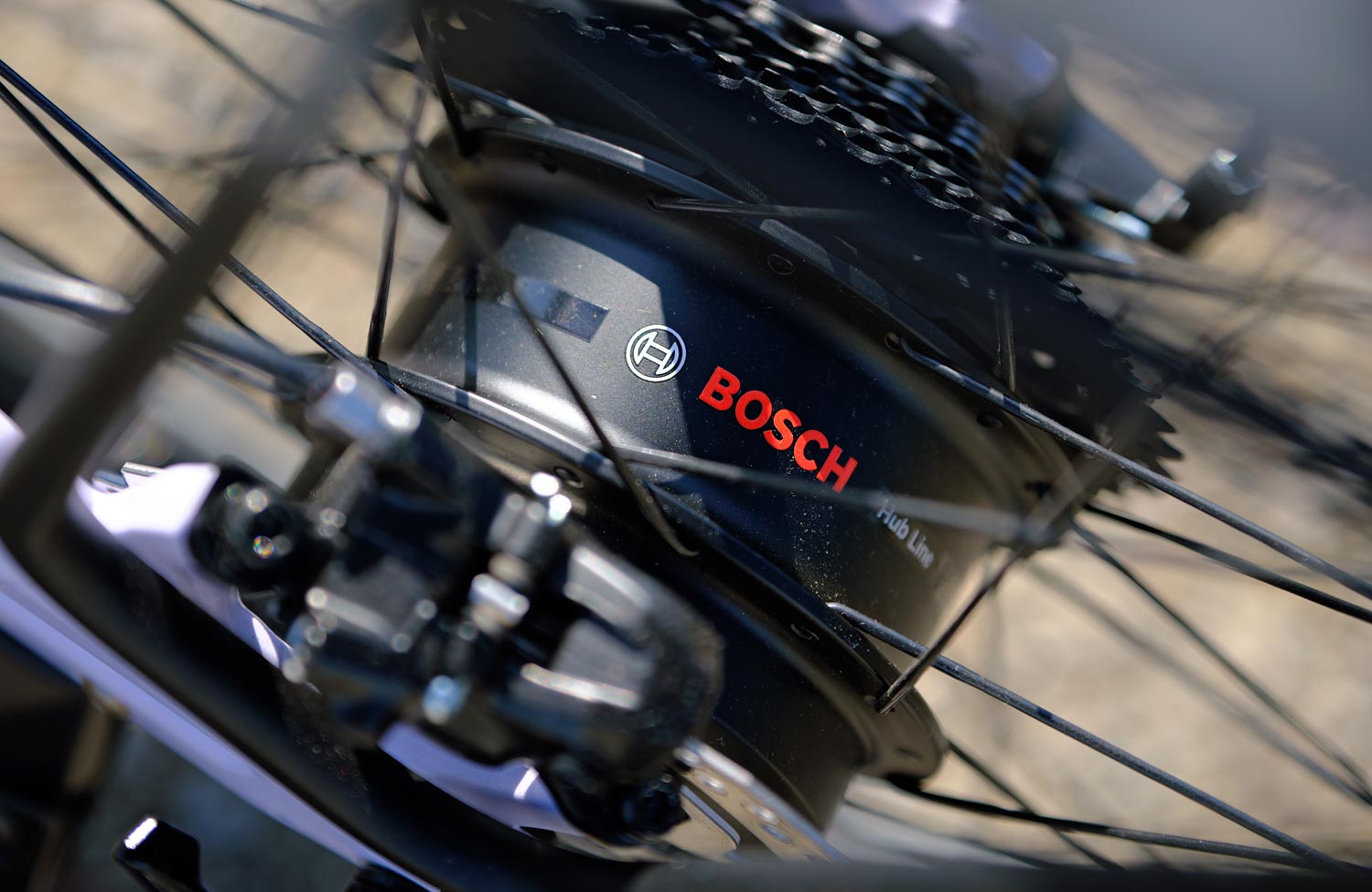
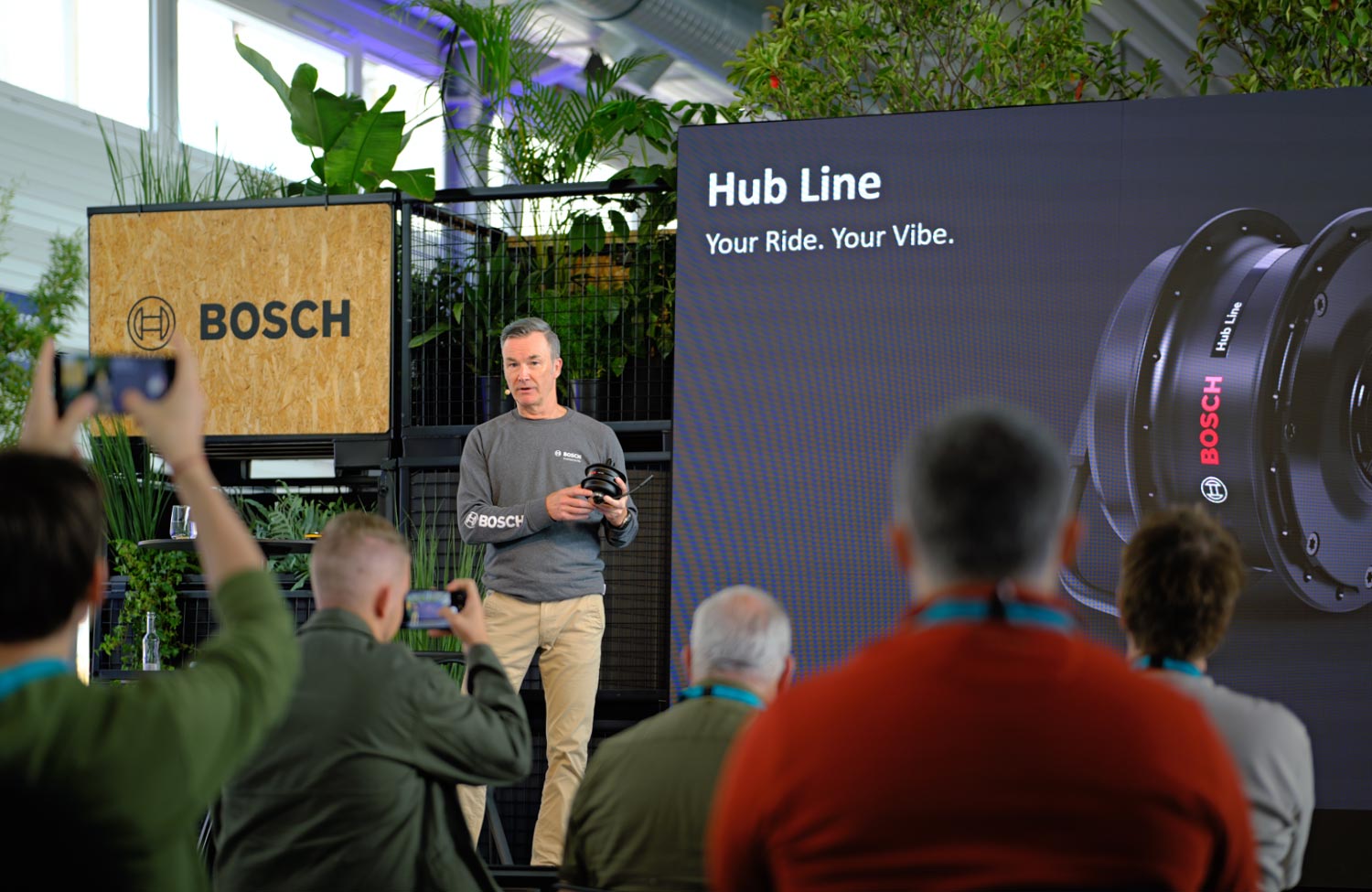
Bosch and hub motors – this combination has never existed before. Whilst the company has shaped the e-bike market for many years with its mid-drive motors, the compact rear-hub drive segment has been left to other manufacturers. With the new Hub Line, this is now set to change fundamentally. For the first time, Bosch is launching its own hub motor, thereby entering a segment in which this type of drive has long been firmly established, particularly in lightweight and urban e-bikes.
This is precisely where the advantages come into their own: the motor is concealed almost out of sight within the rear wheel, allowing for slim frame designs and providing sufficient assistance. The number of suppliers is correspondingly high. Manufacturers such as Bafang, Mivice and Mahle are widely represented – but there are also numerous in-house developments and white-label solutions. What had been missing until now, however, was one of the really big, established market leaders.
More than just a new motor
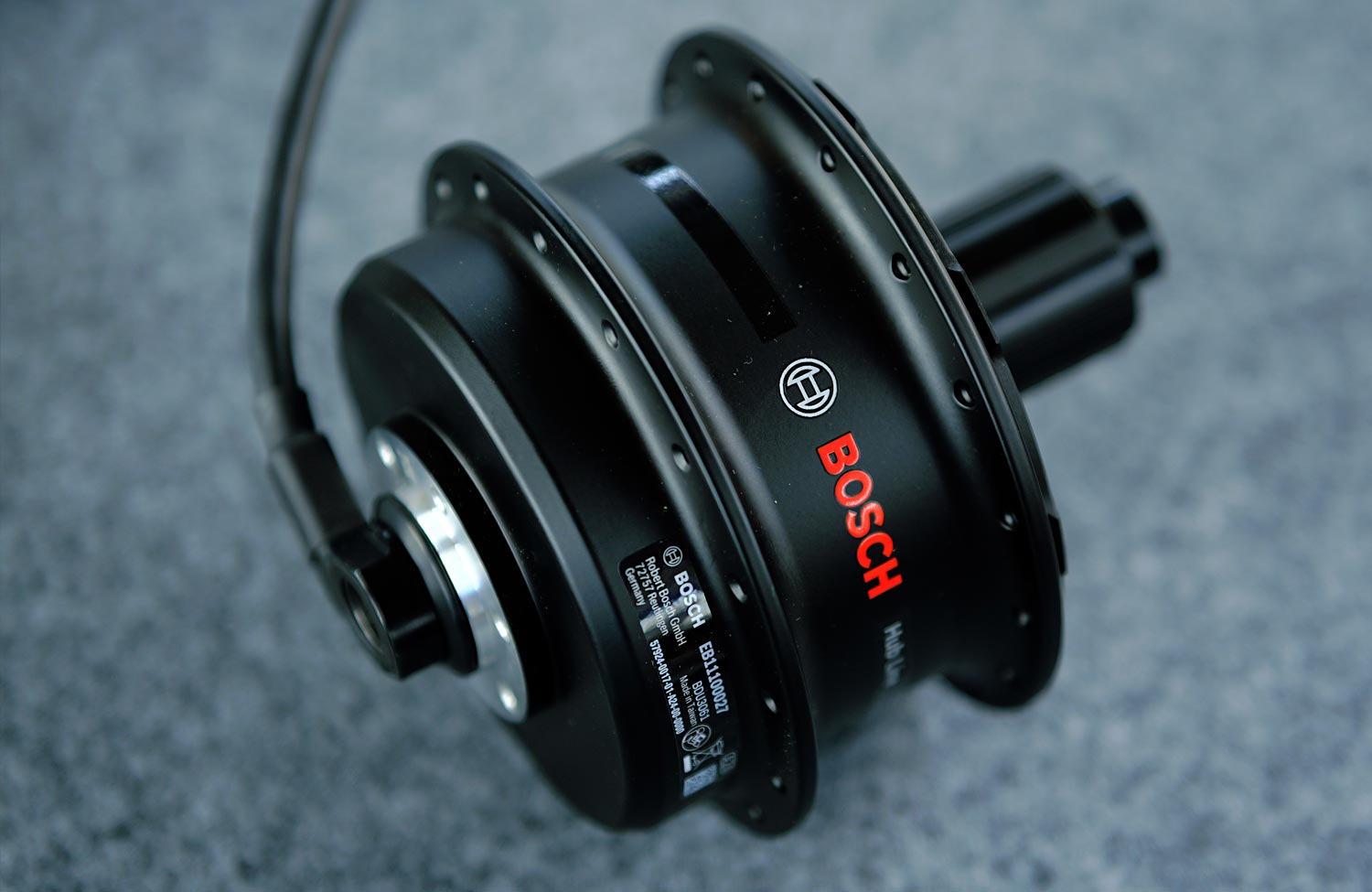
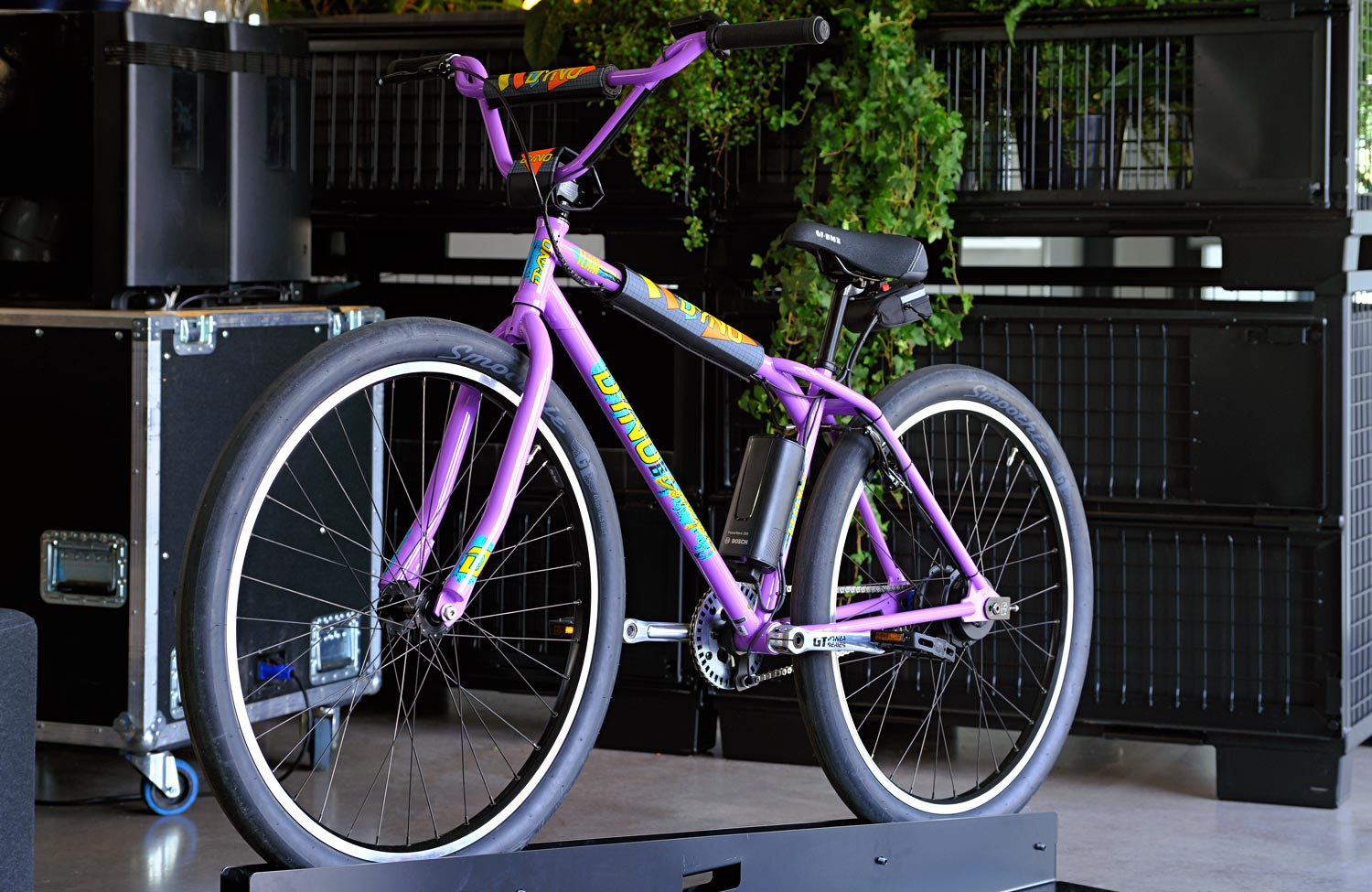
The focus of the new announcement is, of course, first and foremost on the compact Hub Line hub motor: with 45 Newton metres of torque, an output of 400 watts and a diameter of 10 cm, Bosch is technically on a par with its established competitors. The motor can also be used with a standard derailleur gear system and as a single-speed bike – as well as with a new two-speed gear system, but more details on that below.
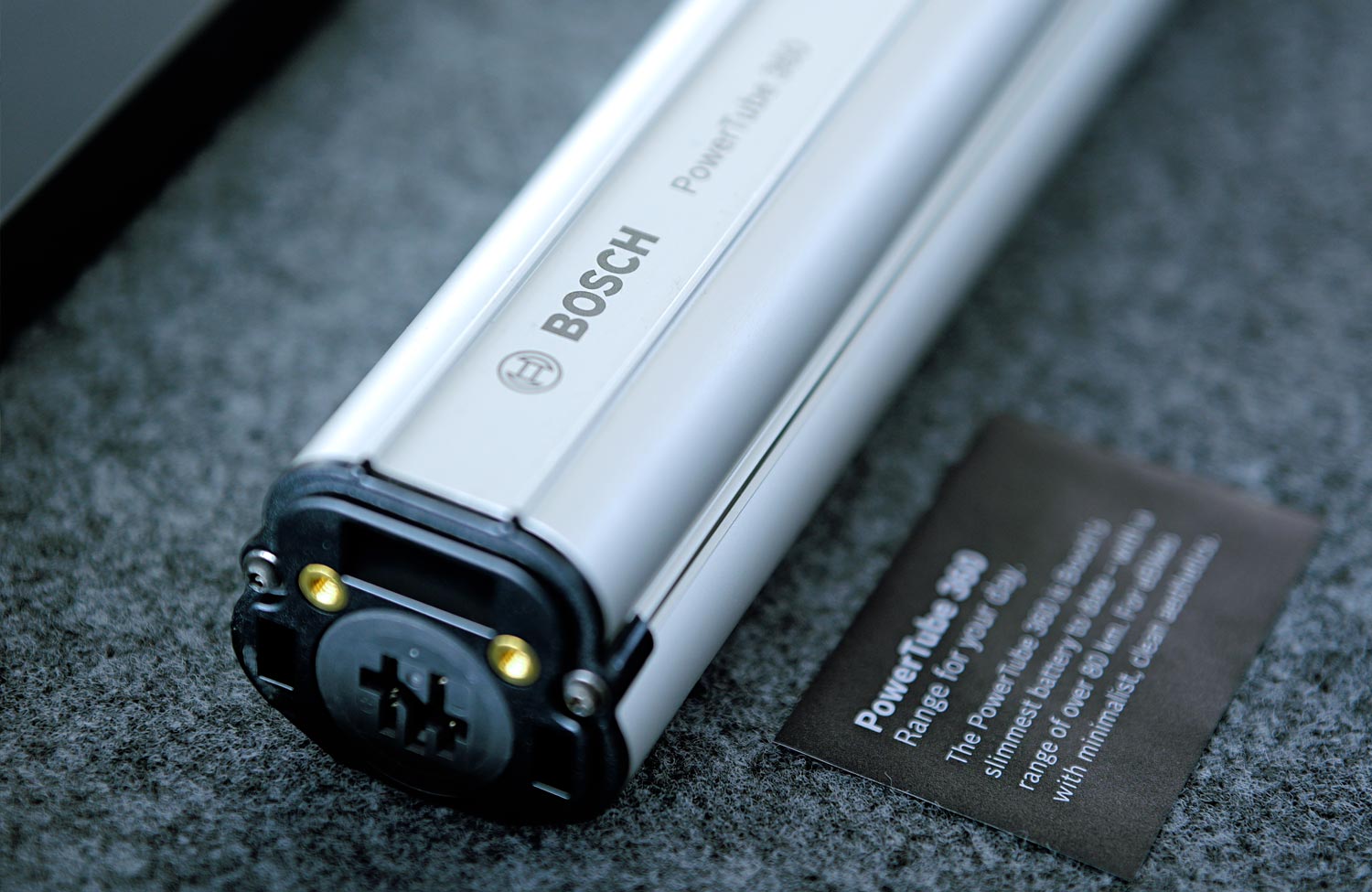
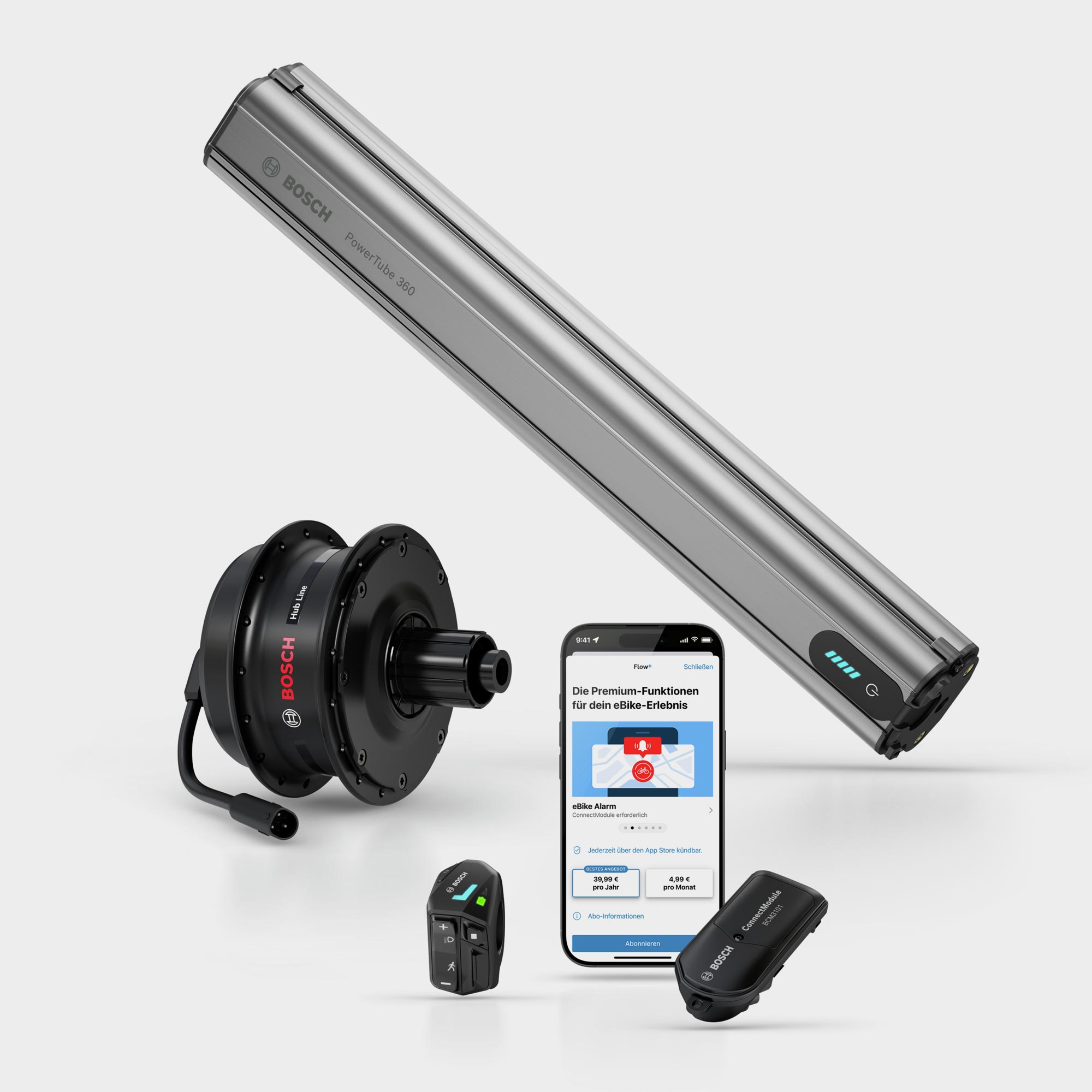
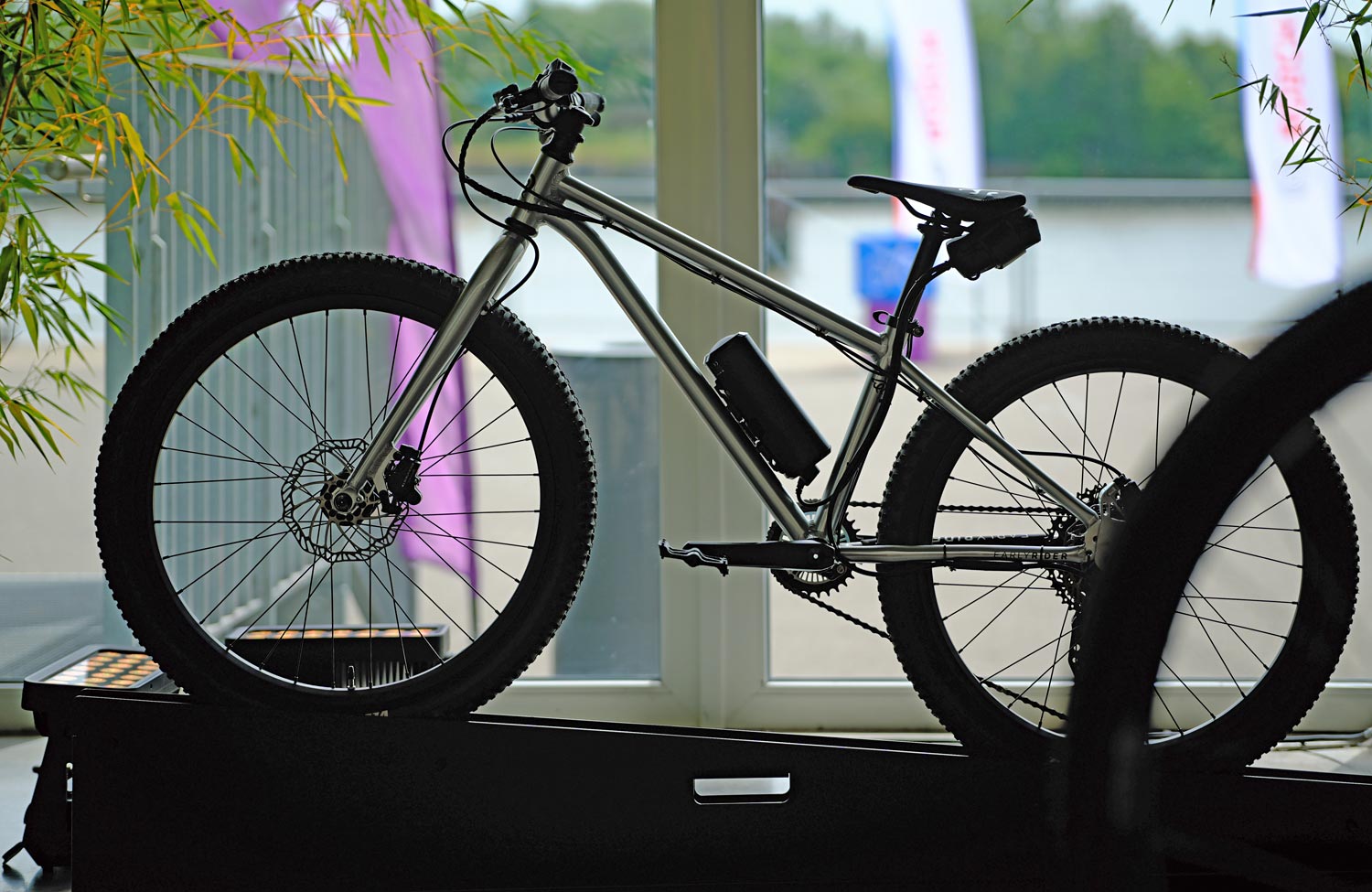
However, the surrounding features are at least as interesting. The system includes a new PowerTube 360 battery with a capacity of 360 Wh, which can be fitted either as a fixed unit or as a removable battery. This is a particularly important feature for urban e-bikes. Many users do not charge their bikes directly at home or in the office, but prefer to be able to take the battery with them as and when they need to. Compared to systems such as Mahle’s, which have so far relied exclusively on permanently fitted batteries, Bosch is opening up additional possibilities here.
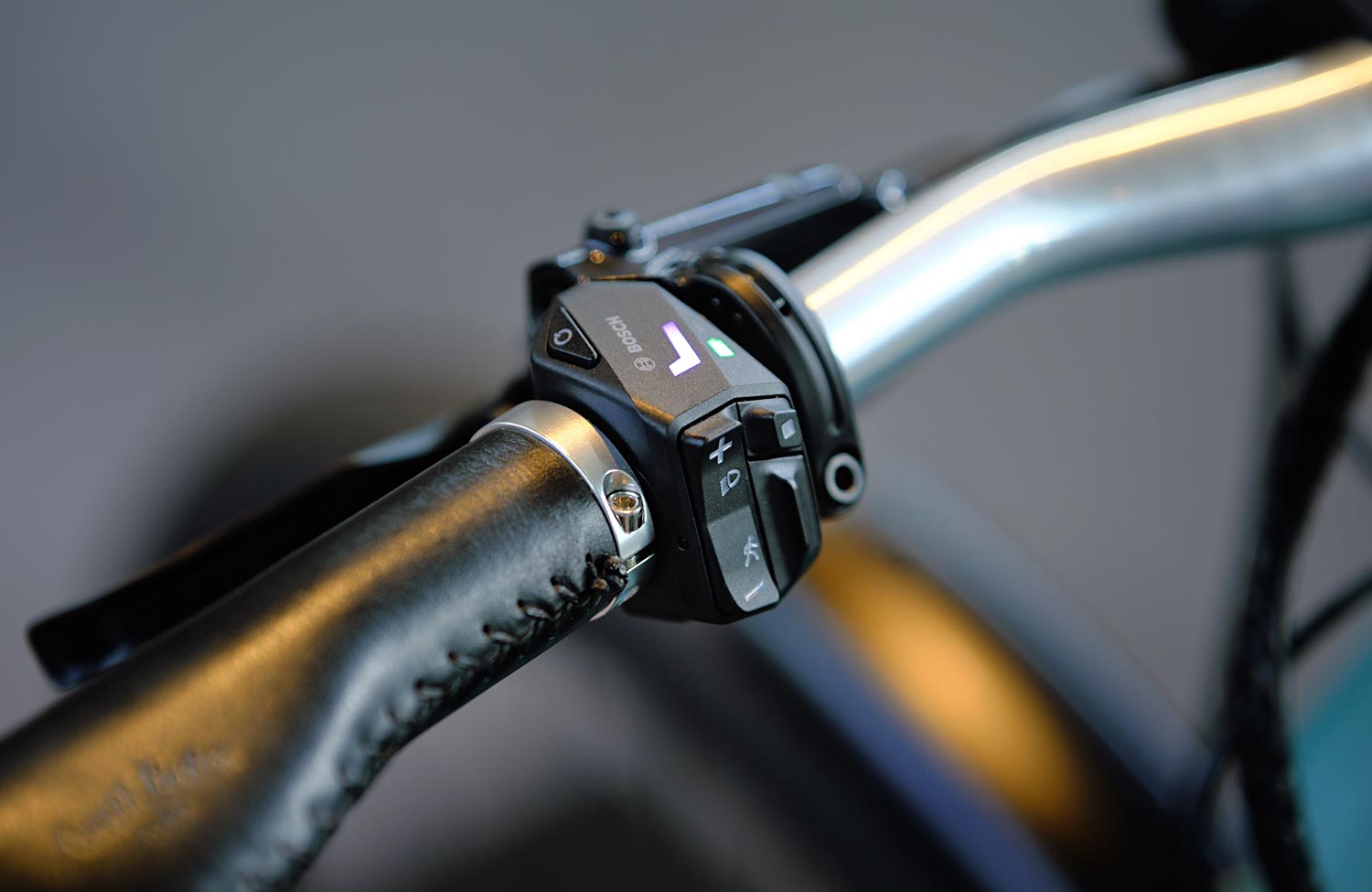
With the new LED Controller, Bosch is also introducing a redesigned control unit. It is significantly more compact than the previous LED Remote and can be integrated more discreetly into the handlebar area. This is a real step forward, particularly for sleek urban bikes with a minimalist design. A handy feature is that the new LED Controller is not exclusively reserved for the Hub Line, but can also be combined with other motors in the Bosch system in future.
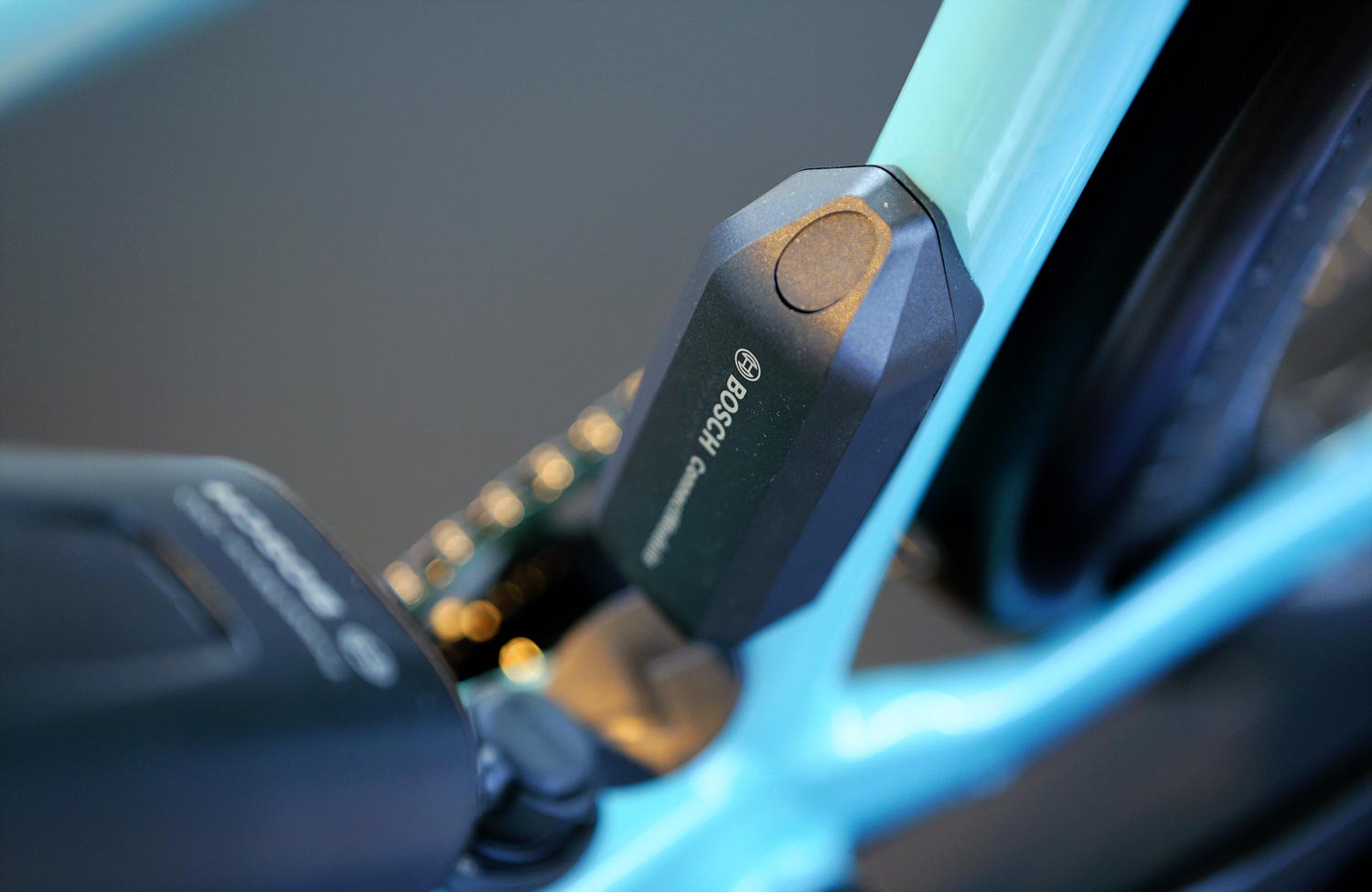
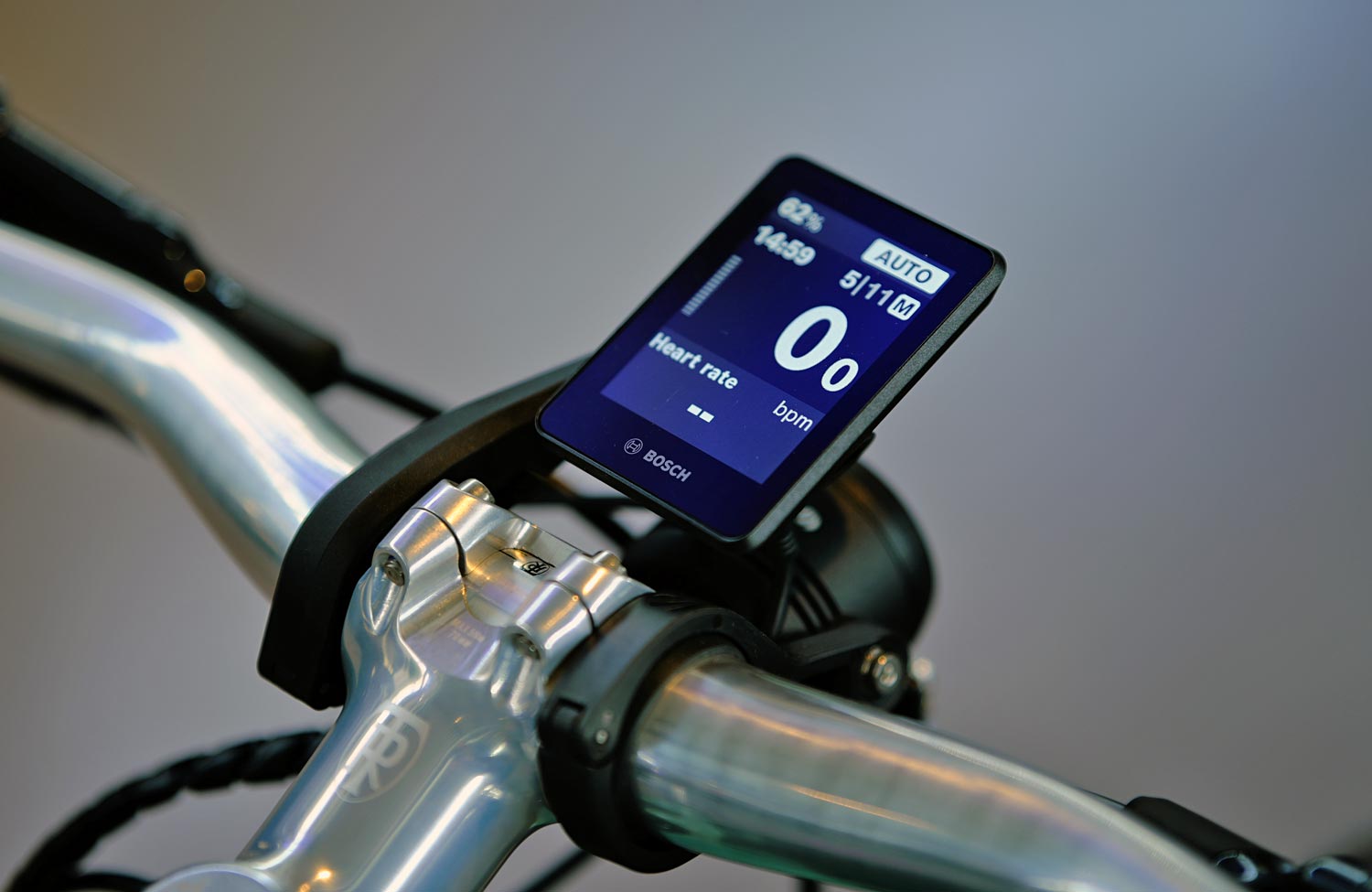
Further innovations relate to the existing Bosch ecosystem. For example, the ConnectModule is being updated to a new version which, thanks to additional Bluetooth Low Energy technology, is designed to enable more precise tracking of your e-bike – even in places where GPS reaches its limits. Furthermore, the module will be easier to retrofit in future. Also new is the Intuvia 200, a compact 2.4-inch display with a clear greyscale display, which blends discreetly into modern e-bikes and is designed for maximum readability.
Points of criticism and innovations
However, even the Hub Line is not without its criticisms. We would regard its weight as a minor issue at best. Weighing 2.3 kilograms for the motor and 2.1 kilograms for the battery, the system is not at the top of the field, but this is perfectly acceptable for use in urban e-bikes. A technical aspect is far more significant: Bosch has omitted a torque sensor from the Hub Line. Instead, the assistance is controlled via cadence and additional sensors for speed and gradient – but this means that the rider’s actual pedalling force is not directly factored into the control system. Our initial riding impressions of the Hub Line already demonstrate how this affects the riding experience. To give you a preview: thanks to sophisticated software tuning, Bosch often manages to mask the absence of a torque sensor well during riding. However, it cannot completely replace the direct measurement of actual pedalling force. In certain riding situations, differences compared to systems with a torque sensor remain noticeable.
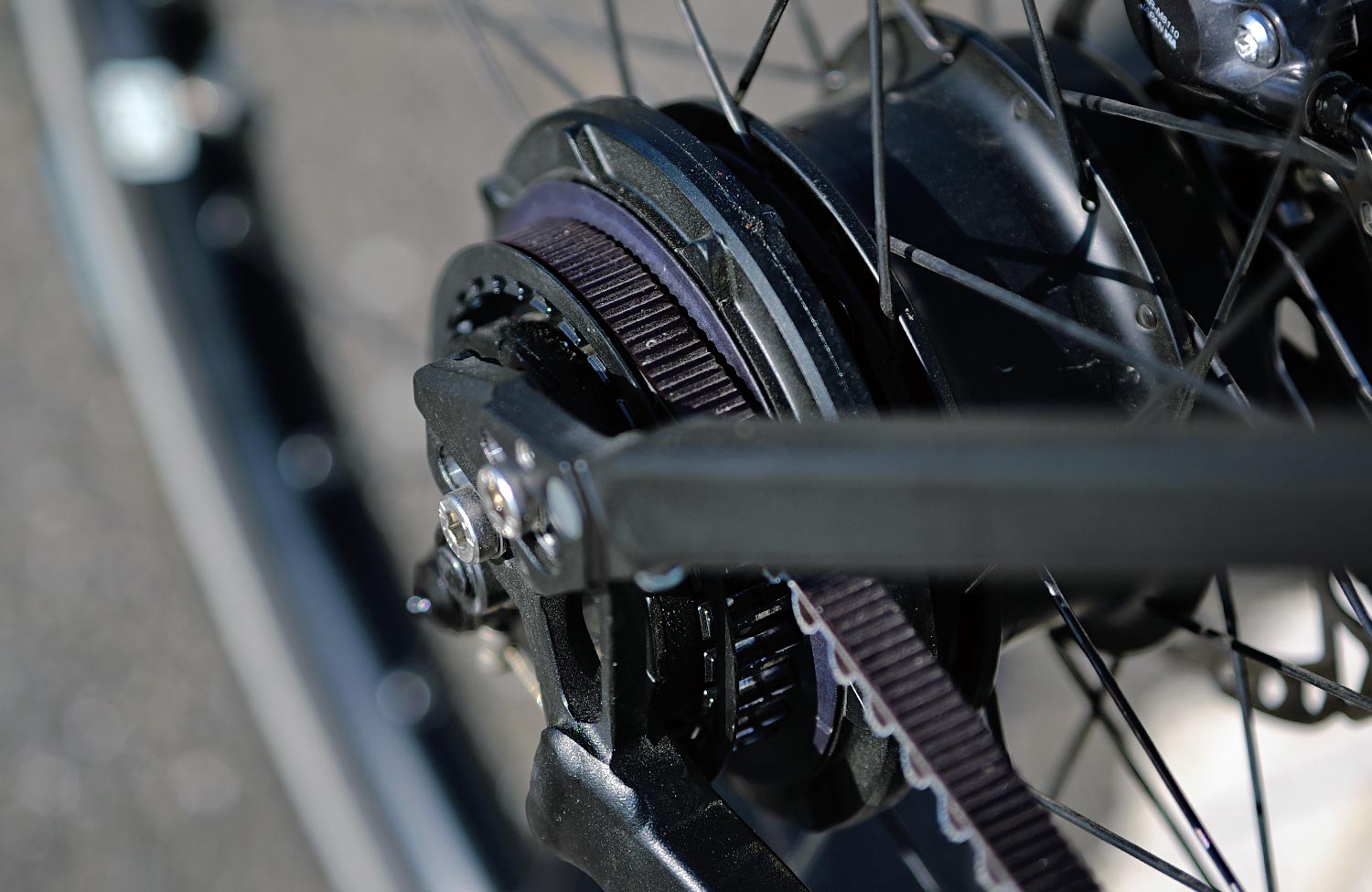
However, Bosch also had a real surprise in store. The Hub Line can now be combined with a new two-speed gearbox, which is fitted to the motor’s standard freewheel. The solution was developed by Universal Transmissions, the company behind the distribution of the Gates Carbon Drive toothed belt. This makes it possible to create urban e-bikes with toothed belt drives and a minimalist single-speed look, without having to completely sacrifice shifting comfort. The two gears are changed manually in the traditional way using a gear lever on the handlebars.
First bikes have already been unveiled
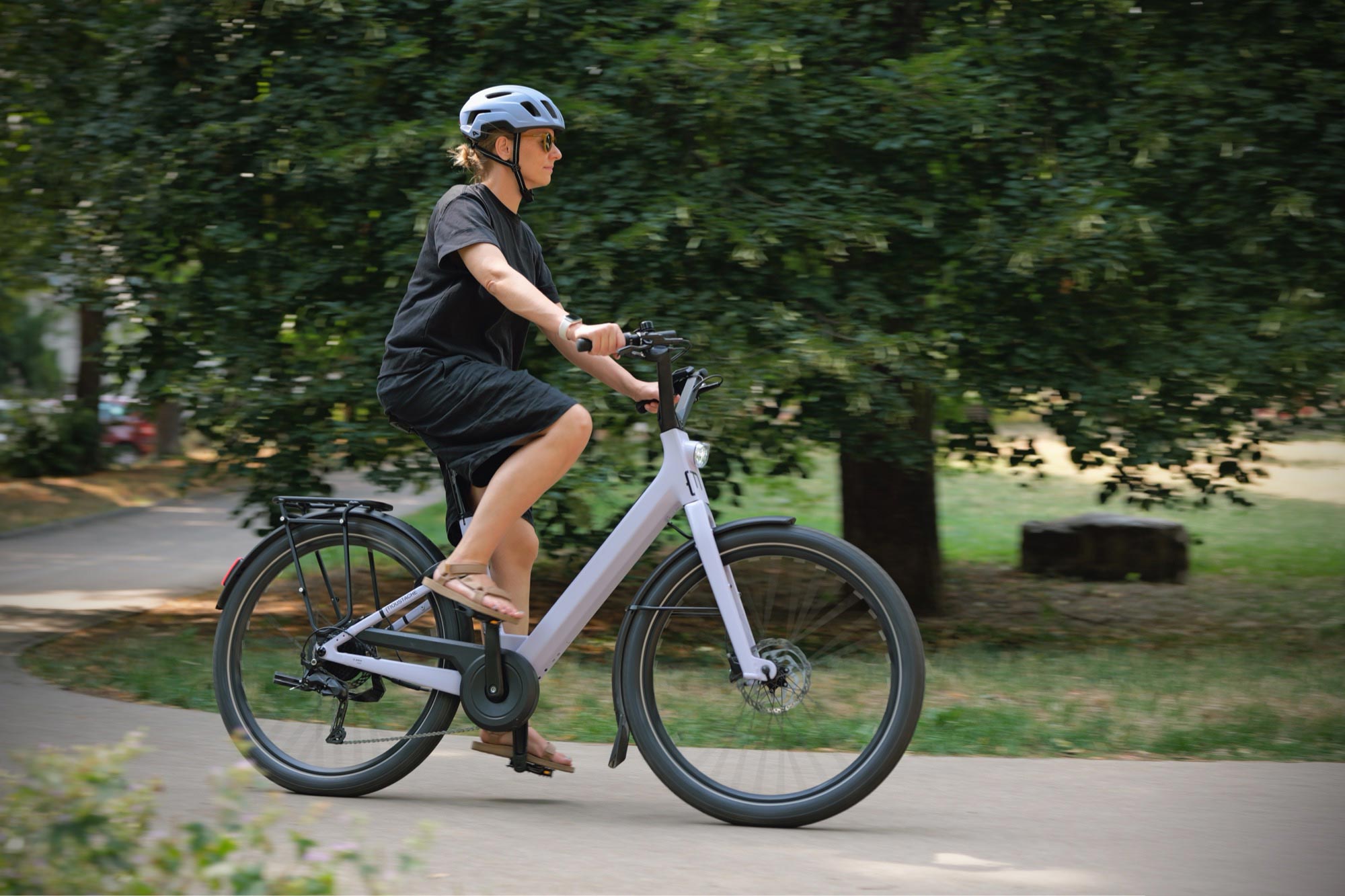
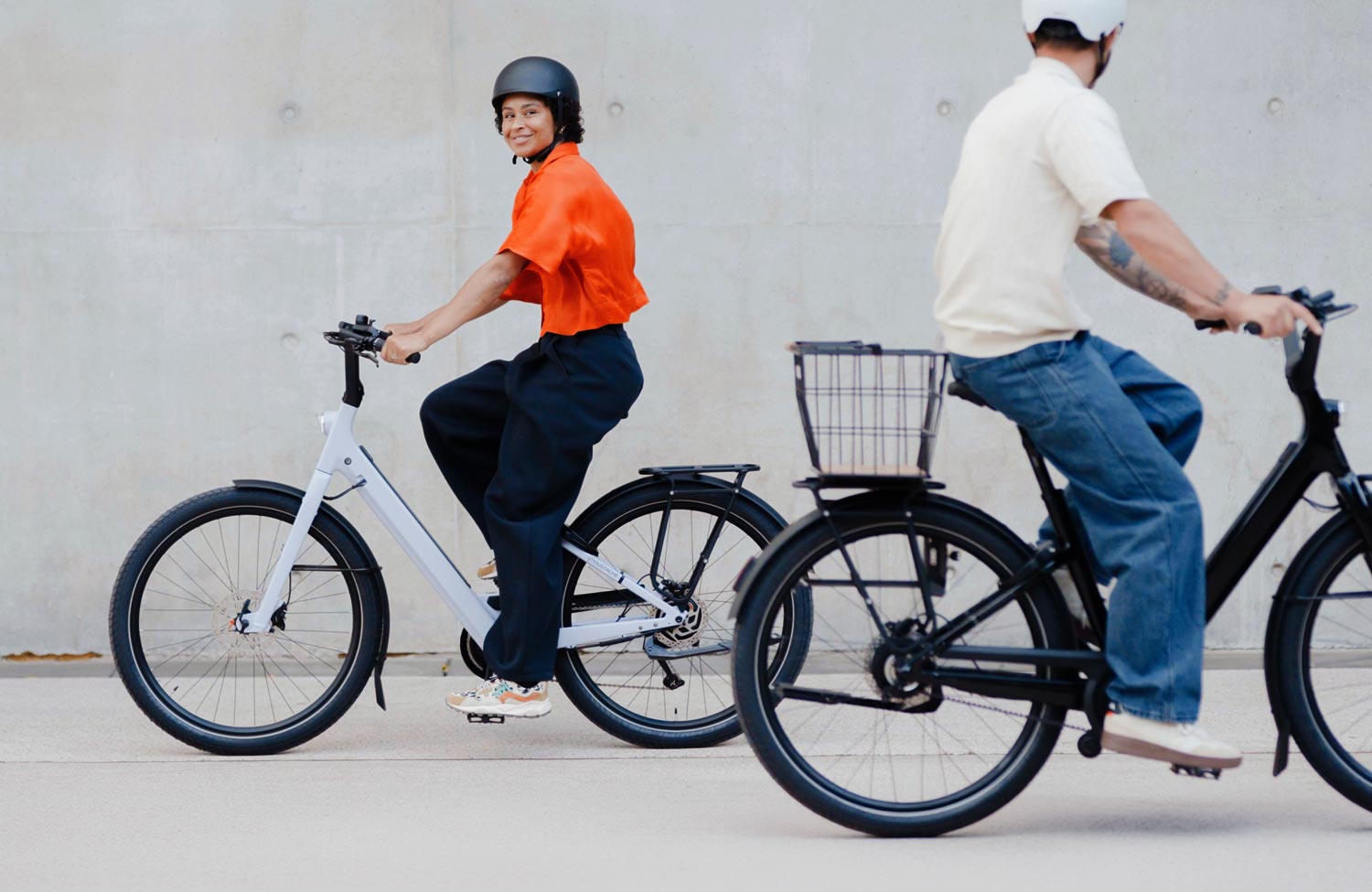
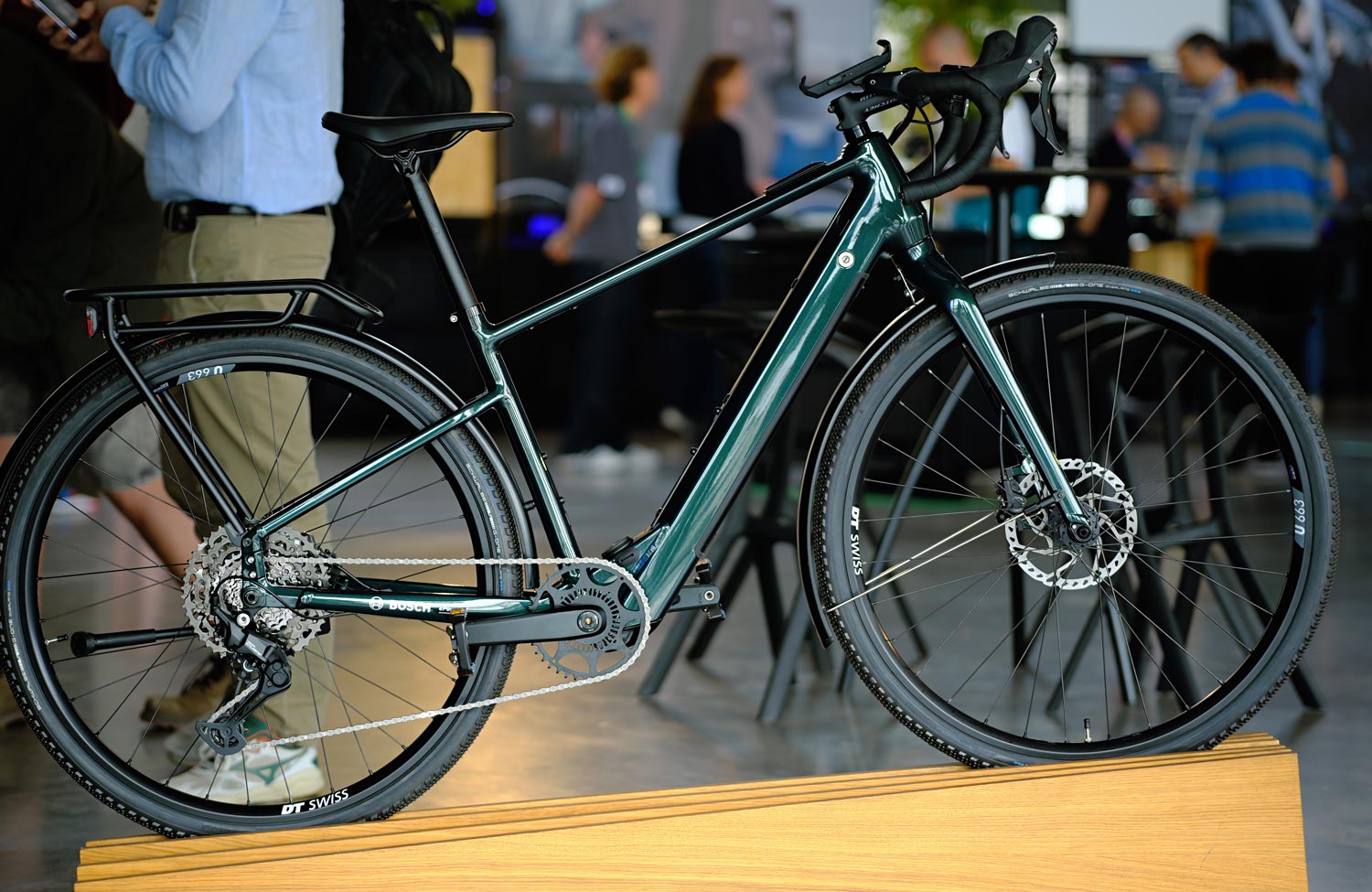
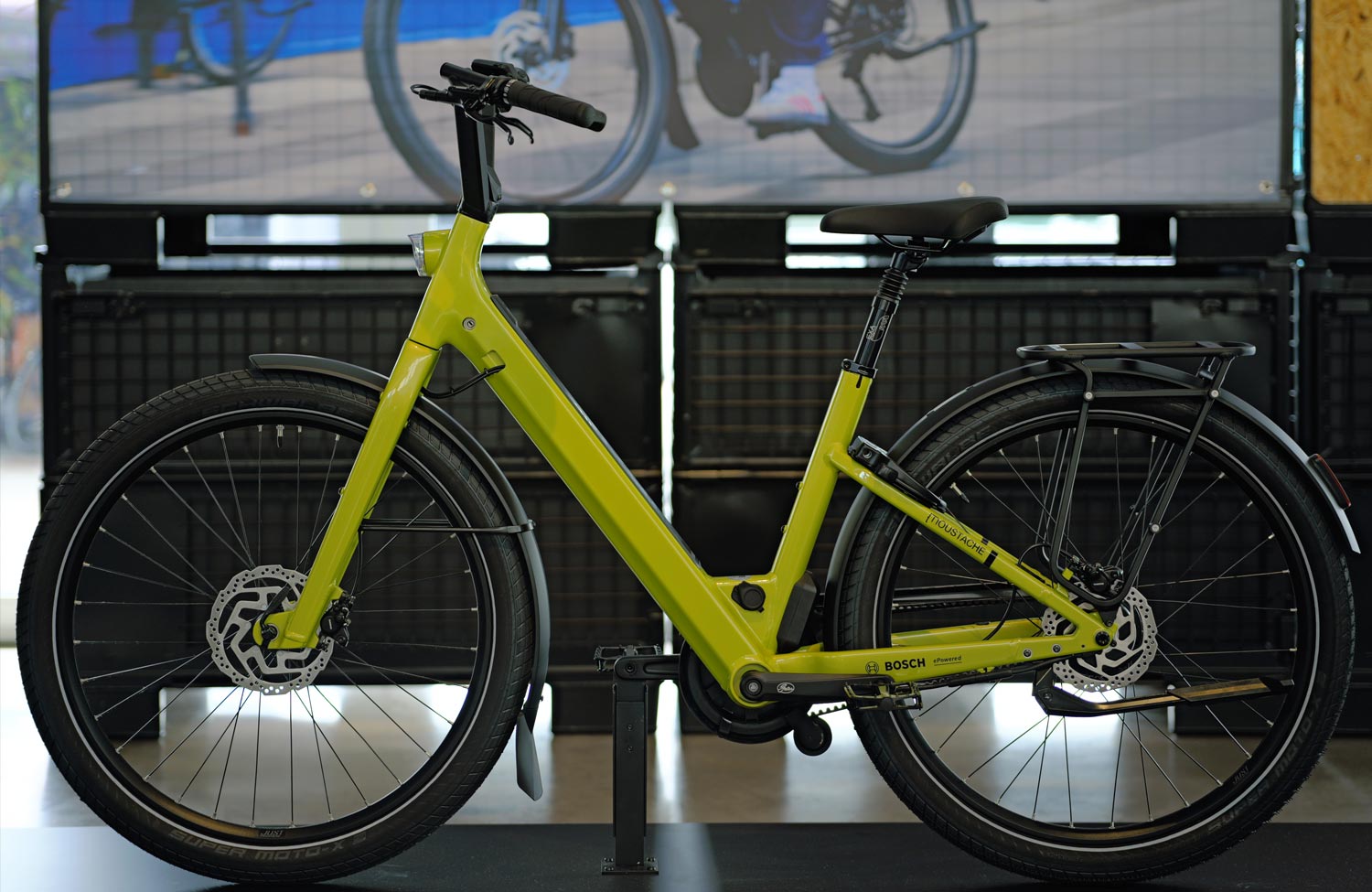
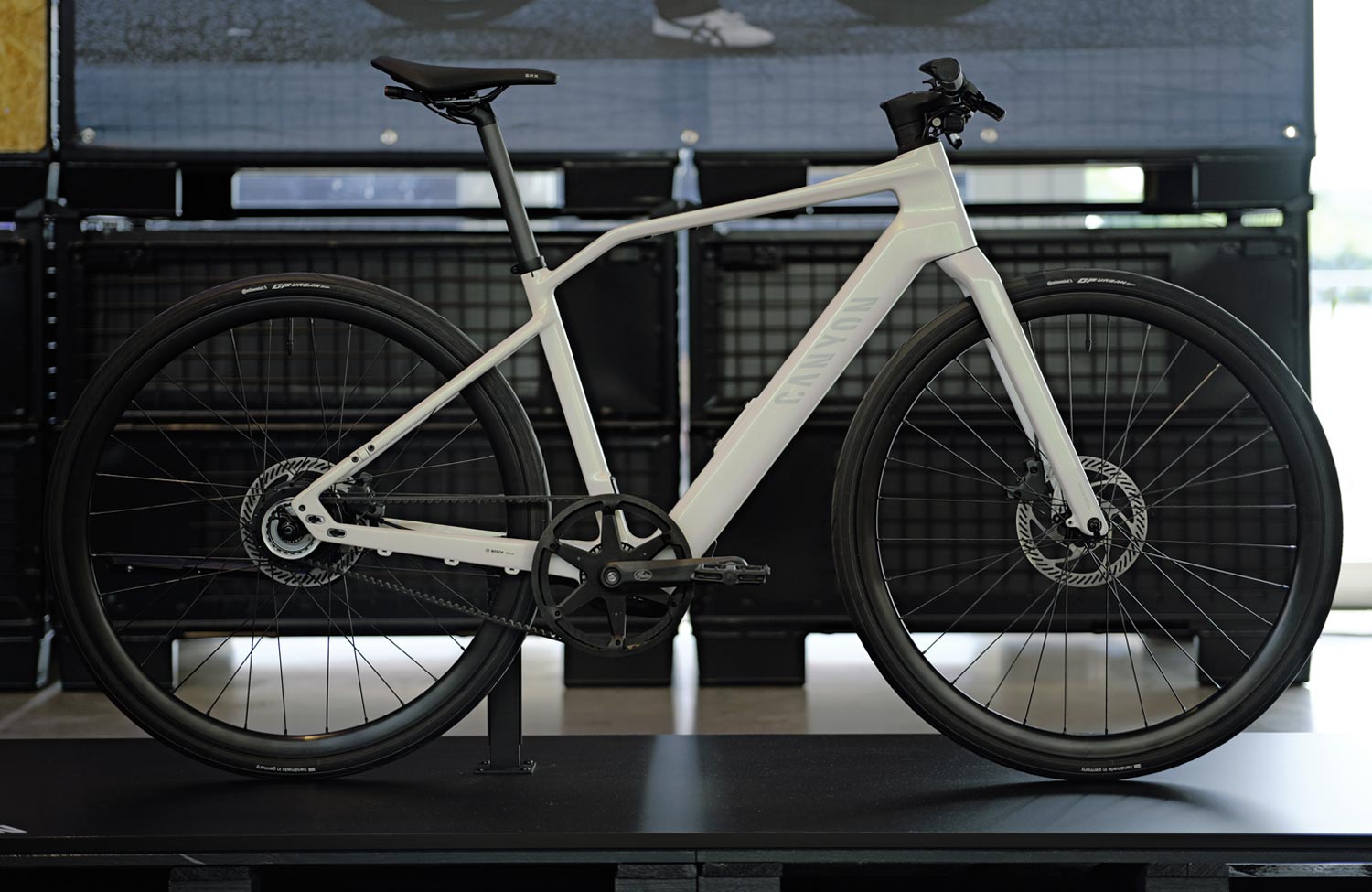
The market launch alone demonstrates that Bosch has high expectations for the new system. At the launch event, three well-known manufacturers – Canyon, Gazelle and Moustache – were featured, each unveiling their first models based on the Hub Line. What these bikes have in common is their clear urban focus – sleek and elegant city bikes that are also attractively priced.
Moustache – a close development partner of Bosch for the past 14 years – is launching a brand-new generation of the classic Lundi, with its striking design and signature handlebars, at prices starting from 2,399 euros. Gazelle’s new Curb is in the same price bracket, whilst Canyon’s Roadlite:ON CF, at 2,999 euros, is slightly more expensive – but in return offers a bike weighing just under 14 kg with a carbon frame.
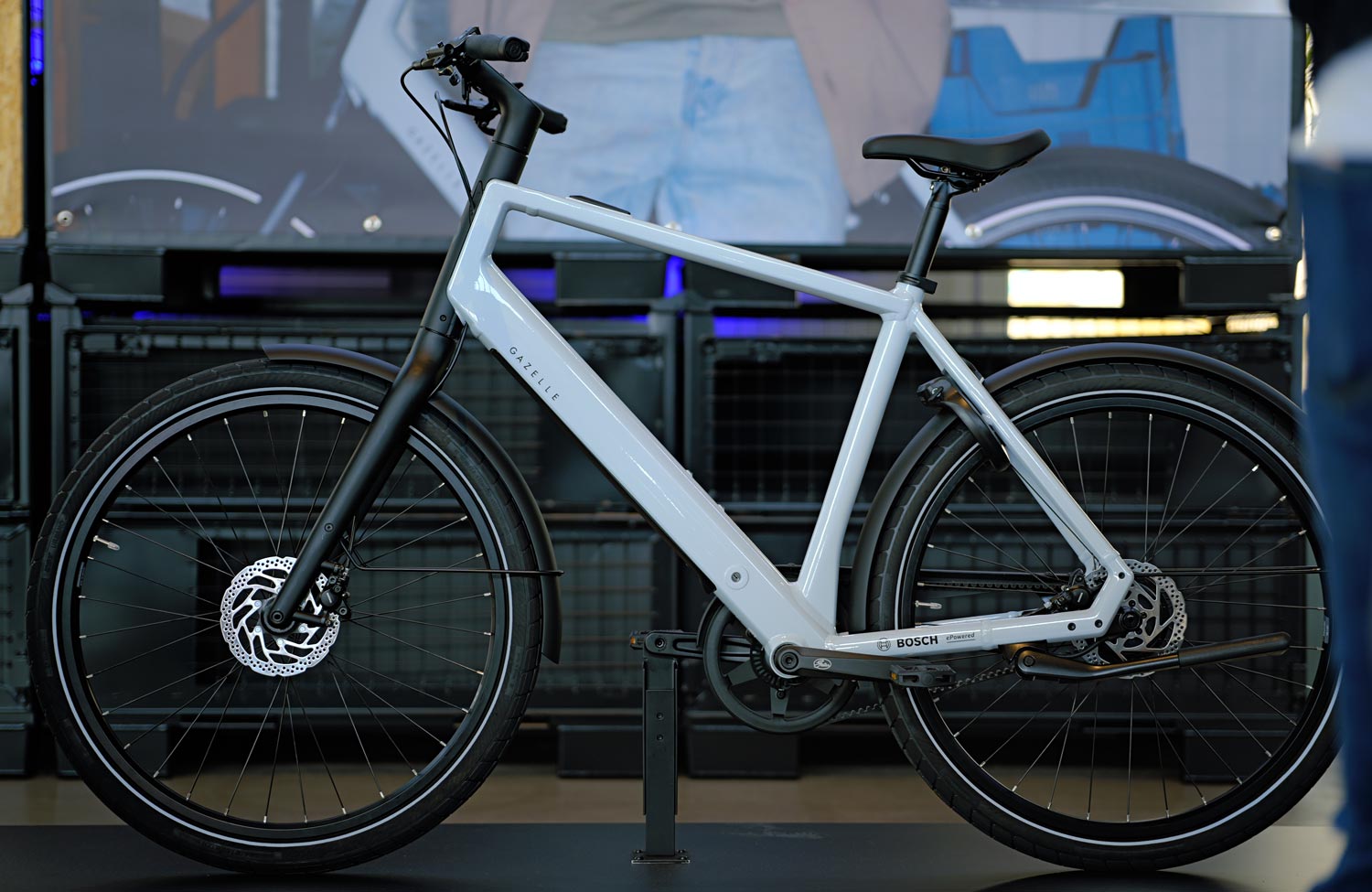
Against this backdrop, the points of criticism mentioned earlier also appear in a different light. With the Hub Line, Bosch was evidently less interested in developing a technical marvel and more in creating a reliable system suitable for everyday use at an affordable price. This is precisely what is reflected in the bikes presented so far.
And there are many indications that this is only the beginning. Given Bosch’s strong market position, other manufacturers are likely to announce their own models in the coming weeks and months.
Bosch could make the in-hub motor even more significant
With its new Hub Line, Bosch is not reinventing the hub motor, nor does it offer performance figures that significantly outperform the competition – and yet this system could bring about lasting change in the market. The decisive factors are trust and brand recognition.
After all, Bosch enjoys an excellent reputation among many customers and is the first choice for numerous bicycle manufacturers when it comes to drive systems. A similar trend could already be observed with the Performance Line SX: the concept of lightweight e-bikes had existed long before Bosch, but gained significantly more attention following the market leader’s entry into the market.
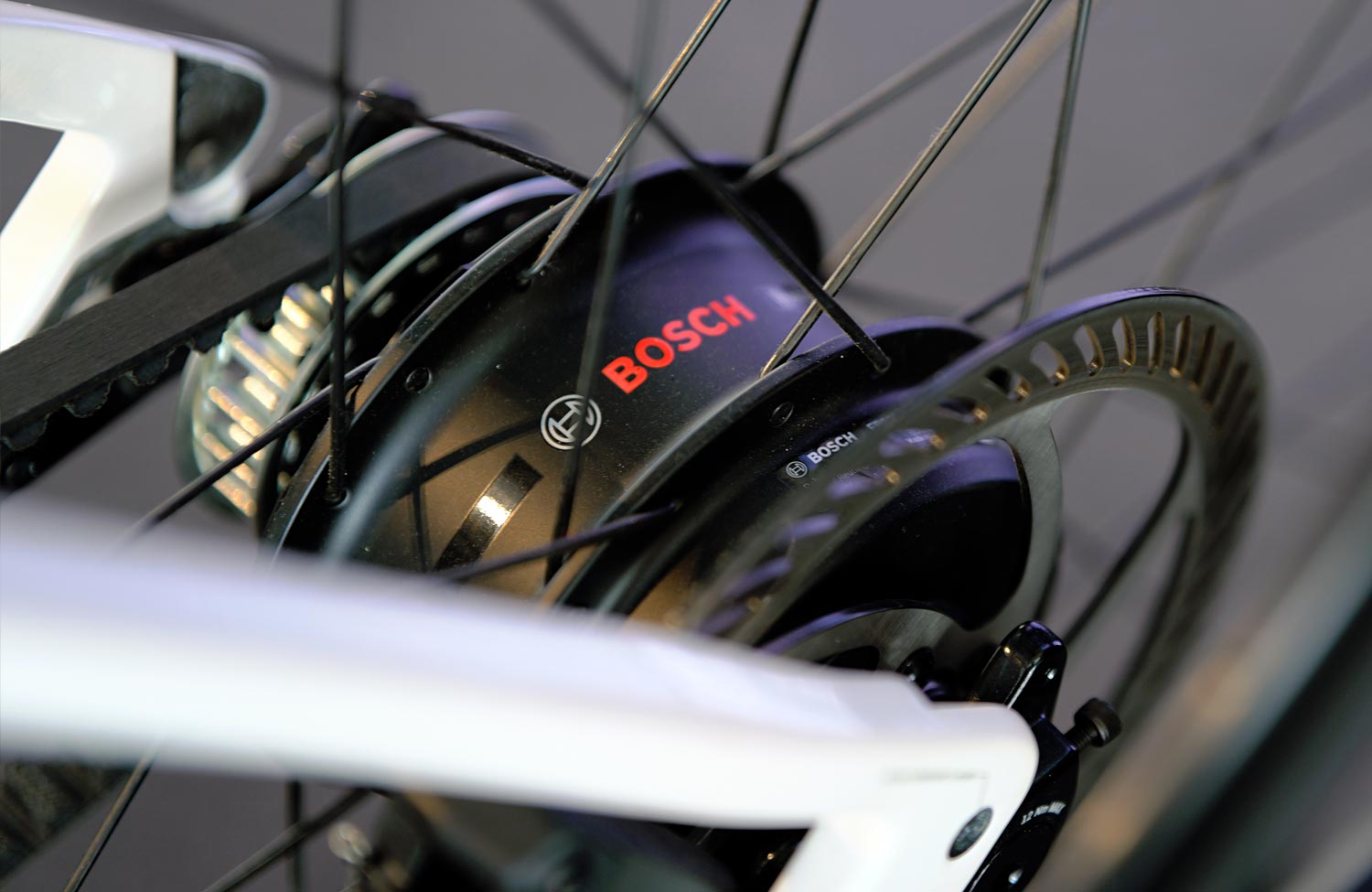
It is precisely this effect that the hub motor could now be set to experience. The Hub Line combines the familiar Bosch components with the benefits of a compact rear-wheel drive system. These include integration with the Bosch ecosystem, the app, the familiar riding modes and numerous connected features.
What’s more, the new drive system is likely to enable e-bikes to be offered at comparatively attractive prices – at least by Bosch’s standards. This is an important consideration at a time when many manufacturers and customers are paying closer attention to price than they were just a few years ago.
Conclusion
It is particularly encouraging for the urban e-bike sector that Bosch now also has a hub motor in its range. This not only provides more choice, but is also likely to draw further attention to this type of drive system. After all, there is hardly any other manufacturer that has such a strong influence on the e-bike market as the Swabian firm.
The first models unveiled by Canyon, Gazelle and Moustache already demonstrate the potential of the Hub Line. Lightweight, elegant and comparatively affordable e-bikes are a perfect match for the character of the new system. And further announcements are likely to follow soon. The chances are therefore good that Bosch will achieve success with the Hub Line.
We’ve already had the chance to test the new Hub Line on three bikes. You can read the article about it here.