With its Smart-Bike One, Lemmo has already demonstrated just how innovative, well-designed and, at the same time, comparatively affordable an urban e-bike can be. With the Lemmo Zero, the manufacturer is now applying many of these ideas to a completely different format: this ultra-compact folding bike incorporates some of the familiar features of its predecessor, but – thanks to its design – reinterprets them in some respects entirely anew. The question remains: does the concept work in a smaller format too?
Design
Design is one of Lemmo’s core strengths – and even at first glance, it’s clear that a great deal of development work has gone into the Zero. Not just in terms of its external appearance, mind you, but above all in its functional design, which offers some surprisingly clever solutions.
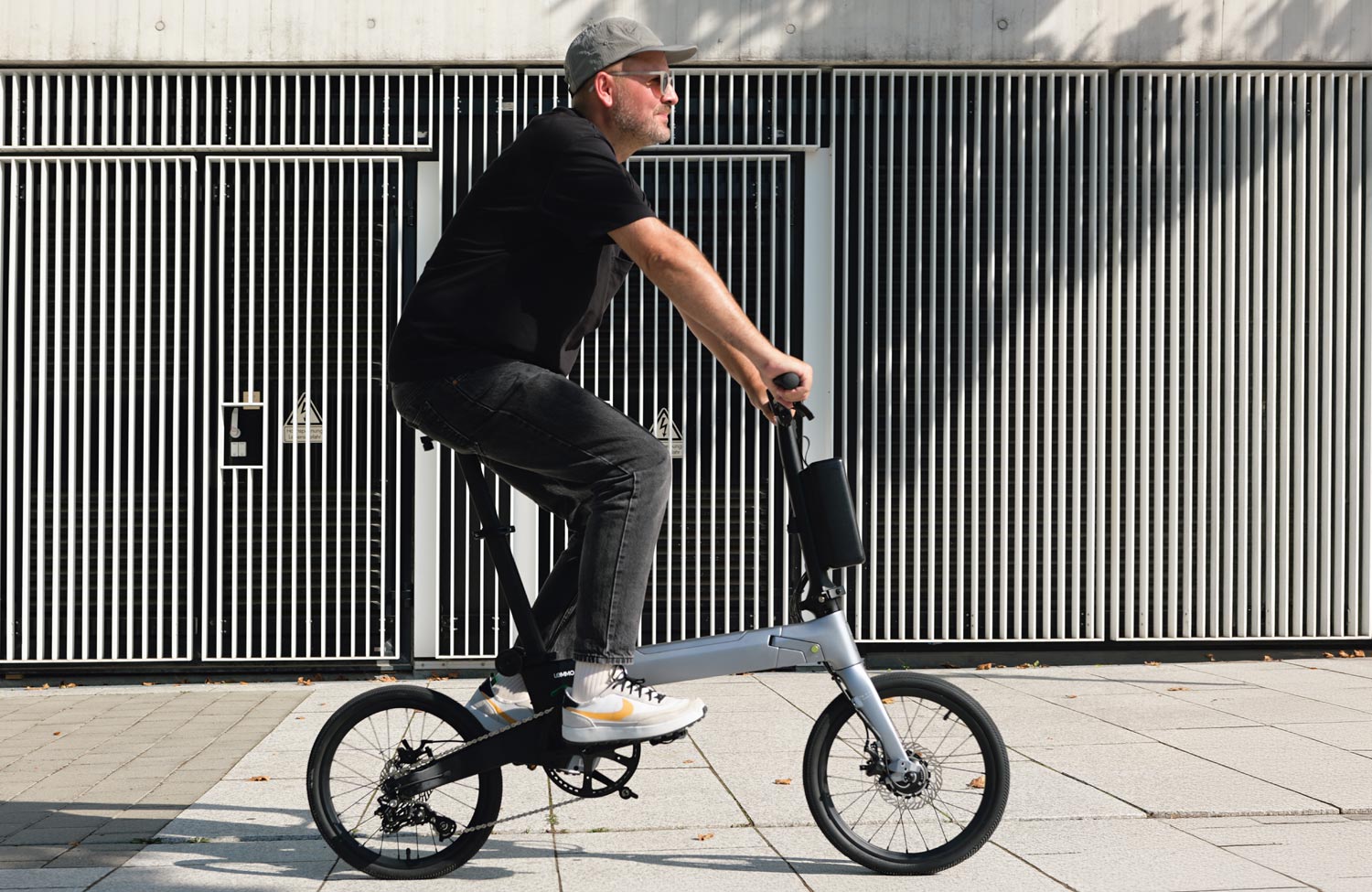
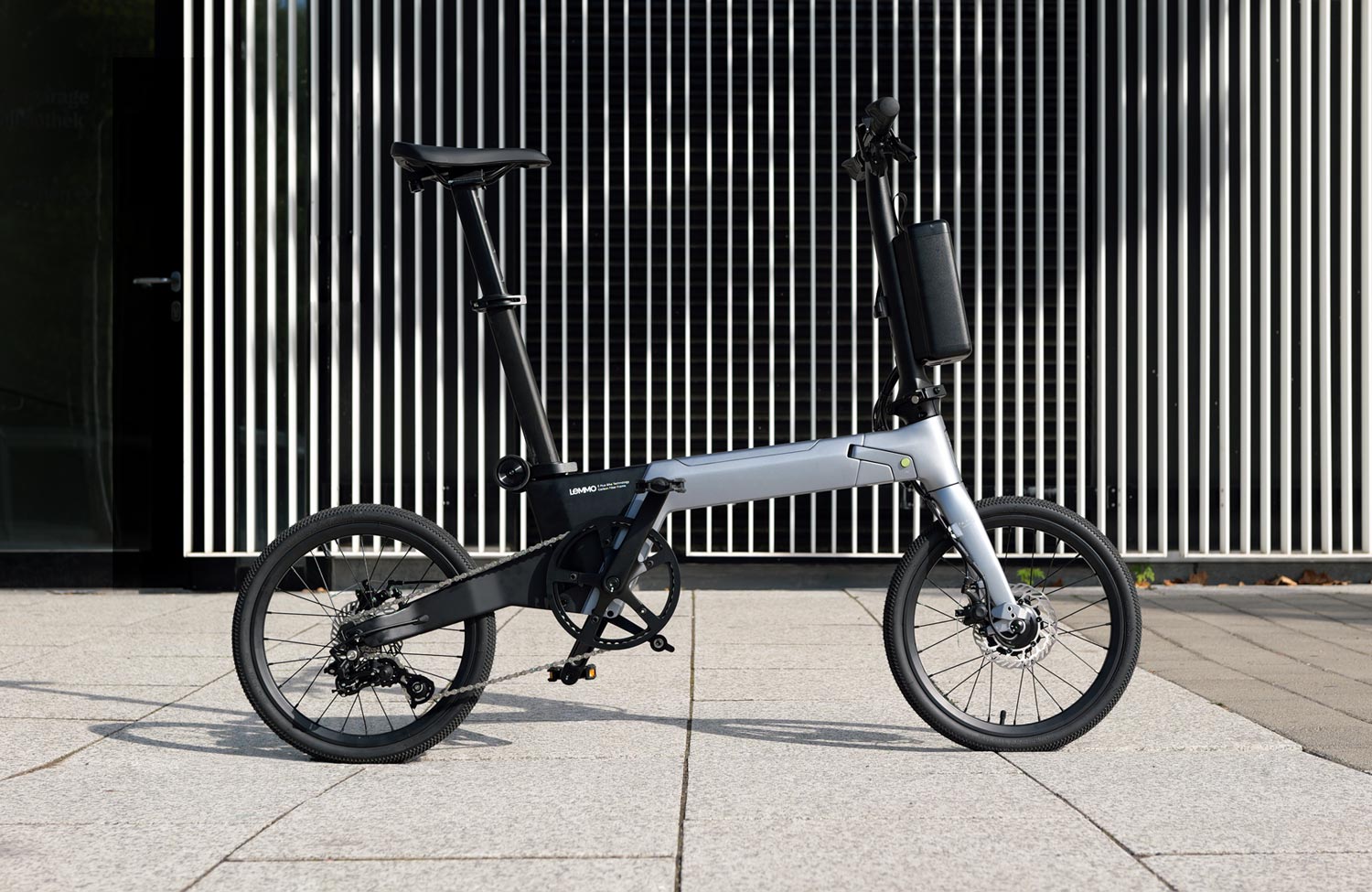
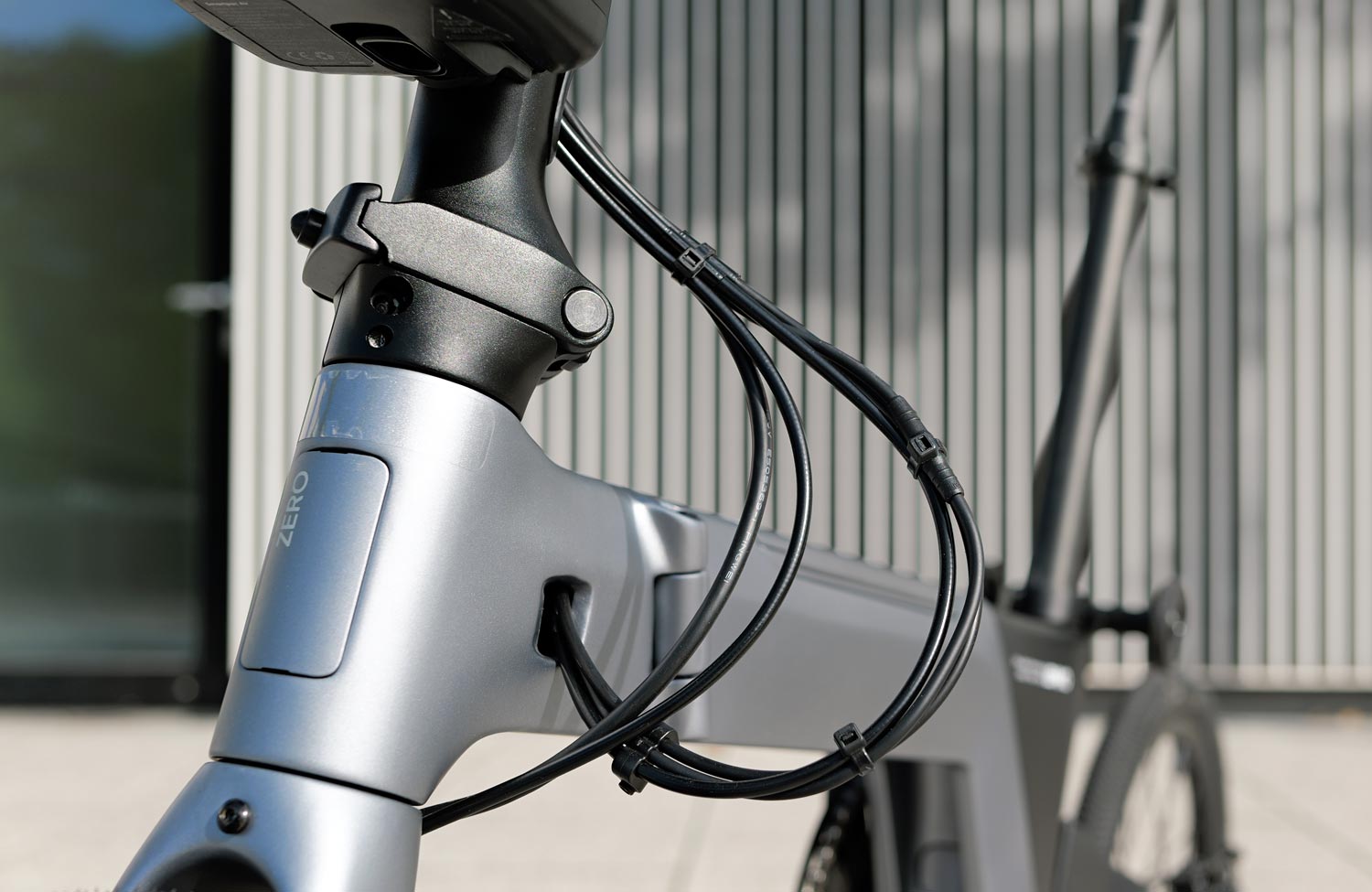
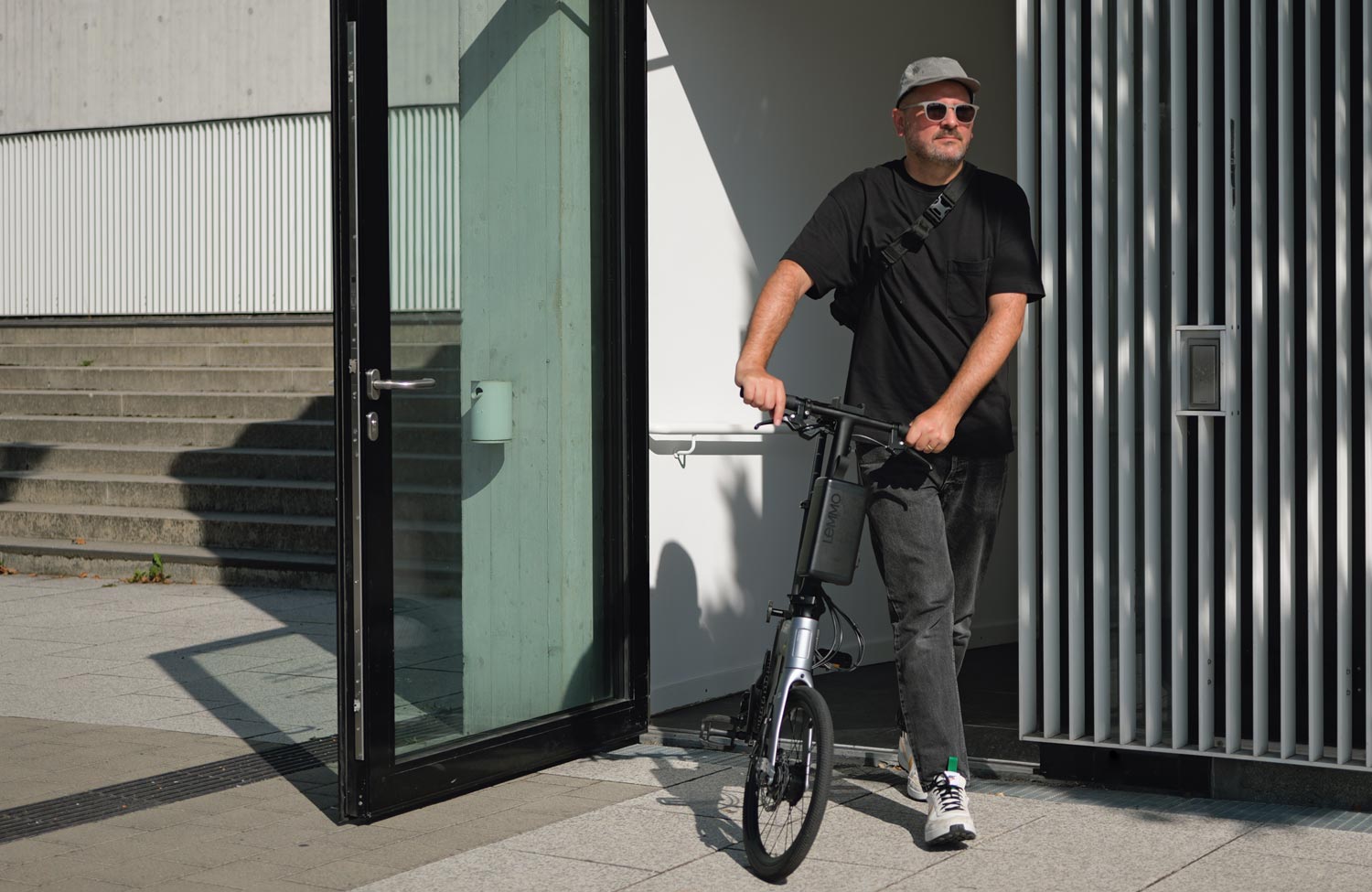
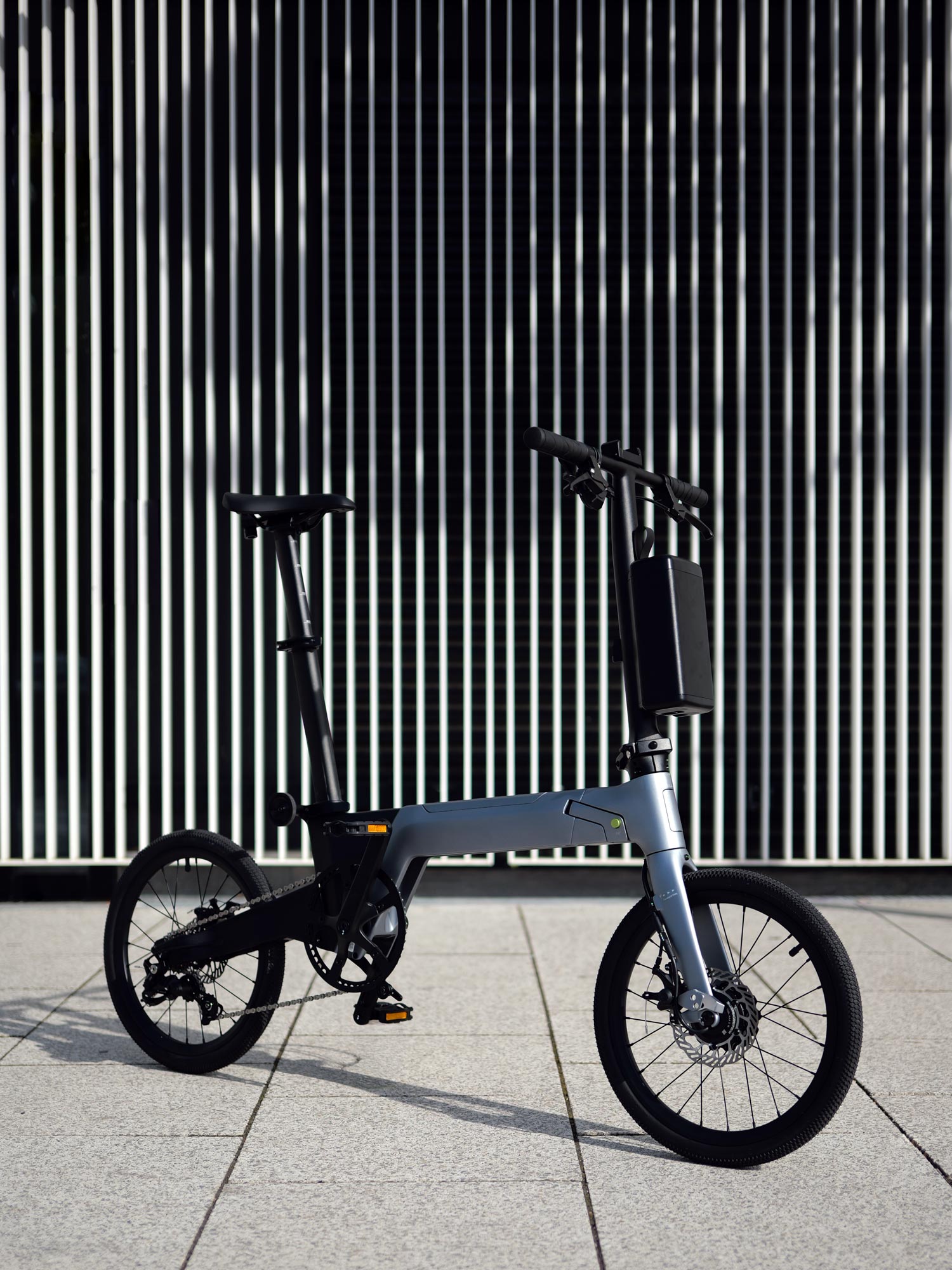
Visually, the bike is appealing with its clean lines and the two-tone colour scheme of our test model in silver and matt black. For such a compact folding bike, the routing of the cables and wires is also elegantly resolved, as most of them disappear directly into the frame. Only on the folding handlebar do they remain visible, due to the design. The compact motor in the front wheel, on the other hand, is so small that you almost only notice it at second glance.
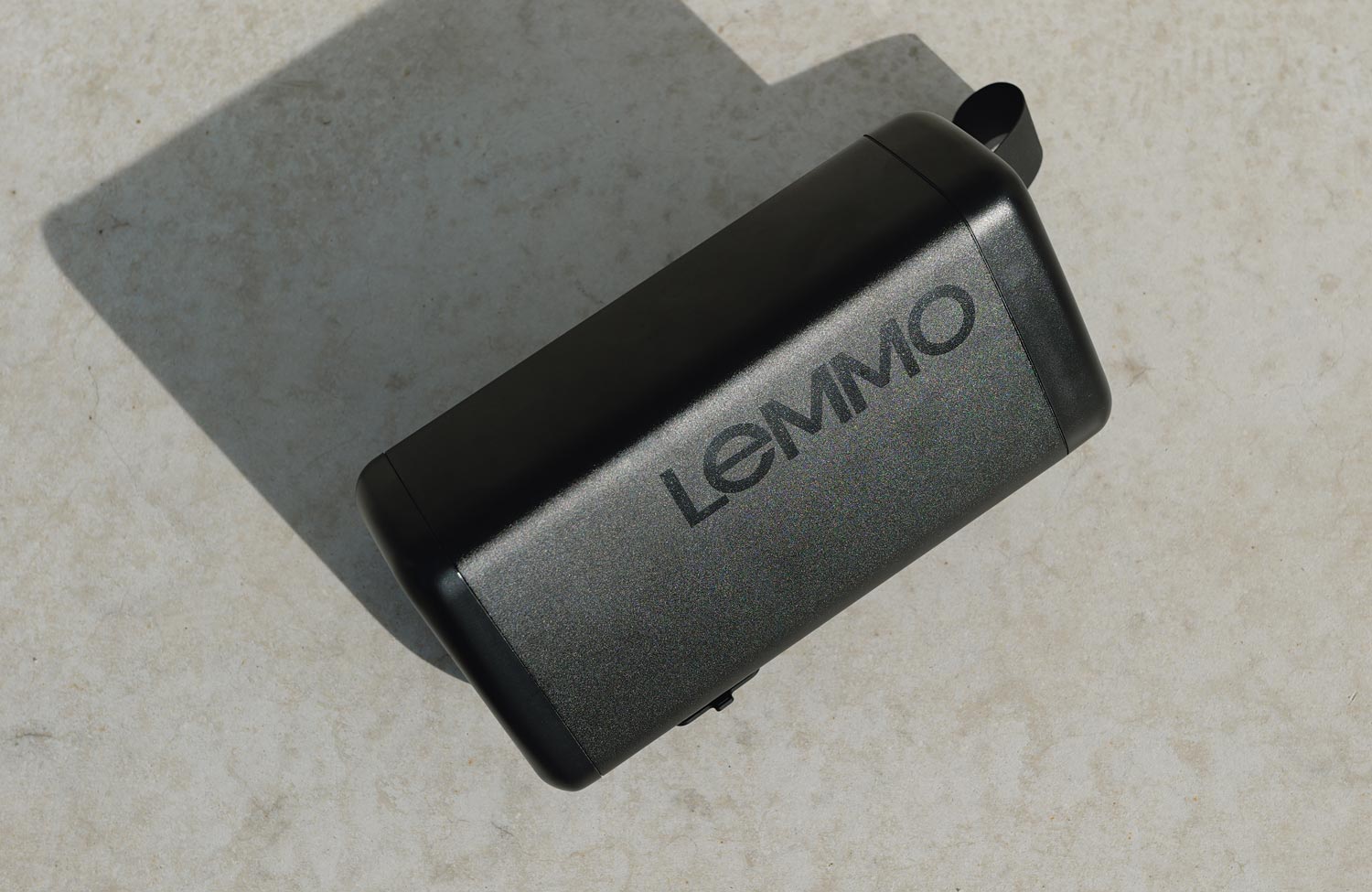
The battery is much more prominent at the front of the handlebars. However, this should be seen as a feature rather than a design flaw, as the module – which Lemmo calls the Smartpac – can be completely removed and carried separately, and can then also be used as a power bank to charge external devices such as smartphones or laptops.
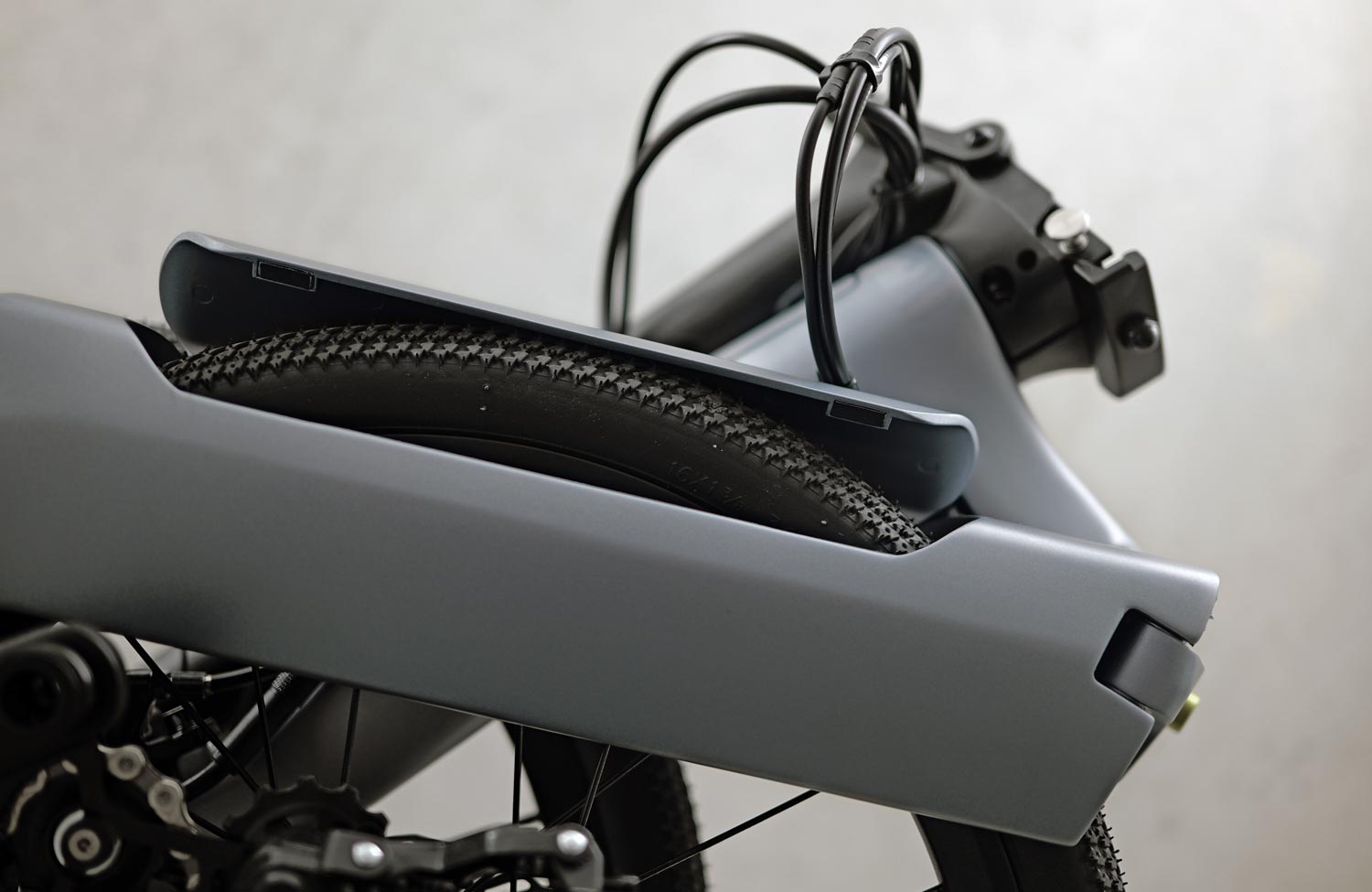
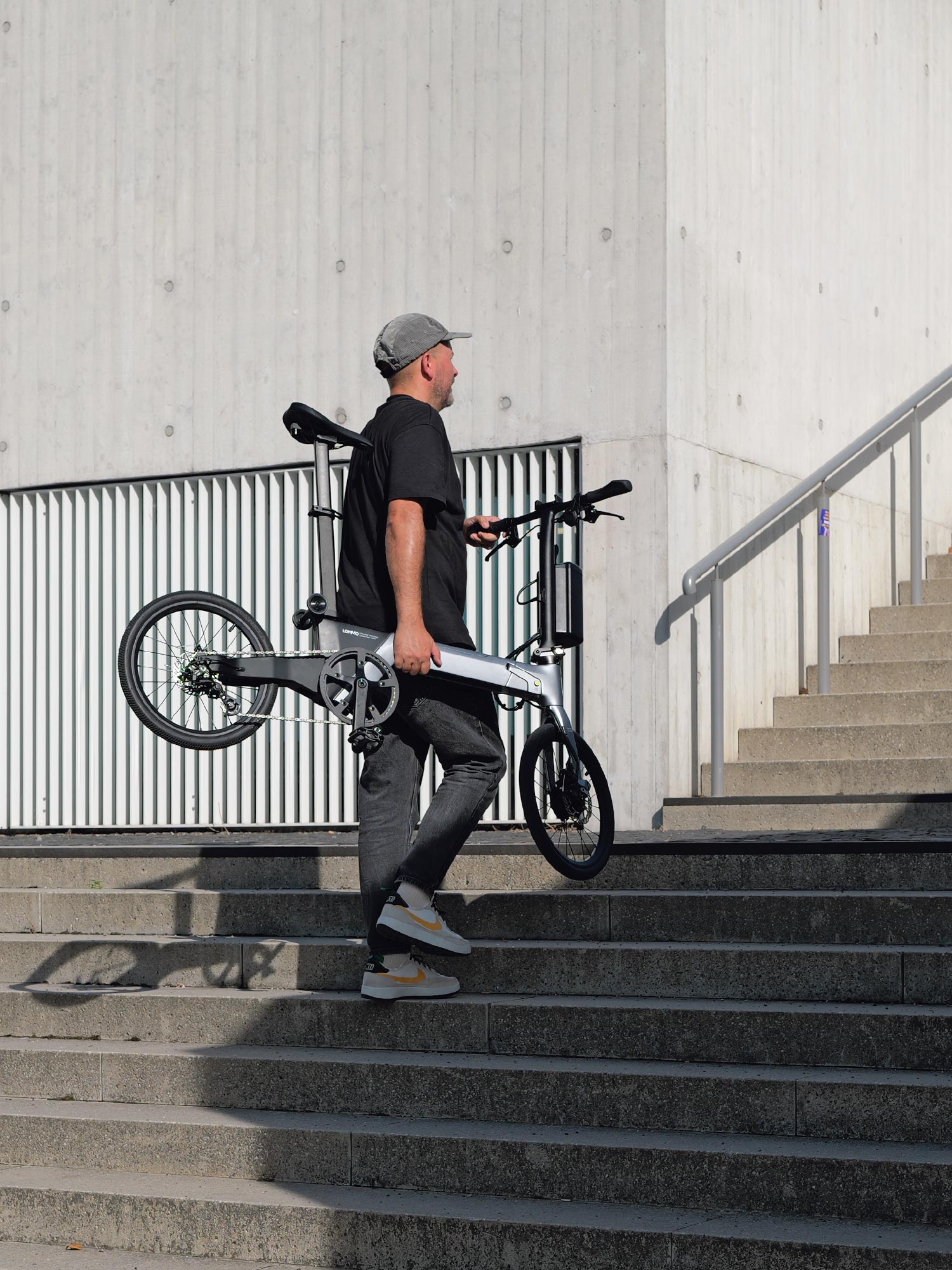
What is particularly clever, however, is the folding mechanism itself. When folded, the front wheel partially disappears into the frame and then re-emerges at the top, where a magnetically held flap opens automatically. The result is an exceptionally compact folded size, meaning the Zero can even be stowed away in a suitably large suitcase.
Features
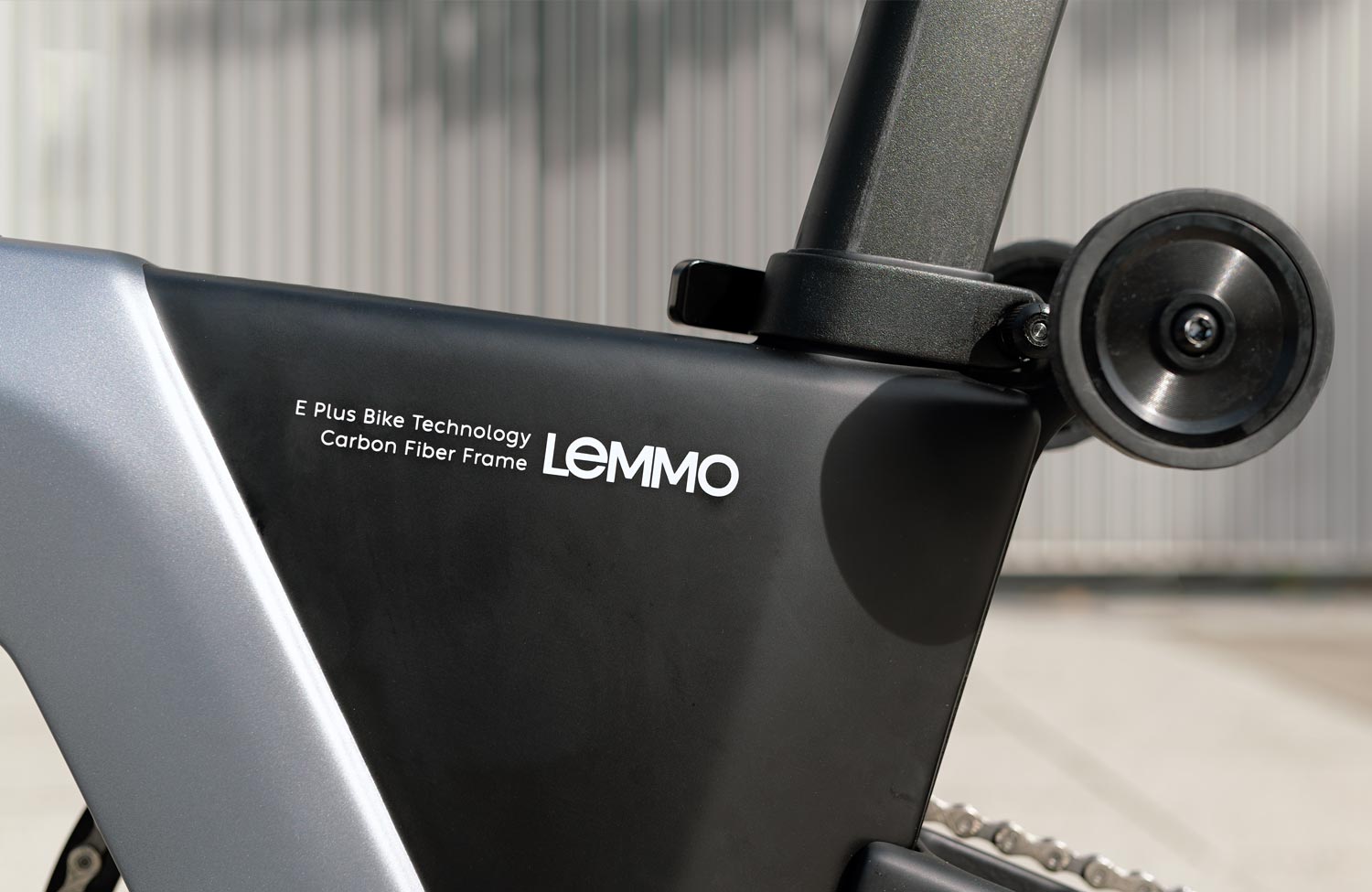
To ensure that the Lemmo Zero is not only compact in size but also lightweight, the manufacturer has opted for a lightweight carbon frame. Without the Smartpac, our test bike weighed in at just 11.7 kilograms – an exceptionally good figure for an electric folding bike of this size. The Smartpac adds a further 2.6 kilograms.
The built-in battery has a capacity of 159 Wh. At first glance, this seems fairly modest – it’s usually sufficient for the generally short commutes typical of a folding bike like this. At the same time, Lemmo has managed to keep just within the 160 Wh limit, up to which batteries can be carried on flights under certain conditions. So, as you can see, Lemmo is certainly serious about the idea of taking the Zero with you when travelling.
In this context, here’s another point of reference regarding the required suitcase size: the folded Zero, measuring 59 x 52 x 25 cm, just didn’t quite fit into a Rimowa Check-In M. With the larger Check-In L version, however, fitting it in shouldn’t be a problem. Of course, you should still check the airline’s specific guidelines on carrying the battery before travelling.
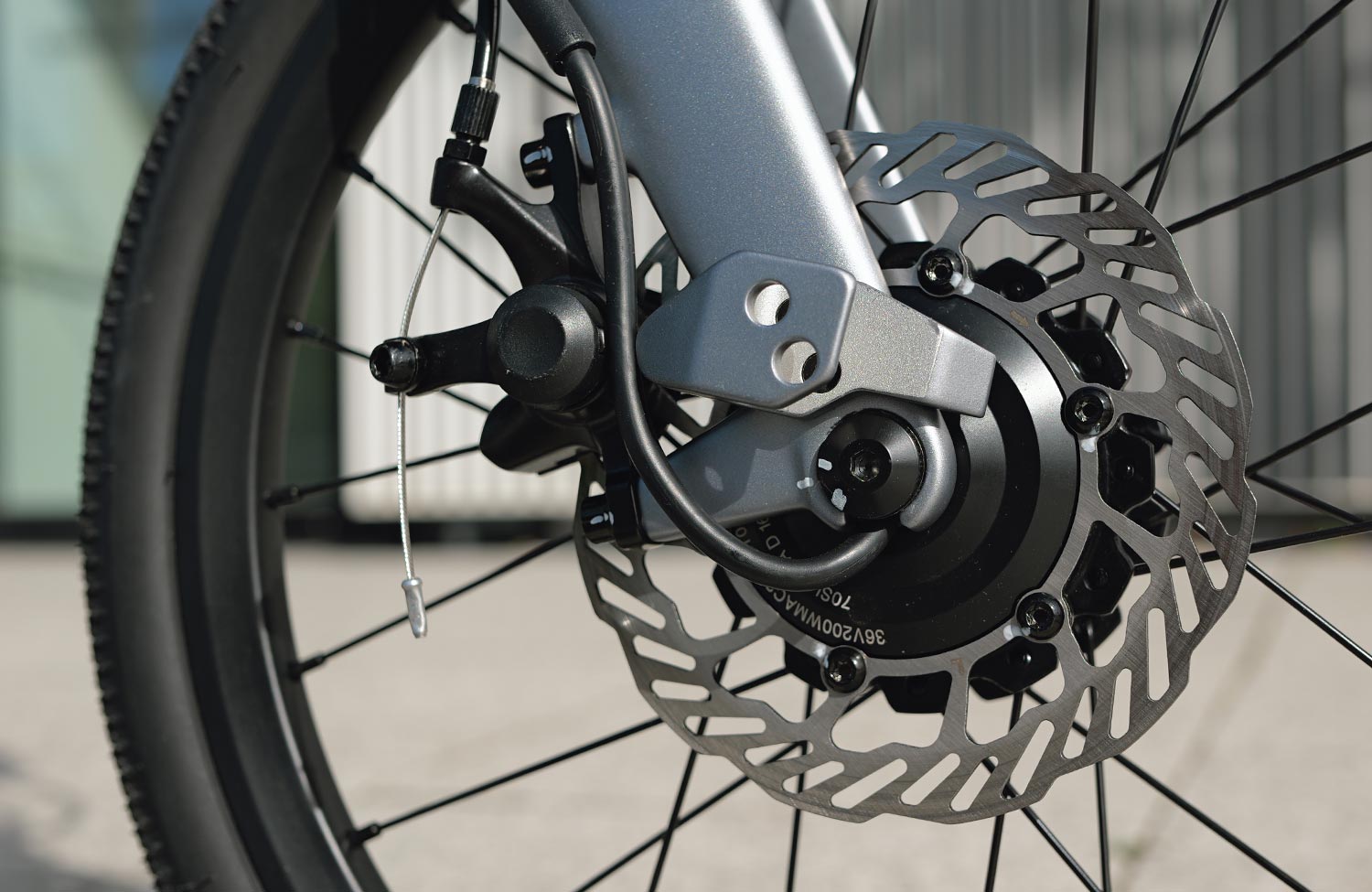
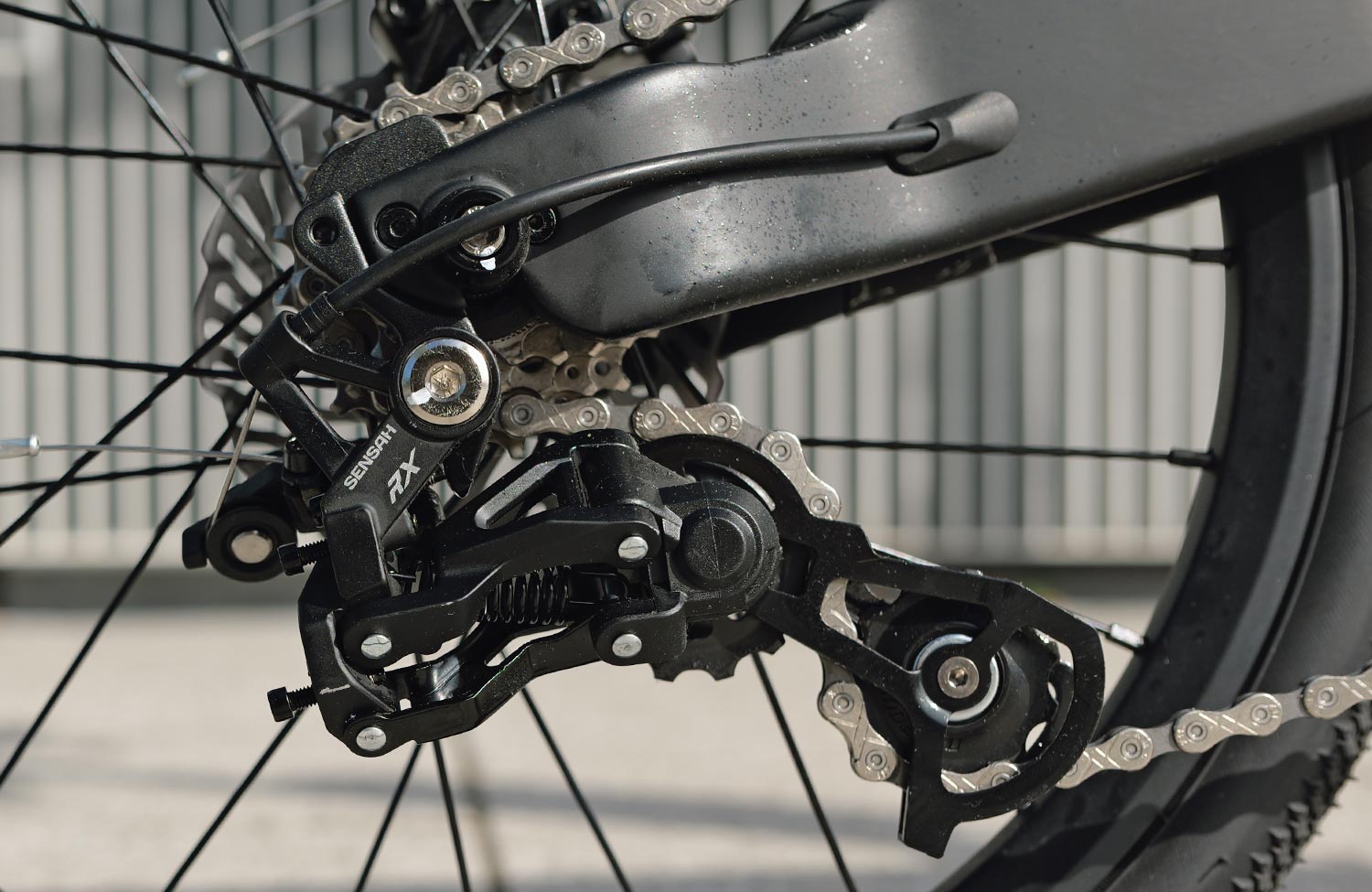
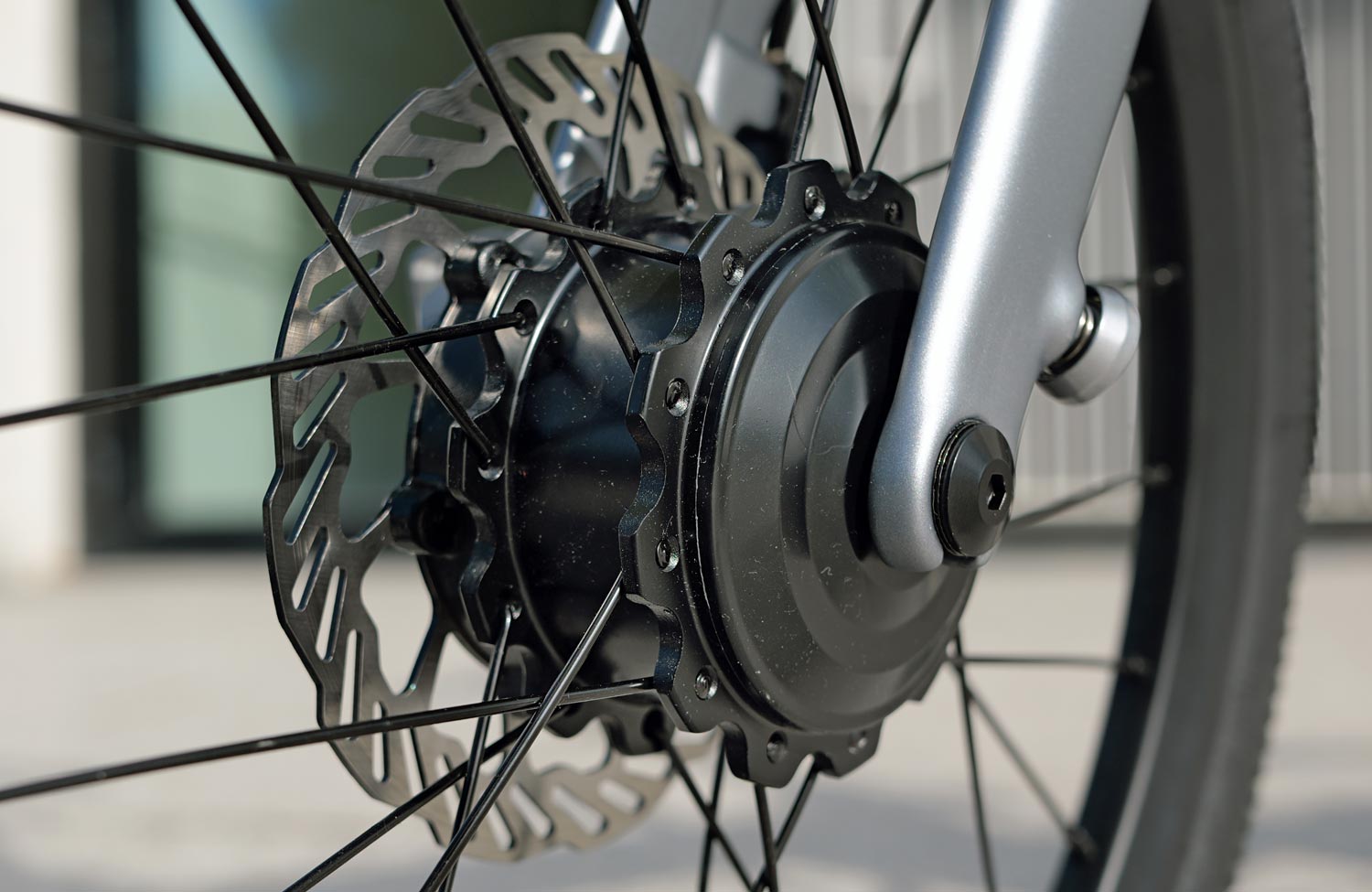
But let’s get back to the bike’s actual specifications. The electric motor is housed in the front wheel and delivers up to 30 Nm of torque at a power output of 200 watts. On paper, these figures may seem rather modest, but in actual riding experience, they leave nothing to be desired. The motor is complemented by a mechanical 5-speed derailleur from the Chinese manufacturer Sensah, which is operated in the traditional way via a cable.
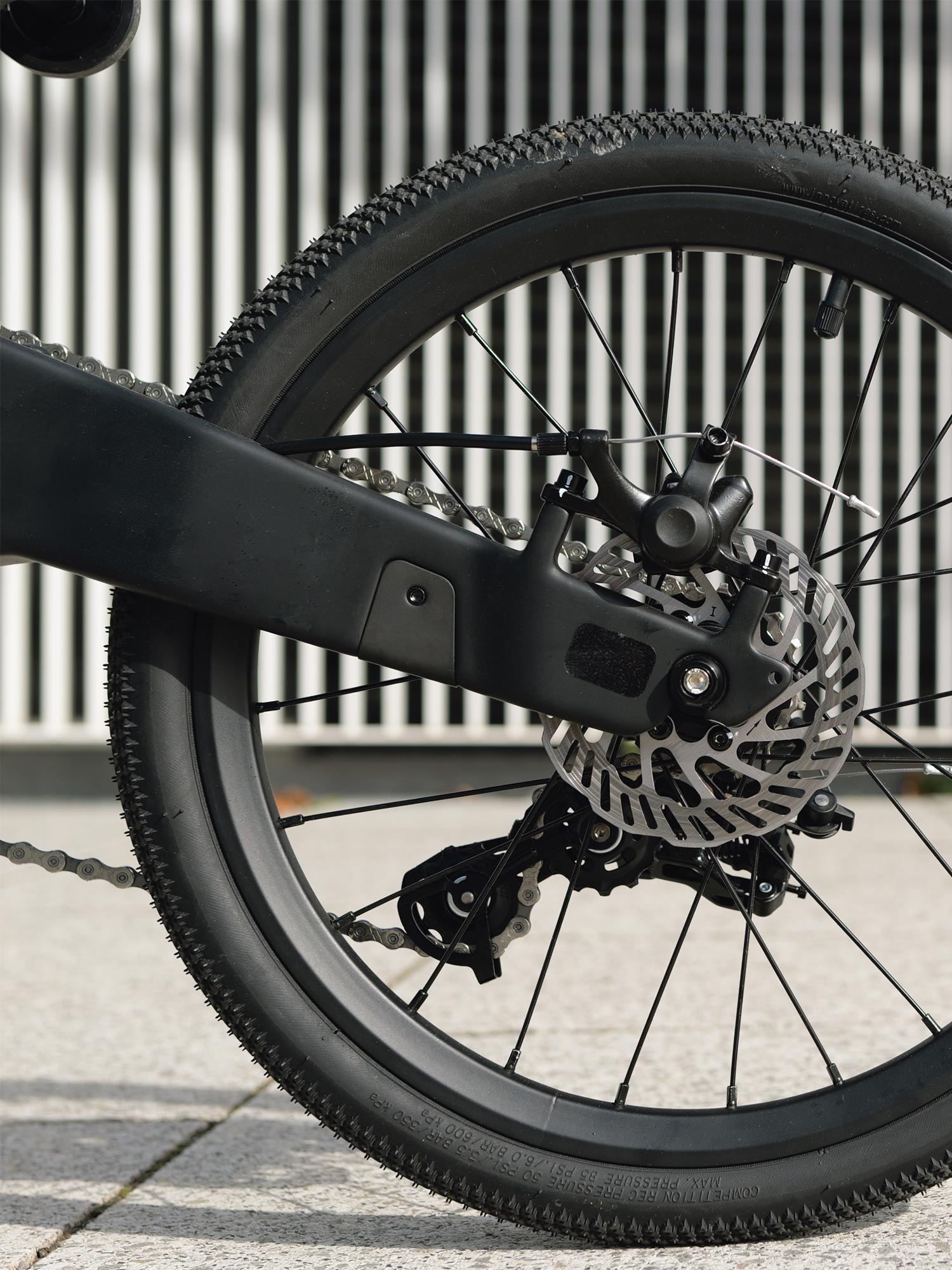
Lemmo has also opted for mechanical operation of the disc brakes, rather than a hydraulic system. As is typical for such a compact folding bike, the Zero rolls on 16-inch wheels, with tyres that are comparatively narrow at 34 millimetres. Unfortunately, they don’t have reflective strips, but reflectors for the spokes are included with the bike.
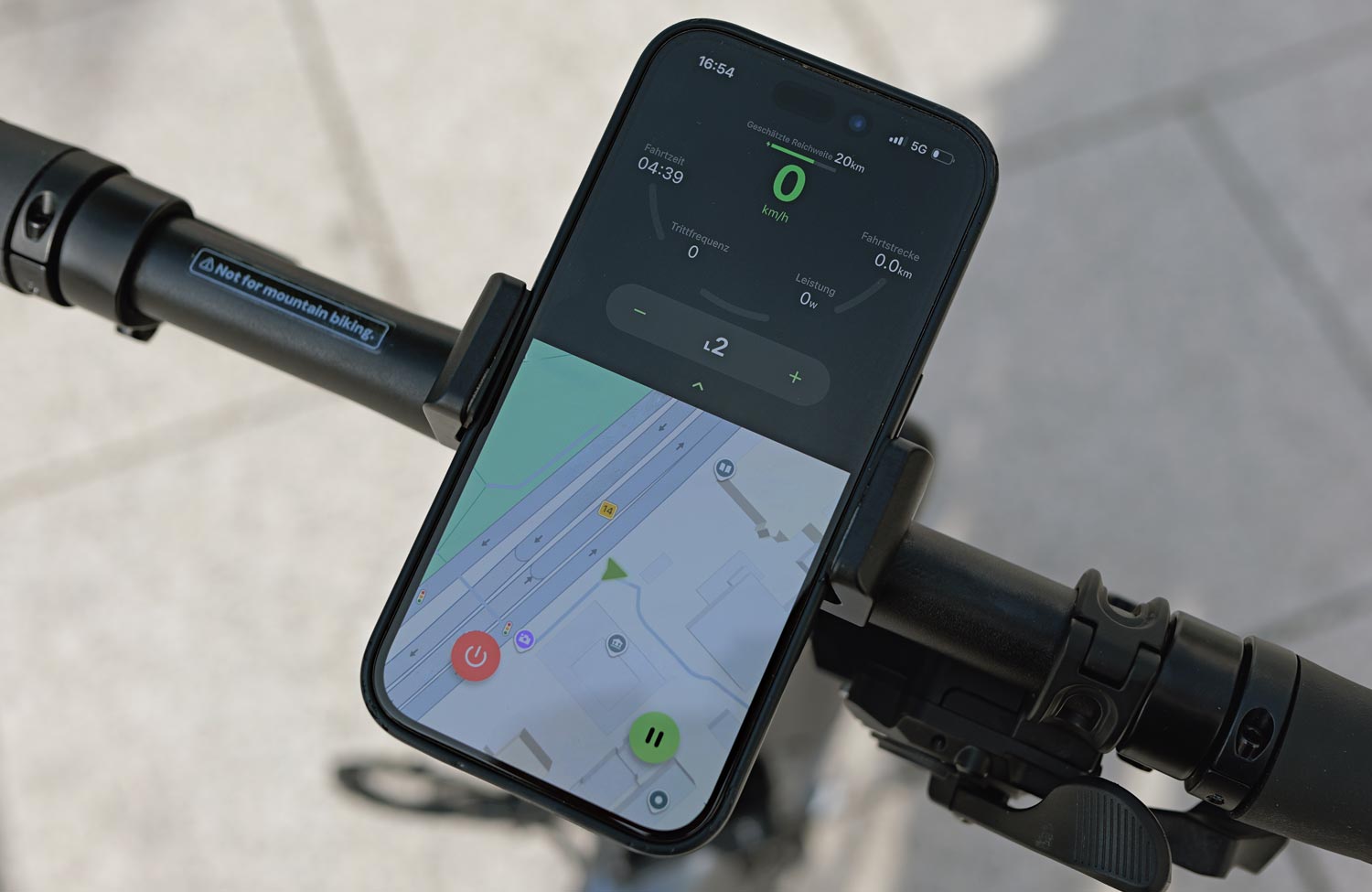
There is a universal smartphone holder on the handlebars into which the phone simply clips. No special smartphone case or additional adapter system is required. The smartphone can also be charged whilst riding using a separate cable connected via a USB port on the handlebars. However, you won’t find any other traditional controls for operating the electric drive on the handlebars.
Our test bike was fitted with neither mudguards nor lights. Lemmo now offers the former as an optional extra, whilst the latter are now included as standard – although, unfortunately, they are powered separately by batteries rather than being supplied with power centrally by the Smartpac.
Operation
A key aspect of any folding bike is, of course, the process of folding it up and unfolding it. First of all: the basic principle is similar to that of other bikes in this category – so it takes a few attempts to get the hang of the individual steps. Once you’ve got the sequence down, however, the process becomes second nature.
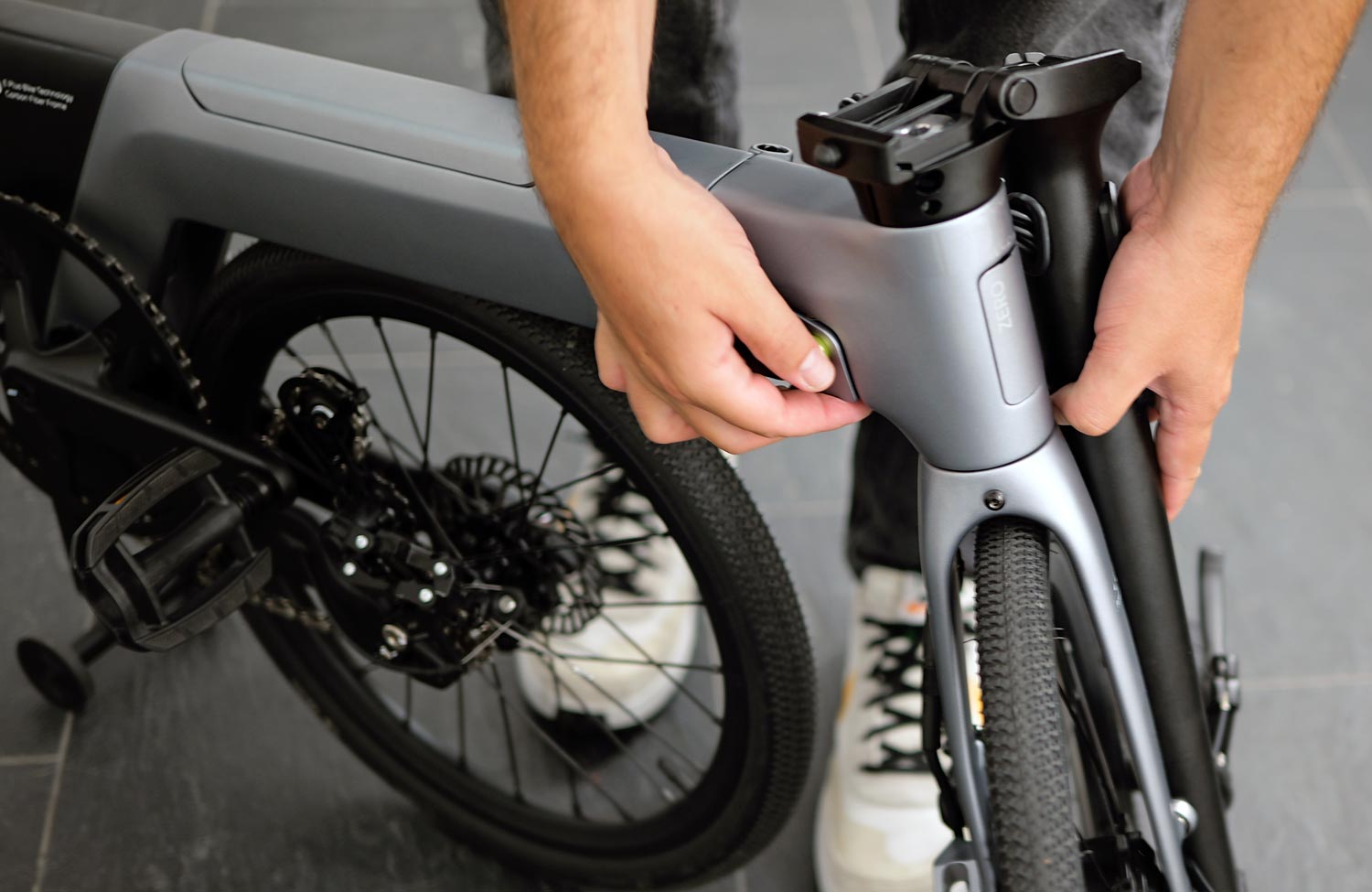
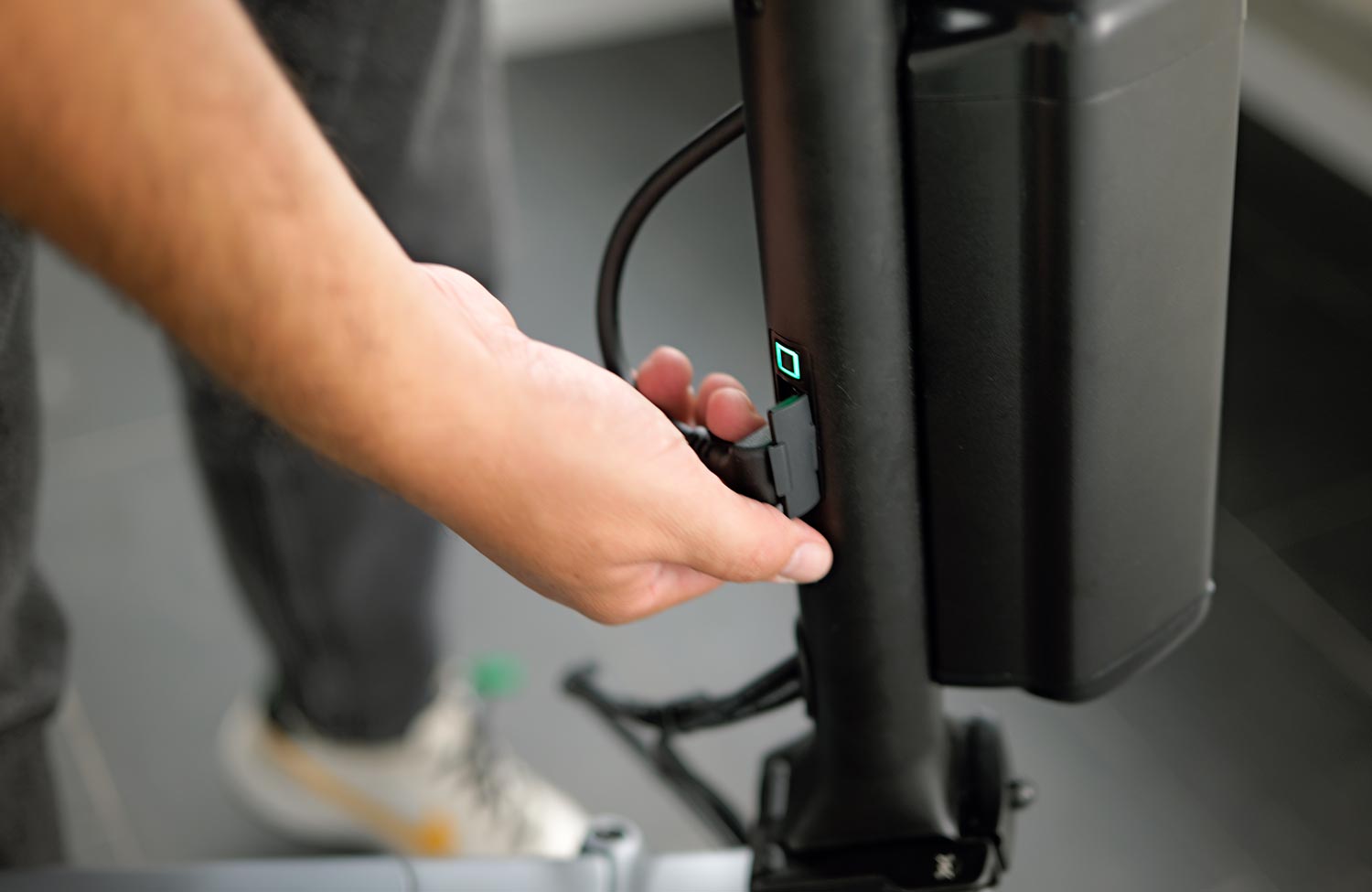
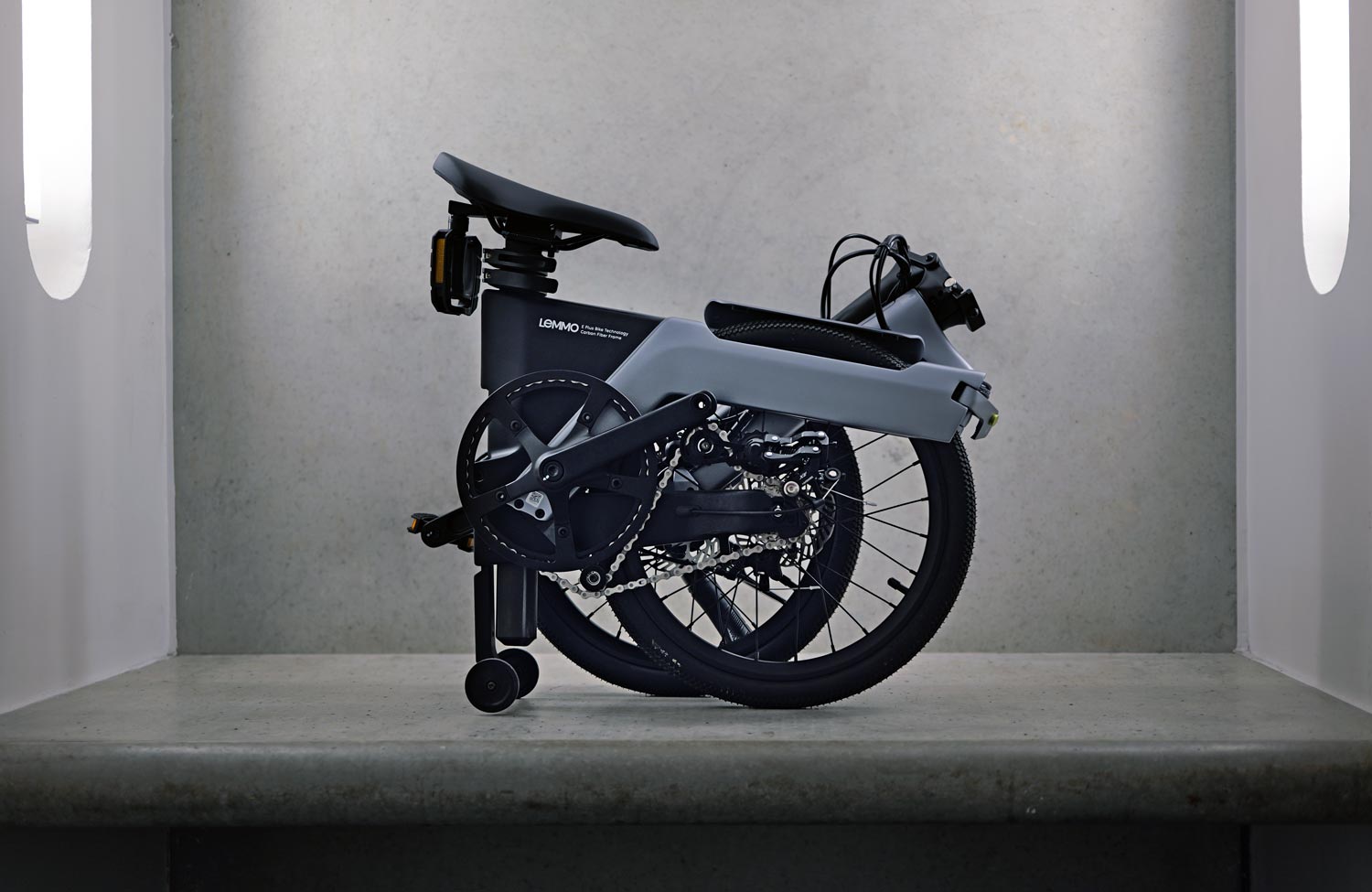
To unfold the bike, first tilt the handlebars upwards and then fold the front section of the frame forwards. Both parts lock securely into place with a clearly audible and noticeable click. The corresponding levers are made of sturdy aluminium and can be operated with precision. The rear section, on the other hand, requires no additional locking lever and is held in place on the main frame by magnets. To fold it away, simply press the chainstay down with your foot whilst lifting the frame at the same time.
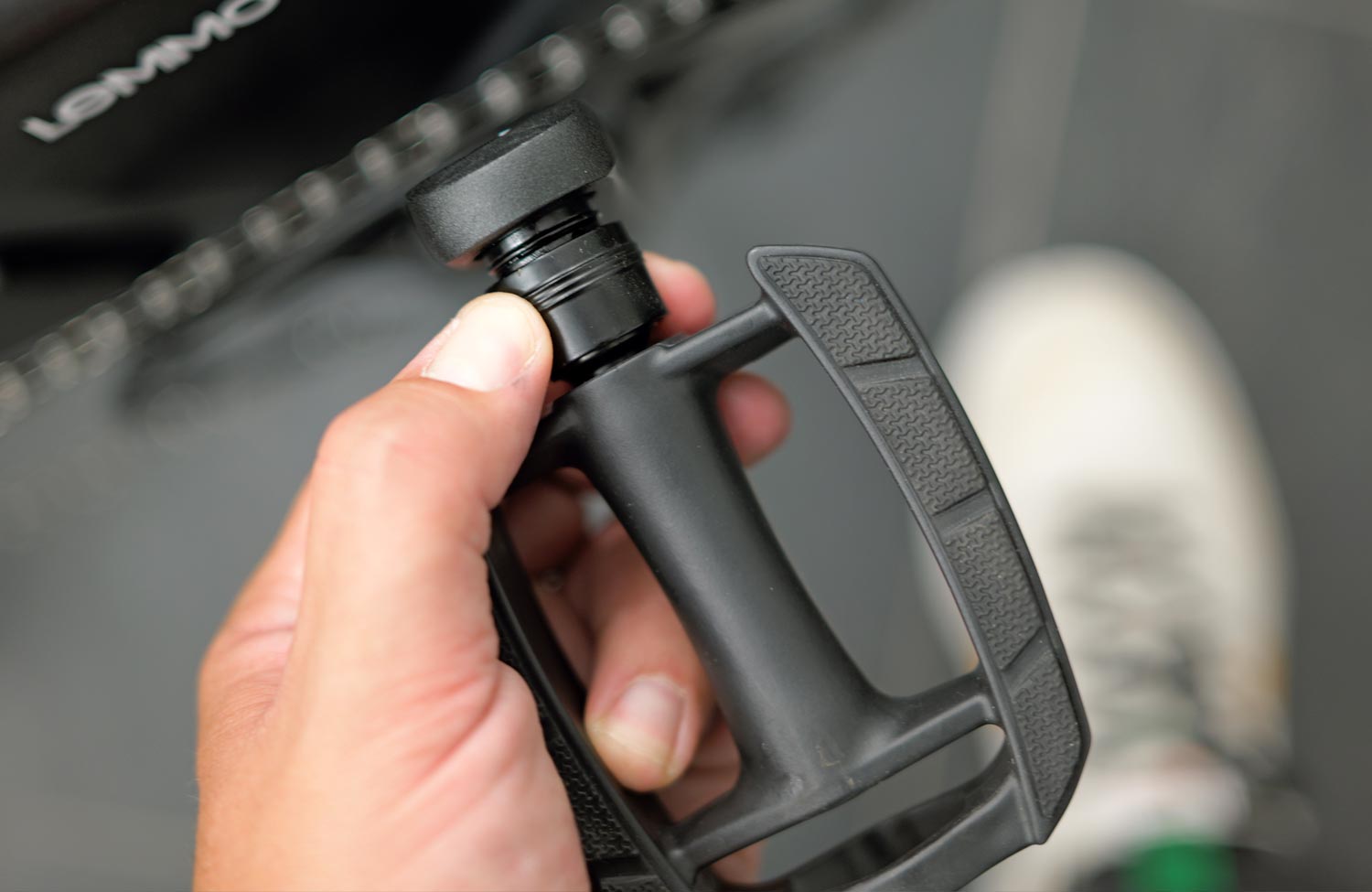
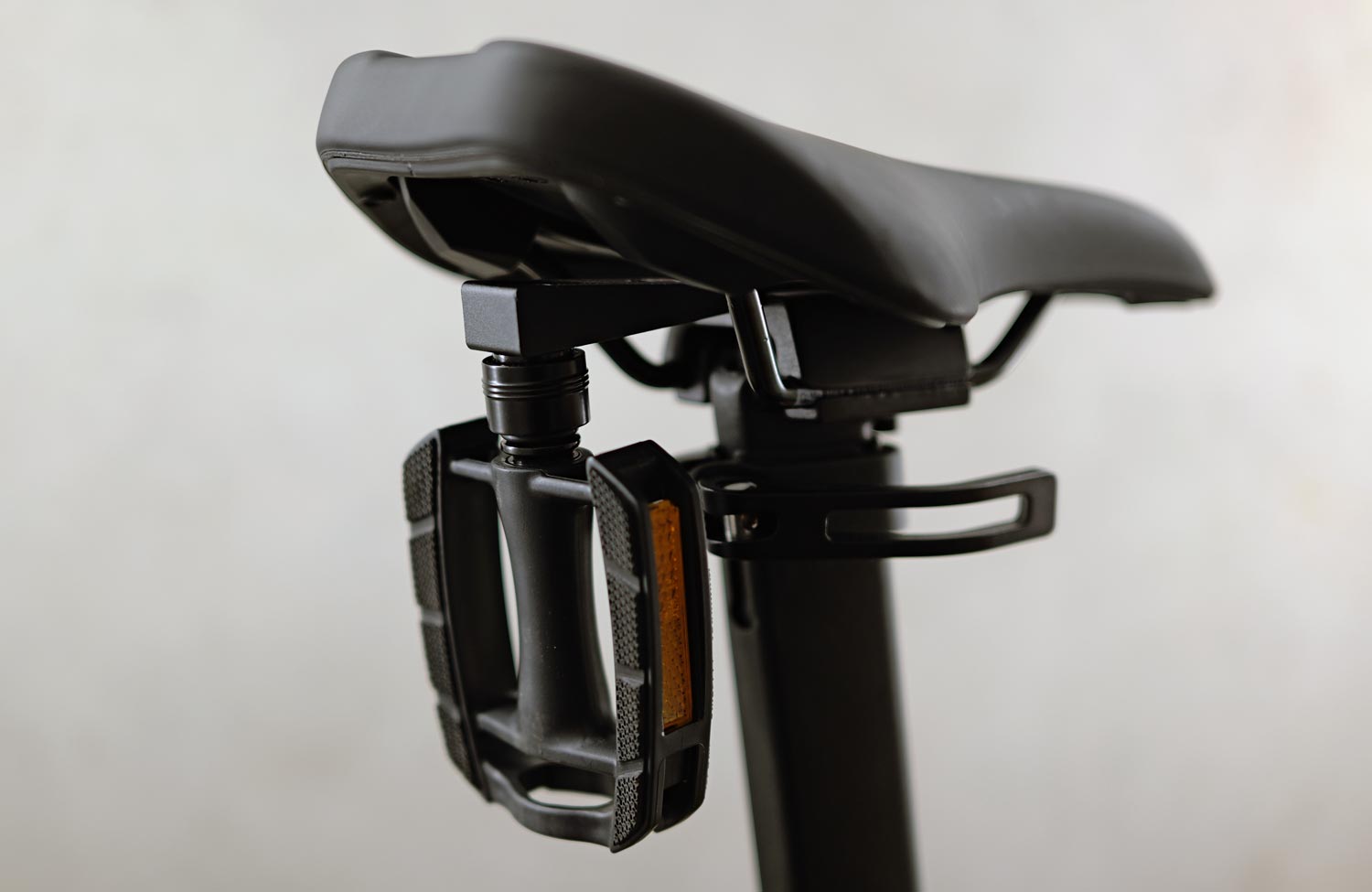
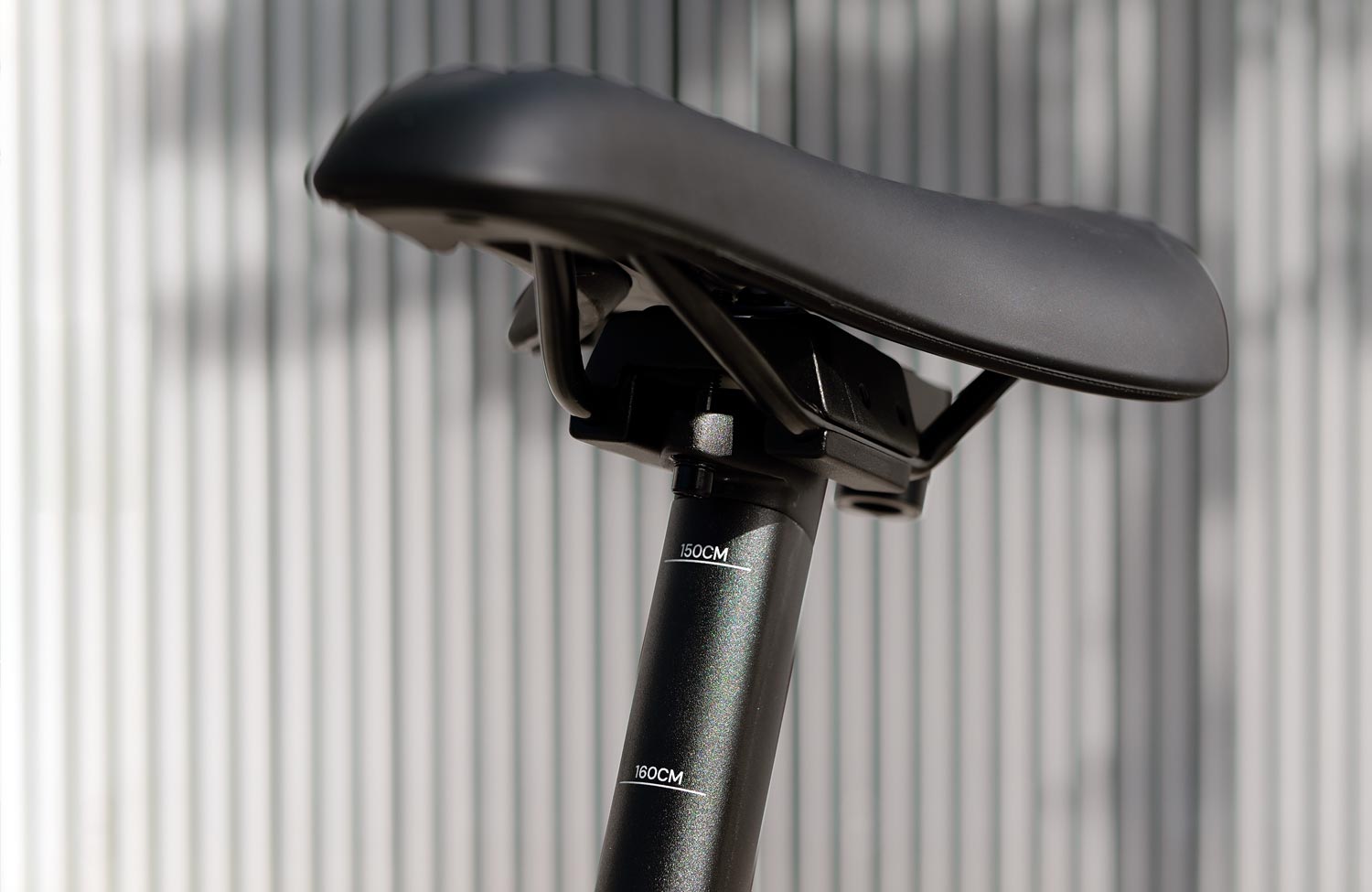
Finally, there is the seat post, which can be extended and retracted using two quick-release levers. A handy feature is that the seat post has a scale showing the corresponding body height. This means that, once you’ve found the right seat height, you can readjust it after each time you unfold the bike with virtually no trial and error. To achieve the narrowest possible folded dimensions, the right-hand pedal can also be removed and stowed under the saddle. When folded, the left-hand pedal points towards the centre of the frame anyway and therefore does not protrude outwards.
All in all, this results in a well-designed folding mechanism that proves perfectly suited to everyday use, particularly when travelling or when combined with public transport. Thanks to a small transport wheel on the rear wheel, the folded Zero does not need to be carried all the time, but can be pushed along in front of you, attached to the saddle, in a relatively comfortable manner. For greater stability, it is advisable to remove the Smartpac – thanks to its integrated carrying strap, you can easily carry it in your other hand.
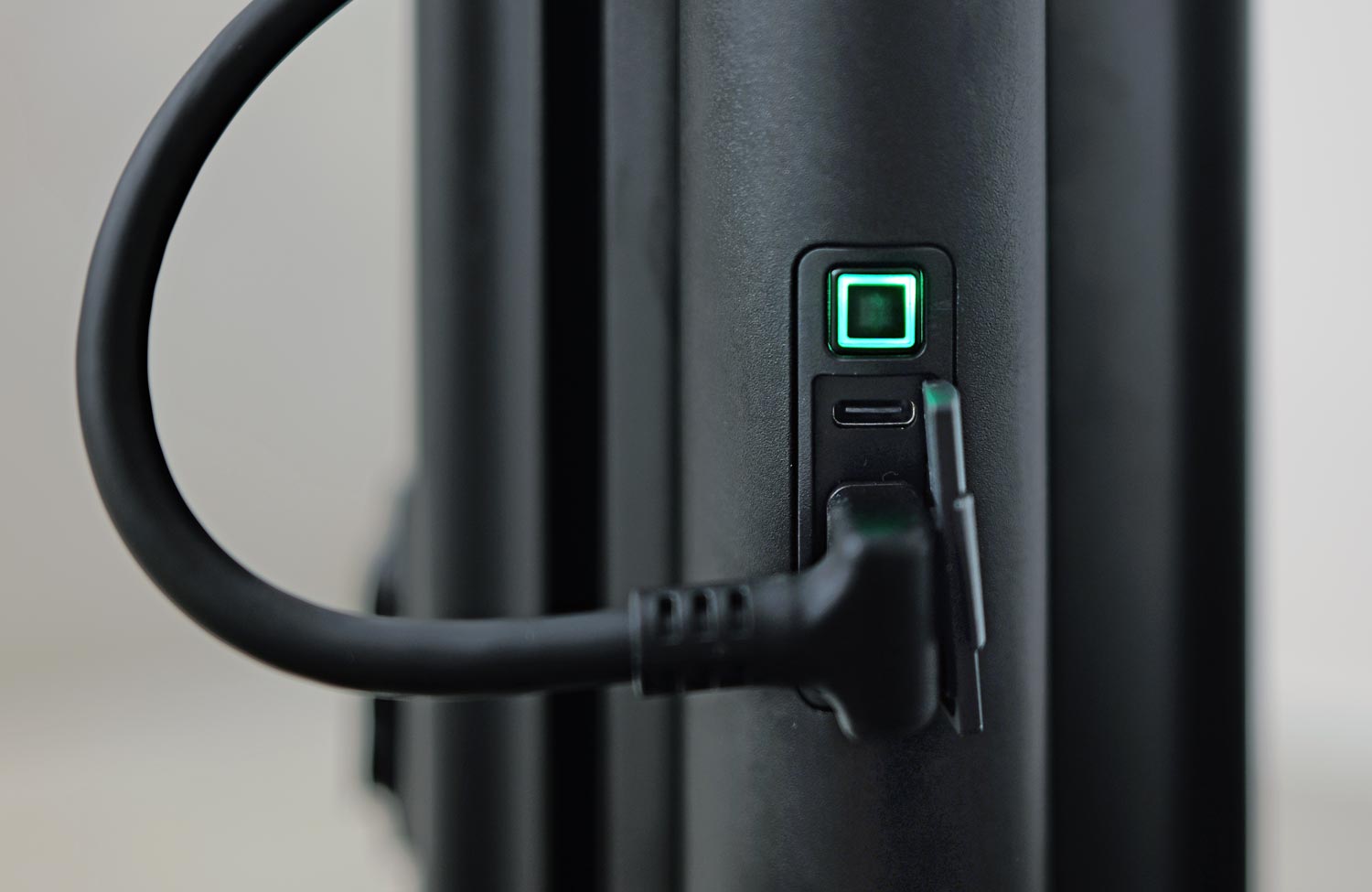
The only thing that could be a little more user-friendly is the handling of the Smartpac itself. Whilst the module slides neatly into place on the handlebar via a guide rail and sits securely there, the electrical connection to the bike must still be established manually using a cable. We would have preferred a solution where the electrical contact is established automatically as soon as the module is inserted.
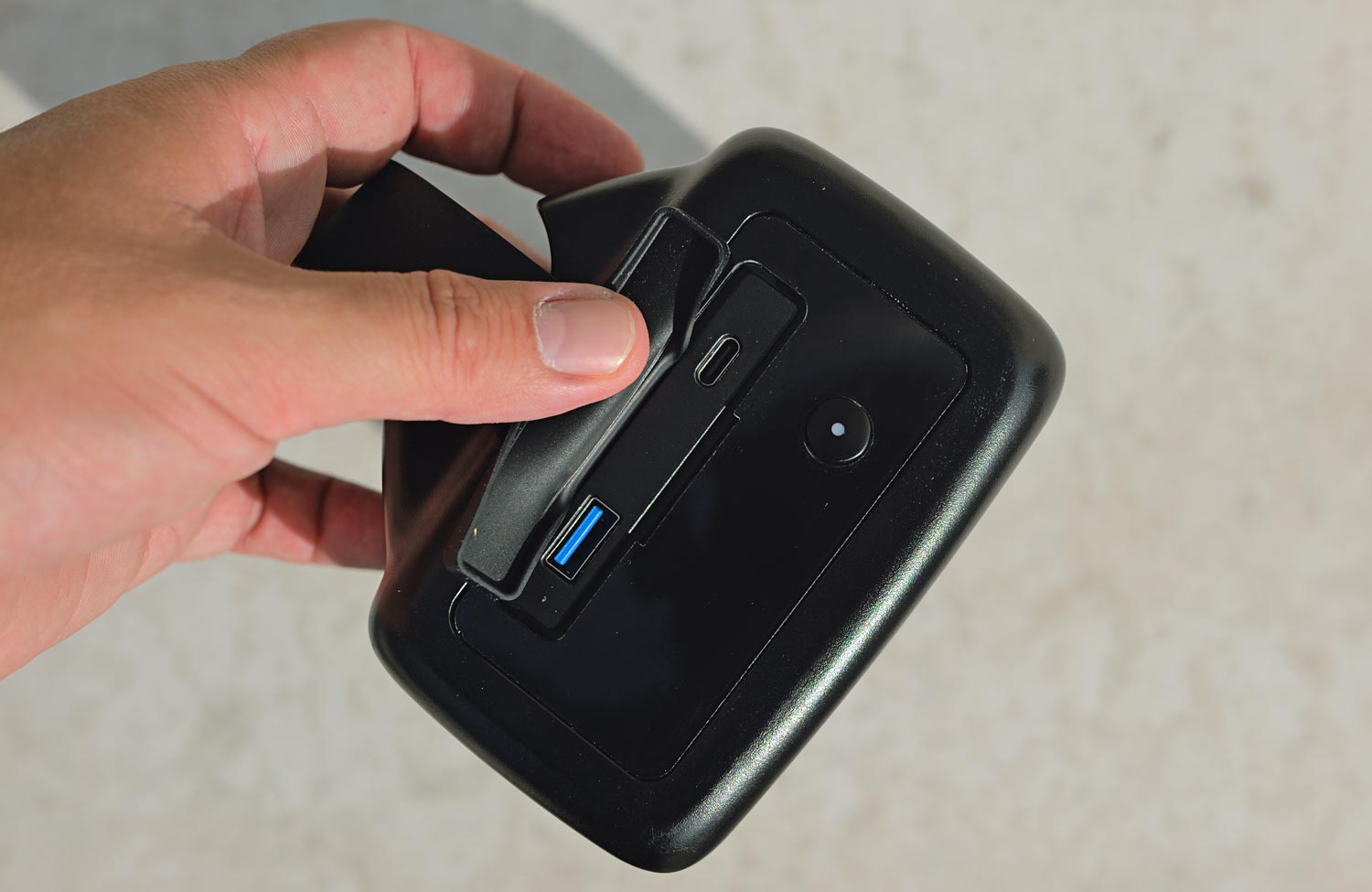
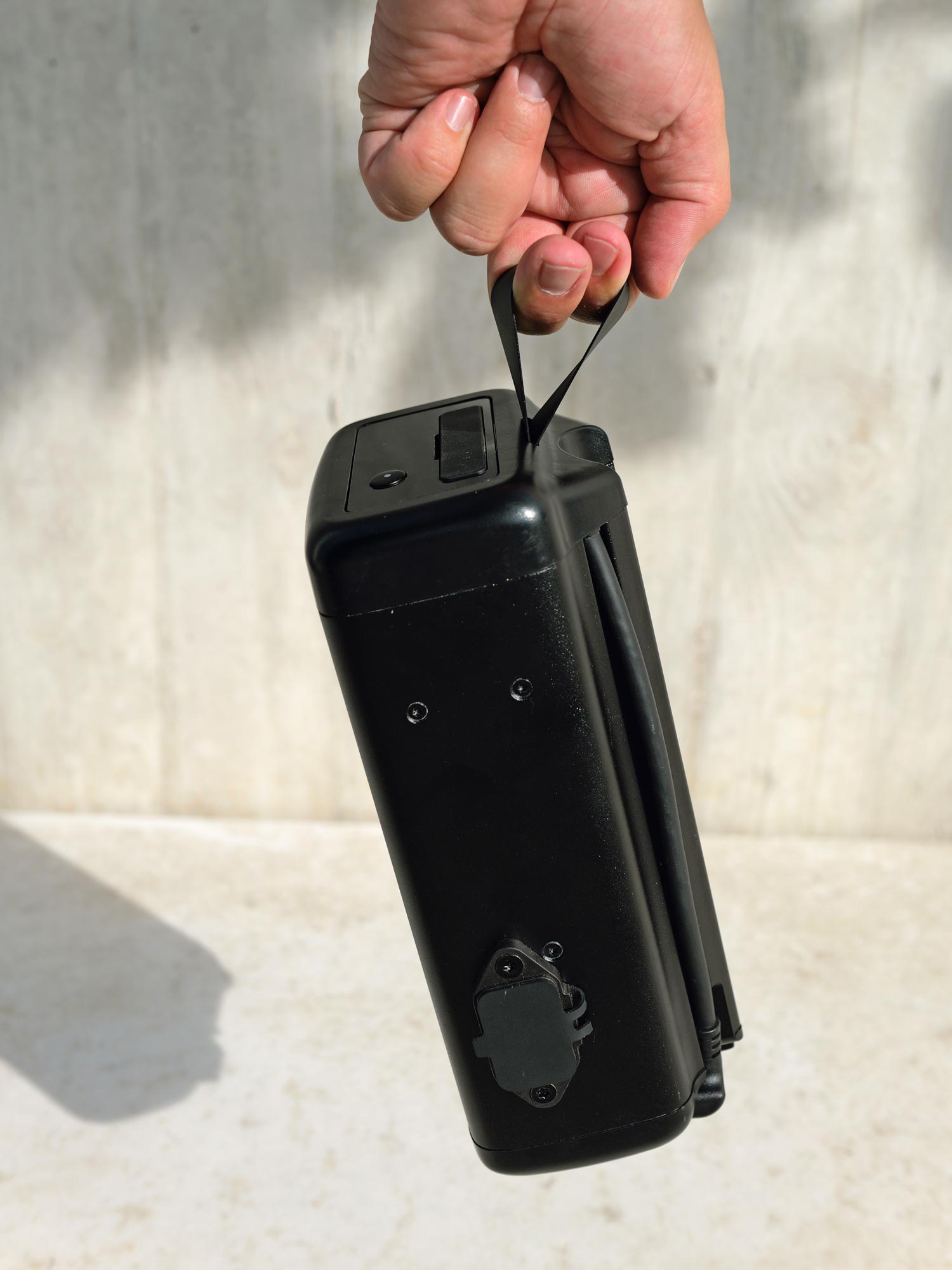
Apart from that, the Smartpac has two USB ports and can therefore also be used as a power bank. There is also a small display on the top which shows, amongst other things, the charge level and the currently selected riding mode.
Together with the green illuminated button on the handlebars, this can also be used to change the assistance level; there are three riding modes available in total. The Zero can therefore be ridden and operated entirely without a smartphone – a very useful backup solution. However, operation is more modern and convenient via the Lemmo app on your smartphone. The phone sits securely in the handlebar mount even on rough terrain and can, amongst other things, display your current speed and record the distances travelled.
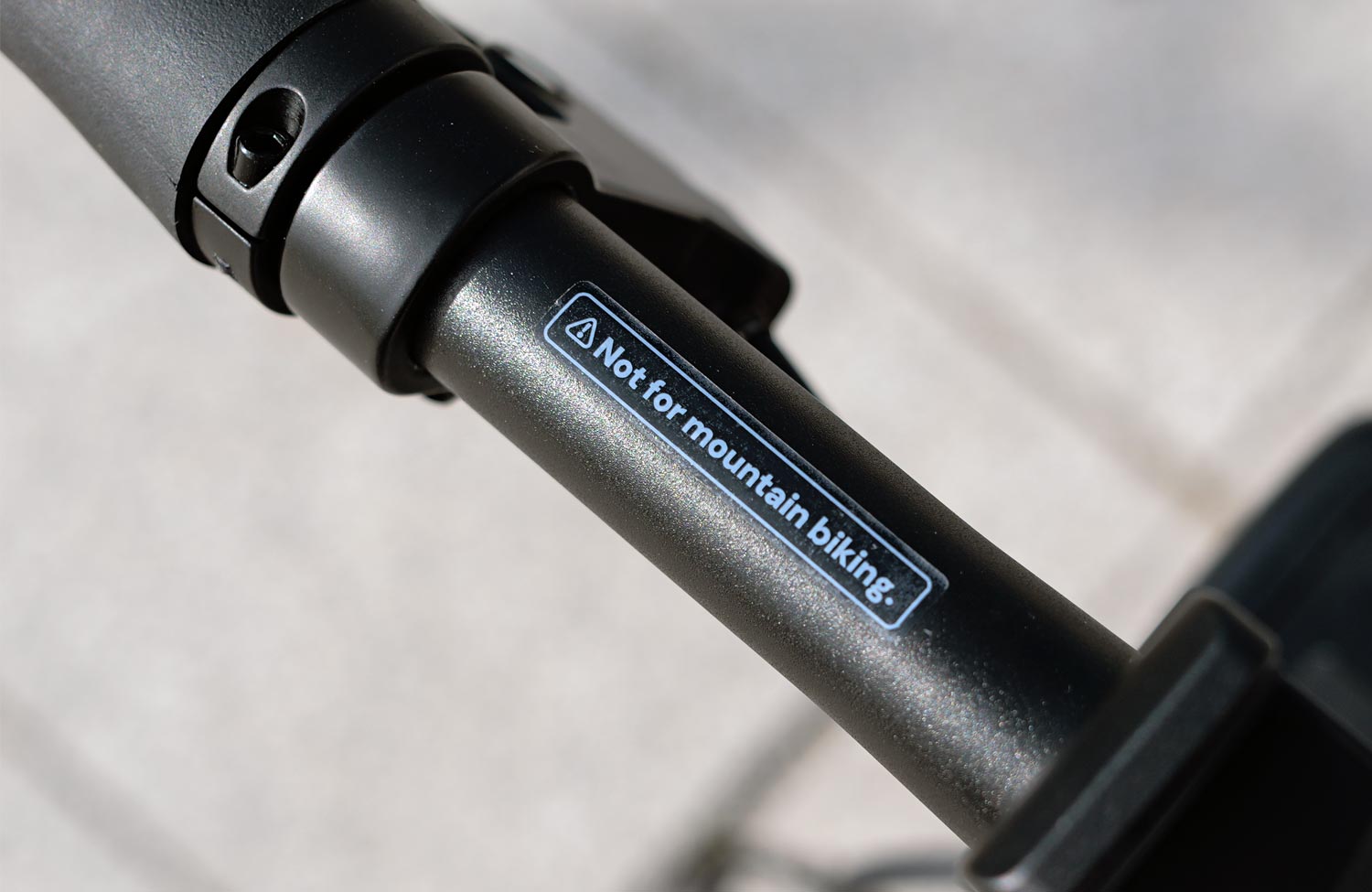
The derailleur operates smoothly, and the shifting is quite direct and responsive. The brakes are much the same: despite being mechanically operated, they provide sufficient stopping power for the bike’s intended use. And Lemmo itself makes it abundantly clear, with a small sticker on the handlebars, where the limits lie – this bike isn’t designed for mountain biking 😉
Ride impressions
Despite its compact dimensions, the Lemmo Zero certainly doesn’t give you the feeling of sitting on a bike that’s too small when you get on it. Lemmo recommends this model for people between 1.50 and 1.95 metres tall, which means it’s designed to cover a surprisingly wide range. Even at 1.85 metres – which is already at the upper end of this range – the riding position still felt comfortable in our test.
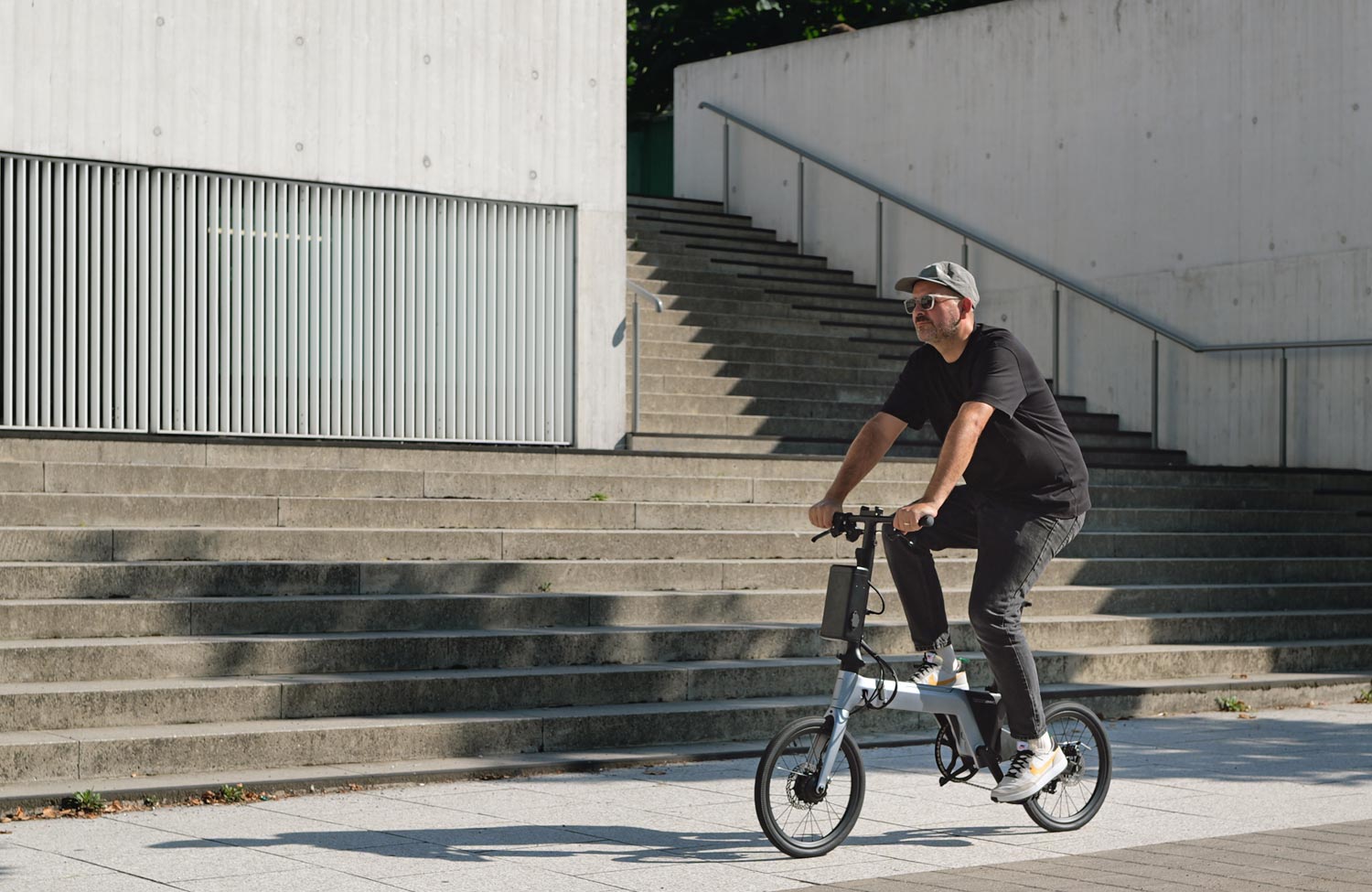
However, at around 52 centimetres, the handlebars are quite narrow and are also designed to be almost straight, resulting in a rather sporty riding position. Short to medium distances can be covered without any problems, though a little more comfort would be welcome on longer rides. Even so, it’s important to bear in mind the Zero’s intended use: after all, it’s not meant to replace a trekking bike, but to be as compact, lightweight and easy to transport as possible.
Thanks to its small, narrow tyres, the Zero handles with remarkable agility and responsiveness – behaviour typical of bikes of this design and size. What is particularly noteworthy, however, is the frame’s surprisingly sturdy overall feel. At no point do you get the sensation that anything is twisting or bending in an unsettling way whilst riding. This inspires confidence, as the little Zero is certainly capable of reaching quite a pace.
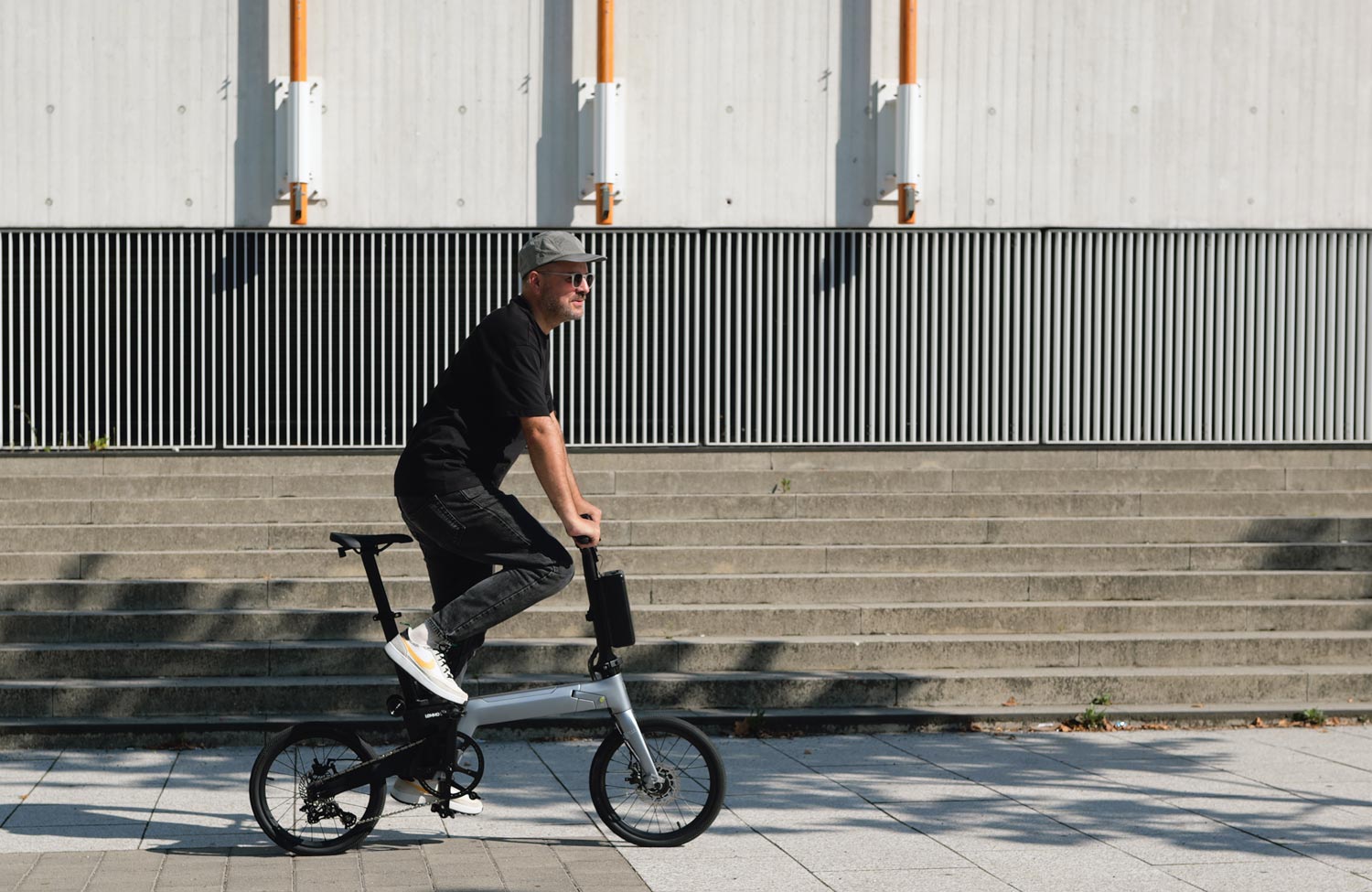
The electric drivetrain also fits well with the Zero’s character. The power figures, which appear rather modest on paper, prove to be entirely sufficient when riding – even steeper sections can be tackled with ease thanks to the 5-speed gearbox. This makes it all the more remarkable how confidently the extremely compact front motor performs its task, whilst also operating pleasantly quietly. The front motor’s responsive control is particularly impressive. Although the assistance kicks in immediately, it is never excessively abrupt. This means there is no risk of the front wheel suddenly losing traction uncontrollably when setting off – a point we have certainly criticised in the past with less well-tuned front motors.
All three levels of assistance are distinct from one another. At the same time, the Zero rides surprisingly well even without electric assistance. On the one hand, its light weight makes a difference here; on the other, the small front motor offers barely any noticeable resistance when switched off. This is an advantage that should not be underestimated, particularly when the battery is flat or you deliberately choose to ride without assistance.
Conclusion
With the Zero, Lemmo demonstrates once again that a compact folding e-bike can be designed not only to stand out visually, but also to be technically very well thought out. The folding mechanism, in particular, is one of the bike’s strengths: it is cleverly engineered right down to the smallest details and, after a short period of getting used to it, remains easy to use in everyday life. At the same time, the bike impresses with its stability and its remarkably well-tuned electric motor, which leaves little to be desired for a bike in this class.
In our view, there are just a few details that could be improved: with the Smartpac in particular, we would have liked a more convenient electrical connection that would allow the battery to be inserted without the need for an additional cable. For day-to-day use, we would also recommend mudguards – which are now available as optional accessories.
Then there’s the price – and this is a real statement: the Lemmo Zero costs 1,990 euros, including the Smartpac. Given its carbon frame, light weight, electric drive and clever folding mechanism, this is extremely attractive – with no significant drawbacks! One reason for this low price is Lemmo’s direct-to-consumer sales model: the bike is available right here in Lemmo’s online shop in two colour options.